Autonomous AI Agents (agentic AI) are moving from demos into enterprise operations. In 2025–2026, major vendors expanded from chat interfaces to systems that can plan tasks, call tools, interact with software, and execute multi-step workflows with less human intervention. The strategic shift is clear: platform competition now depends on orchestration, reliability, security, and governance, not only model performance.

What are Autonomous AI Agents?
Autonomous AI Agents are systems that use a Large Language Model (LLM) together with tools, memory, and workflow logic to pursue goals across multiple steps. Instead of following only rigid predefined rules, they can adapt to changing inputs and system feedback in real time.
The core distinction from standard conversational assistants is execution. A chatbot may suggest actions; an agent can perform them within permitted boundaries, such as retrieving data, updating records, routing tasks, or triggering downstream workflows.
In enterprise settings, effective deployment usually follows a controlled pattern: agent + workflow + controls. These controls include scoped permissions, auditability, approval checkpoints, and human fallback when needed.

Why the Race Accelerated
Three forces are driving the current race for Autonomous AI Agents:
Productivity pressure: organizations want measurable automation in service, sales, and operations.
Platform advantage: vendors that become the orchestration layer can capture long-term enterprise usage.
Model maturity: stronger tool use, longer context handling, and multimodal capabilities have made agentic workflows more practical than in early 2024.

NVIDIA: Blueprinting Agentic Workflows for Enterprises
NVIDIA has positioned its enterprise strategy around NIM Agent Blueprints, presented as prebuilt, customizable workflows for business use cases such as customer service, multimodal document/RAG pipelines, and drug-discovery-related tasks.
This approach emphasizes NVIDIA’s full stack (models, inference services, and deployable templates) rather than consumer assistant products.
- Customizable workflows: NVIDIA describes NIM Agent Blueprints as frameworks enterprises can adapt across cloud, on-premises, and edge environments, with partner integration support.
- Cybersecurity and industry: NVIDIA states Deloitte is integrating a NIM cybersecurity blueprint to speed up vulnerability analysis and mitigation workflows.
- Healthcare and life sciences: NVIDIA describes BioNeMo/NIM components (including AlphaFold2, MolMIM, and DiffDock-related capabilities) as building blocks for life-science and drug-discovery pipelines.

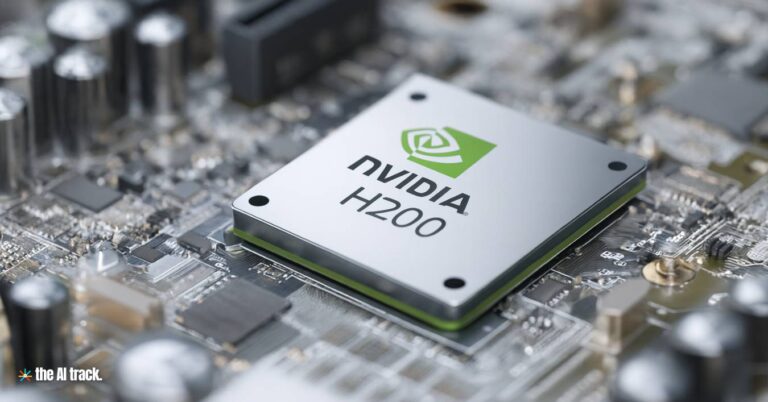
Explore the vital role of AI chips in driving the AI revolution, from semiconductors to processors: key players, market dynamics, and future implications.

Microsoft’s Copilot Studio: The Largest Agent Ecosystem
Microsoft has expanded enterprise agent capabilities through Copilot Studio and Dynamics 365 autonomous agents across sales, service, finance, and supply chain workflows.
Adoption scale: In late 2024, Microsoft-linked reporting cited over 100,000 organizations creating or editing agents in Copilot Studio.
Autonomous Dynamics 365 agents: Microsoft announced first-party autonomous agents for scenarios including sales qualification, supplier communications, and employee self-service.
Enterprise outcomes: Impact examples should be presented with explicit attribution to public case studies or official statements.
Interconnected workflows: A practical description is multi-agent workflow orchestration across enterprise systems.

Anthropic: “Computer Use” and Execution-Layer Competition
Anthropic’s “computer use” capabilities signaled a shift from text-only response toward interface-level execution. Public API documentation presents this as developer-facing functionality that can be integrated into constrained, real workflows.
The execution layer is becoming a key competitive frontier: the ability to automate real desktop and browser tasks reliably, with strong controls, is increasingly central to enterprise value.

Google: Browser-Native Agent Direction via Mariner and Jarvis Reporting
Google’s publicly documented browser-agent direction is represented by Project Mariner, a DeepMind research prototype focused on human–agent interaction in web environments. The project demonstrates computer-use capabilities for practical browser tasks such as navigation, information gathering, and assisted task completion.

The Role of “AI Scientists” in Biomedical Discovery
A major frontier for agentic AI is the development of “AI scientist” systems that combine LLM-based reasoning with domain tools and experimental workflows to support scientific planning and analysis.
Virtual cell simulation: Recent models can predict cellular responses to perturbations and drug effects, but performance and economic impact vary by dataset and task.
CRISPR support: AI agents are increasingly used to assist CRISPR experiment design and protocol planning; claims about autonomous closed-loop optimization should be tied to specific validated studies.
Autonomy levels: Researchers have proposed multiple autonomy frameworks; any Level 0–3 scheme should be attributed to the specific source that defines it.

Where Autonomous AI Agents Already Create Value
High-signal domains in 2025–2026:
- Customer operations: triage, routing, follow-up, and resolution support.
- Revenue workflows: lead qualification and sales-support automation.
- Internal operations: HR/IT self-service and process acceleration.
- Scientific and technical work: workflow acceleration in analysis-heavy pipelines.
The strongest results tend to come from scoped, auditable workflows rather than fully open-ended autonomy.

Risks That Now Define the Real Adoption Curve
1) Security Exposure
Gartner forecasts that by 2028, 25% of enterprise breaches will involve AI-agent abuse. This makes security architecture and runtime controls central to rollout decisions.
2) Reliability Risk
Agentic chains can amplify a single-step error into a broader workflow failure. As autonomy increases, verification, policy constraints, and step-level logging become essential.
3) Energy and Infrastructure Load
IEA analysis indicates strong growth in data-center electricity demand linked to AI expansion, including a base-case trajectory that approaches a doubling by 2030. U.S. energy outlook reporting also indicates rising demand pressure associated with data-center growth.
What Will Determine Winners in 2026–2028
The race for Autonomous AI Agents will likely be decided less by model demos and more by five operational factors:
- Governance by design (permissions, audit trails, policy gates)
- Interoperability (agents that work across tools/vendors)
- Domain depth (industry-grade templates and integrations)
- Security posture (red-teaming + runtime controls)
- Cost/energy discipline (efficient inference and infrastructure planning)
In short: the winners will be the platforms that make Autonomous AI Agents dependable in production, not merely impressive in demonstrations.
Key Takeaways
- Autonomous AI Agents are shifting from assistant behavior to workflow execution.
- Microsoft, NVIDIA, Anthropic, and Google are converging on enterprise-grade agent platforms.
- Security, reliability, and energy costs are now first-order constraints, not side issues.
- The next phase is operational: governance, interoperability, and measurable ROI.