Key Takeaway:
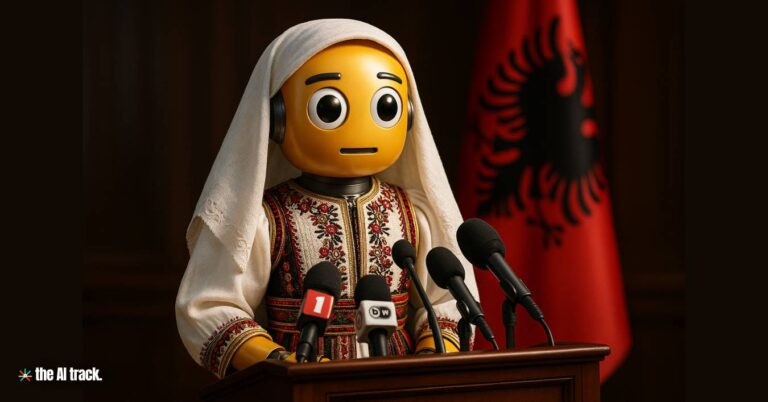
Albania has become the first country in the world to symbolically appoint an AI-generated “minister,” named Diella, to oversee public tenders and combat systemic corruption, a central issue in its bid for EU membership. While her cabinet role lacks constitutional standing, the government presents her as a tool for accountability, efficiency, and transparency in procurement.
Albania Appoints AI Bot ‘Minister’ – Key Points
Appointment Announcement (12 September 2025):
Prime Minister Edi Rama unveiled Diella as a new cabinet member in Tirana, days after presenting his new government formed in May 2025 following his fourth consecutive electoral victory. Rama claimed Diella will ensure 100% corruption-free public tenders, positioning her as minister for public procurement. President Bajram Begaj mandated Rama to form the new government; lawmakers will vote on the cabinet, but it remains unclear whether Diella’s virtual post will be put to a vote. Analysts note the presidential mandate grants Rama latitude to establish and implement Diella operationally. At the ruling Socialist Party conference in Tirana, Rama framed Diella as “the servant of public procurement,” emphasizing a phased rollout.
Political Context – EU Accession Goals:
Albania, population 2.8 million, is targeting EU membership by 2030, with negotiations set to conclude by 2027. Corruption in tenders has been a persistent obstacle. Rama argued Diella’s appointment demonstrates Albania’s readiness to “leapfrog” larger nations locked in traditional systems. EU institutions have made anti-corruption reforms a key condition for accession. The country began full EU membership negotiations roughly a year ago, with Diella also expected to support local authorities in accelerating reforms and aligning with EU standards. Persistent concerns include organized crime and money-laundering networks tied to drug and weapons trafficking—pressures that heighten the stakes for procurement reform.
Legal and Constitutional Challenges:
Albania’s constitution stipulates that ministers must be citizens over 18 and mentally competent, making Diella’s role symbolic rather than official. Gazmend Bardhi, leader of the Democratic Party, called the move unconstitutional “buffoonery,” and the Democrats labeled the initiative “ridiculous.” Legal experts say more work is needed to establish Diella’s official status, and President Begaj stopped short of describing Diella’s role as a ministerial post.
Role and Capabilities of Diella:
Diella, meaning “sun” in Albanian, was launched in early 2025 on the e-Albania platform, developed in partnership with Microsoft and managed by the National Agency for Information Society. Since January 2025, she has advised users via voice commands, helping them navigate about 95% of citizen services delivered digitally. Cumulatively, she has supported over one million applications, issued 36,600 digital documents, and provided nearly 1,000 services. Government materials say Diella uses up-to-date AI models and techniques. Rama now envisions her functions expanding into a full AI-based public procurement system, built by a domestic and international team, aimed at speed, efficiency, and total accountability in bidding.
Procurement Operating Model – Step-by-Step Transfer:
Rama outlined a step-by-step transfer of responsibility for deciding tender winners away from individual ministries to AI-driven evaluation, with the goal that “all public spending in the tender process is 100% clear.” Diella would examine every tender where the state contracts private firms and objectively assess bidder merits against criteria—reducing exposure to bribes, threats, and conflicts of interest.
Symbolic and Cultural Presentation:
Diella is projected on screen as a woman in traditional Albanian folk attire. Media noted her presentation style resembled that of a pop star, underscoring Rama’s blend of reform and theatrics. Critics argue this mix of spectacle and governance reflects his leadership style, while some Albanian media praised the move as a “major transformation” that makes technology an active participant in governance.
Advantages Over Human Ministers (Rama’s Framing):
Rama emphasized Diella’s lack of “human weaknesses”: no scandals, no expenses abuse, no political infighting, and only “power-hungry” in terms of electricity consumption. He added the move pressures other ministers to modernize, and described the goal as building the first full AI model in public procurement to remove “every potential influence” on tenders.
Concerns and Skepticism:
Fears persist over manipulation risks, lack of oversight, and constitutional breaches. Social media reactions mocked the initiative: “Even Diella will be corrupted in Albania” and “Stealing will continue and Diella will be blamed.”
Financial services entrepreneur Aneida Bajraktari Bicja noted Rama “often mixes reform with theatrics” but argued the project could be constructive if it evolves into real systems that improve transparency and trust.
Dr Andi Hoxhaj (King’s College London) said that, if programmed correctly, AI can check bids against criteria in real time, increasing transparency—adding that with Brussels urging progress by 2027, “there’s a lot at stake.”
Why This Matters:
Albania’s appointment of an AI “minister” marks a world first in symbolic governance. While critics dismiss it as political theater, the initiative aligns with EU pressure to reform and could, if expanded beyond symbolism, serve as a mechanism to reduce graft and improve efficiency in procurement. Its outcome may influence global debates on AI in governance: if successful, it could set a precedent for digital oversight roles in politics; if it fails, it may deepen skepticism about technology-driven reform in fragile democracies.
This article was drafted with the assistance of generative AI. All facts and details were reviewed and confirmed by an editor prior to publication.

Combat fake news with these powerful AI disinformation detection tools. Analyze content, verify images, and uncover the truth.
AI in law enforcement serves as a transformative power, with diverse applications. One major breakthrough is the advent of AI-generated suspect sketches.

The article highlights the pivotal role of AI in politics, revealing its transformative impact on elections, campaigns, and governance. It underscores the dual nature of AI as a tool for advancing democratic engagement and policy-making, while also posing risks like the spread of disinformation
Read a comprehensive monthly roundup of the latest AI news!