Key Takeaway
Anthropic released Claude Opus 4.5 on 24 November 2025, delivering major gains in coding performance, enterprise task automation, research, safety, and efficiency. It completes the Claude 4.5 lineup and stands as the company’s most capable system for advanced reasoning, long-running agents, and professional-grade spreadsheet and document work, now paired with improved pricing, memory tools, and integrations across Chrome, Excel, desktop, and developer platforms.

Anthropic Introduces Claude Opus 4.5 – Key Points
Third major Anthropic model release in two months
Claude Opus 4.5 follows Sonnet 4.5 (September 2025) and Haiku 4.5 (October 2025). Anthropic highlights fast release cycles and strong tester feedback, with tasks previously impossible for Sonnet 4.5 now executable by Opus 4.5. The launch completes the family: Opus for top reasoning, Sonnet for balanced performance, Haiku for speed.
Flagship Opus model with stronger reasoning and tool use
Opus 4.5 replaces Opus 4.1 (August 2025). It is described as Anthropic’s strongest model for coding, agents, and computer use—offering improved vision, reasoning, mathematics and top-tier results across industry benchmarks. It generates expert-level code, spreadsheets, and presentations, and supports more capable, long-running AI agents tailored for complex workflows.
Major investments and a soaring valuation
Microsoft and Nvidia announced multi-billion-dollar investments, helping lift Anthropic’s valuation toward $350 billion. Anthropic plans roughly $30 billion in GPU spending through Microsoft’s cloud, with Nvidia contributing up to $10 billion and Microsoft up to $5 billion. Additional funding discussions with Google could raise the valuation further. Anthropic’s backers include Amazon and Alphabet, underscoring intensifying competition in enterprise AI.
Built for developers and knowledge workers
Designed for engineers, analysts, consultants, and accountants, Opus 4.5 improves spreadsheet work, slide creation, and deep research. Testers report strong performance in ambiguous tasks, multi-system debugging, and complex reasoning. It can generate human-quality financial spreadsheets and polished business documents.
Best-in-class performance in agentic coding
Opus 4.5 surpasses Google’s Gemini 3 Pro and OpenAI’s GPT-5.1 on the SWE-bench Verified benchmark—becoming the first model to exceed 80%. It also earned the highest score ever on Anthropic’s internal two-hour engineering test, outperforming human candidates. It leads 7/8 languages on SWE-bench Multilingual and excels on Terminal-bench, τ2-bench, MCP Atlas, ARC-AGI 2, and GPQA Diamond. It is available as
claude-opus-4-5-20251101at $5 input / $25 output per million tokens, making high-end capabilities more accessible.Growing enterprise adoption
A July 2025 Menlo Ventures report shows Claude with 32% enterprise market share—surpassing OpenAI (25%), Google (20%) and Meta (9%). This shift strengthens Opus 4.5’s position among companies requiring robust, production-grade AI.
Default model across Pro, Max and Enterprise
Opus 4.5 is now the primary model in Anthropic’s paid tiers and all major cloud platforms. Updated usage limits let Max and Team Premium users access Opus similarly to Sonnet. Automatic summarization and memory compaction unlock uninterrupted “endless chat” sessions for long projects.
Expanded product ecosystem
- Claude for Chrome is now available to all Max users, enabling cross-tab browsing actions.
- Claude for Excel rolls out to Max, Team and Enterprise users, supporting advanced spreadsheet editing and analysis.
- Claude Code arrives in the desktop app, enabling parallel sessions for coding, GitHub research and documentation.
- Developer platform updates enhance long-running tasks, agent orchestration, integration depth, and workflow automation.
Efficiency controls via the new “effort” parameter
Developers can now choose how much reasoning the model applies. At medium effort, Opus 4.5 matches Sonnet 4.5’s top SWE-bench score with 76% fewer output tokens; at highest effort it surpasses Sonnet by 4.3 percentage points using 48% fewer tokens. Combined with lower pricing and context compaction, this supports continuous, large-scale workloads.
Advances in agents, memory, and multi-agent systems
Opus 4.5 manages long tasks with less backtracking and better memory handling. Anthropic’s platform supports coordinated multi-agent systems, typically with Opus planning and Haiku agents executing. Internal evaluations show an almost 15-point improvement in deep research tasks using these tools. Memory gains help Opus navigate large codebases, track what matters, and revisit earlier steps when needed.
Improved safety and resistance to prompt injection
Opus 4.5 is Anthropic’s most aligned and robust model. It shows lower “concerning behavior” scores and leads external evaluations against strong prompt injection attacks developed by Gray Swan. These protections are essential for high-stakes workflows. Anthropic notes that its creativity—useful in tasks like τ2-bench—must be balanced to avoid unintended behavior, a focus of the company’s Societal Impacts and Economic Futures research.
Why This Matters
Claude Opus 4.5 advances Anthropic’s push into enterprise AI, rivaling Google, OpenAI and Microsoft with superior coding benchmarks, strong agentic capabilities, and an ecosystem that integrates directly into offices’ everyday tools. Three major model releases in two months highlight a rapid industry escalation driven by massive chip investments and soaring valuations.
For teams seeking automation in engineering, research and analysis, Opus 4.5 provides a powerful and cost-efficient system with tunable reasoning depth. Its >80% SWE-bench Verified score, human-surpassing exam results, and ~15-point boost on deep research tasks point to a shift in how high-skill work is performed. Combined with stronger safety, memory, and agent orchestration, the model is built for long-running, production-grade applications—not just prototypes.
This article was drafted with the assistance of generative AI. All facts and details were reviewed and confirmed by an editor prior to publication.
Anthropic confirms Chinese state-backed hackers used Claude to automate 80–90% of a mid-Sept 2025 cyber espionage campaign targeting 30 global organizations.
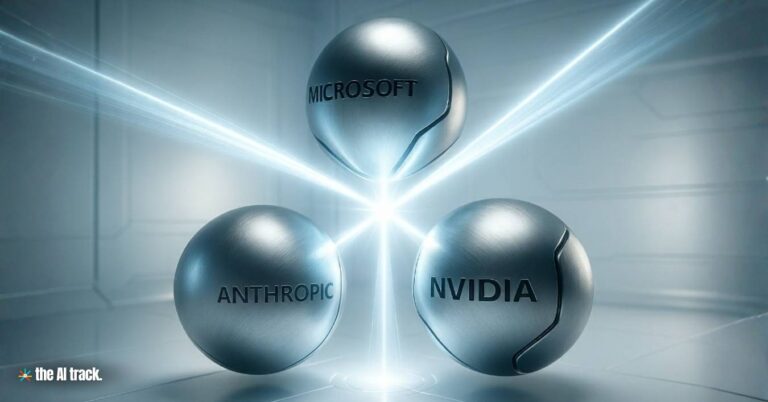
Microsoft, NVIDIA and Anthropic unveiled a strategic AI alliance involving a $30B Azure compute deal, $15B in investments, 1GW expansion, and a surge to a $350B valuation.
Read a comprehensive monthly roundup of the latest AI news!