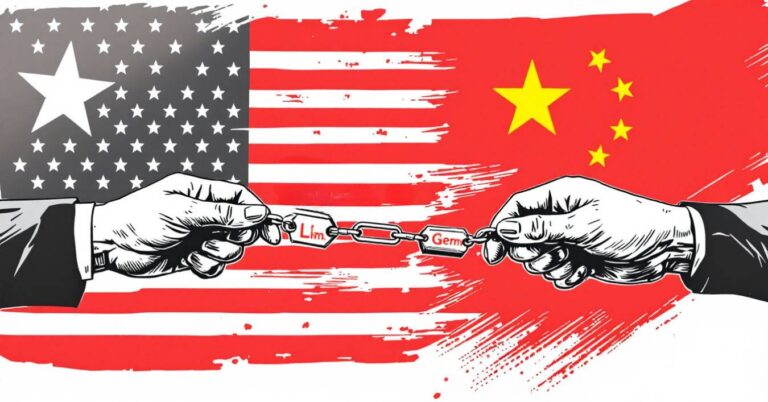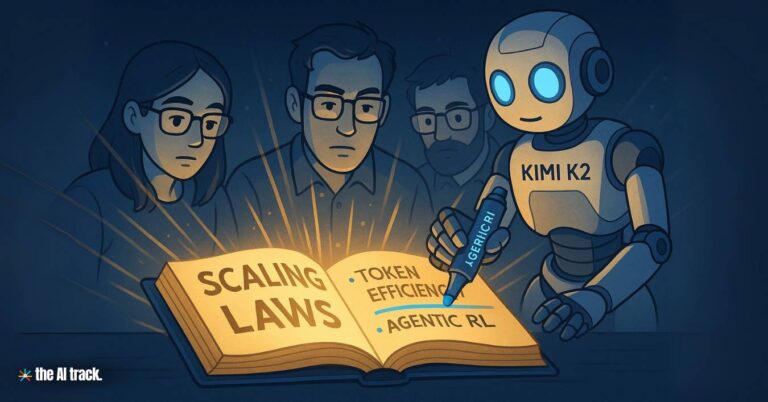
China has proposed establishing an international AI cooperation organization to coordinate global AI development, regulation, and open-source sharing. Positioned as a multilateral response to the United States’ deregulation-first strategy, this initiative reflects escalating geopolitical divides over the future of AI governance, with China seeking a leadership role—especially among Global South nations.
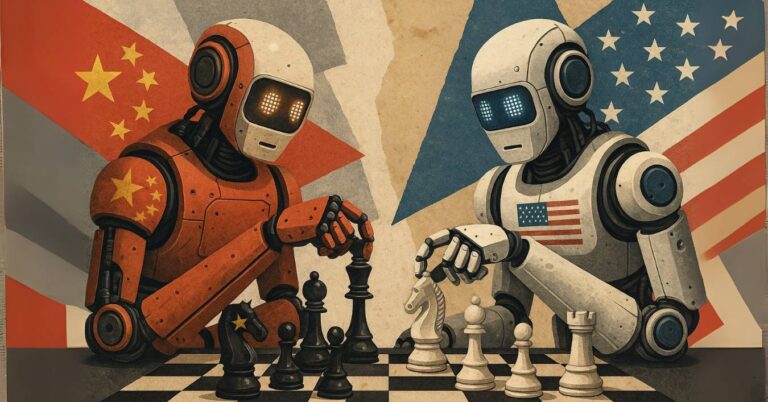
China Proposes International AI Cooperation Organization – Key Points
China Launches International AI Cooperation Organization Proposal
During the World Artificial Intelligence Conference (WAIC) in Shanghai on July 26, 2025, Premier Li Qiang introduced a bold initiative: the creation of an international AI cooperation organization. The body would serve as a centralized platform for coordinating AI regulation, development, and ethical oversight. It would facilitate inclusive participation—particularly from developing nations—and could be headquartered in Shanghai.
Direct Response to US Deregulation Strategy
Just two days earlier, on July 24, 2025, US President Donald Trump unveiled a deregulation-focused AI action plan. It called for reducing what he described as “woke bias” in AI models and emphasized expanding US technology exports to allies. This strategic divergence signaled the formation of two opposing global blocs: a China-led multilateral camp and a US-led coalition prioritizing technological dominance through looser regulation. Analysts like George Chen of The Asia Group noted that China’s China’s international AI cooperation organization initiative could attract Belt and Road participants, while the US would likely solidify support from traditional allies such as Japan and Australia.
Balancing Progress and Risk
Premier Li warned that AI could become an “exclusive game” for a handful of countries and corporations if left unchecked. He stressed the need for unified global rules to manage AI’s economic promise alongside risks such as misuse, inequality, and loss of sovereignty. The current AI governance landscape is fragmented, with countries maintaining vastly different regulatory concepts. A central aim of the proposed organization is to reduce this fragmentation by building broad international consensus.
Escalating Tech Cold War
The AI governance rivalry takes place amid ongoing US export controls on advanced semiconductors and chipmaking tools critical to training large AI models. These restrictions have slowed the flow of high-performance chips like Nvidia’s H100 to China. However, Nvidia resumed shipment of a downgraded H20 chip in July 2025. Simultaneously, China has accelerated the development of domestic AI chip alternatives. Nvidia CEO Jensen Huang called China’s progress “formidable” during his third trip to the country this year.
Open-Source AI and Belt and Road Outreach
Li reiterated China’s willingness to share AI innovations, development practices, and products with developing nations, particularly across the Global South. This offer of technical assistance aligns with China’s “AI Plus” national strategy to integrate AI into all industries and extend its global technological influence. China’s foreign ministry also released a global AI action plan inviting cross-border collaboration through open-source communities and institutional exchanges.
Participation and Global Alignment
Chinese Vice Foreign Minister Ma Zhaoxu emphasized pragmatic cooperation in his remarks at a WAIC roundtable attended by representatives from over 30 countries, including Russia, South Africa, Qatar, South Korea, and Germany. The foreign ministry’s action plan outlines pathways for shared standards, joint research, and regulatory interoperability. Former Google CEO Eric Schmidt, a prominent figure in global AI governance debates, was also present in Shanghai and met with the city’s Party Secretary ahead of the conference.
AI’s Ethical and Economic Disruption
The event raised pressing concerns about AI’s disruptive potential, from job loss and disinformation to its impact on the news media ecosystem. A study presented at the event revealed that AI-generated summaries in search engines have caused up to an 80% drop in traffic to news websites. This has sparked urgent debates on the future of journalism and whether tech platforms should be compelled to protect original content creators. A central aim of the international AI cooperation organization would be to address such ethical and economic challenges through inclusive policymaking.
WAIC 2025 Attendance and Showcases
More than 800 companies participated, unveiling over 3,000 AI innovations, including 40 LLMs, 50 smart systems, and 60 robotics products. Key figures such as Geoffrey Hinton, Anne Bouverot, and Eric Schmidt headlined panels. Notably absent was Elon Musk, who had spoken at past events. Chinese firms like Alibaba, Huawei, and Unitree shared the stage with US tech giants including Amazon and Alphabet.
Why This Matters:
The competing visions for AI governance—China’s multilateralism vs. US deregulation—have now crystalized into rival institutional blueprints. China’s proposal for an international AI cooperation organization reflects its strategy to rewrite global tech leadership through infrastructure sharing, policy collaboration, and open access. This could redefine the future of digital power, especially if countries excluded from US alliances find common cause in China’s inclusive framework.

GRIP, a WEF-UAE initiative, reimagines global regulation for AI, fintech, and biotech with live testing, ethics tools, and leadership frameworks.
Read a comprehensive monthly roundup of the latest AI news!