Kimi K2 is a powerful new AI model from China’s Moonshot AI that beats GPT-4.1 in coding, math, and agentic workflows (real-world task execution). It’s freely available for anyone to use (open-weight 1T-parameter model) and is designed to perform complex tasks on its own. It also introduces a more stable and cost-efficient way to train large models (MuonClip for stable trillion-scale training), marking a major step forward in AI development, and a strong move in China’s goal to become more independent in this field.
Article – Key Points
Kimi K2: A 1T-Parameter Mixture-of-Experts Model
Released on July 11, 2025, by Moonshot AI (founded 2023, backed by Alibaba), Kimi K2 has over a trillion internal settings (“parameters”) and is specially designed to choose the best part of its brain for each task (32 billion activated per inference). It comes in two versions: Kimi-K2-Base for research, and Kimi-K2-Instruct for real-world use like chatting, coding, and tool use.
Open Weights and API Access for Broad Deployment
Kimi K2 is fully open-weight and available for anyone to use on Hugging Face. An OpenAI/Anthropic-compatible API is offered through Moonshot’s platform, with tiered pricing: $0.15M/input tokens (cache hits), $0.60M (misses), $2.50M/output. Moonshot also offers it via an API that works with popular tools used for GPT-based applications (include vLLM, SGLang, TensorRT-LLM, and Apple M3 Ultra with 512GB RAM (for 4-bit quantization).
State-of-the-Art Benchmark Results
Kimi K2 delivers competitive or superior scores across major LLM benchmarks:
- SWE-bench Verified (solves real software bugs better): 65.8% (GPT-4.1: 54.6%)
- LiveCodeBench (writes code more reliably) : 53.7% (DeepSeek-V3: 46.9%)
- OJBench: 27.1% (best among open models)
- MATH-500 (excels in math): 97.4% (GPT-4.1: 92.4%)
- Shows strong results in multilingual and science-based questions (AIME, GPQA-Diamond, and MMLU-Pro).
It performs this well even without having a separate “reasoning engine,” which many other models rely on.
Advanced Agentic Capabilities for Complex Tasks
Kimi K2 can handle entire multi-step tasks without needing a human to guide it every step of the way:
Planned a full trip to a Coldplay concert using 17 tools (flights, emails, hotels, restaurants)
Analyzed job salaries and created interactive visual reports (16 IPython operations + interactive HTML generation)
Converted apps from one coding language to another while checking performance
Built a genealogy website for Stanford’s NLP researchers from scratch: 5 searches, 4 browsings, 3 clicks, 6 edits, 2 deployments
Debugged a game in JavaScript and improved the code until it worked perfectly
These show orchestration of commands, file edits, tool selection, and agent autonomy in dynamic environments.
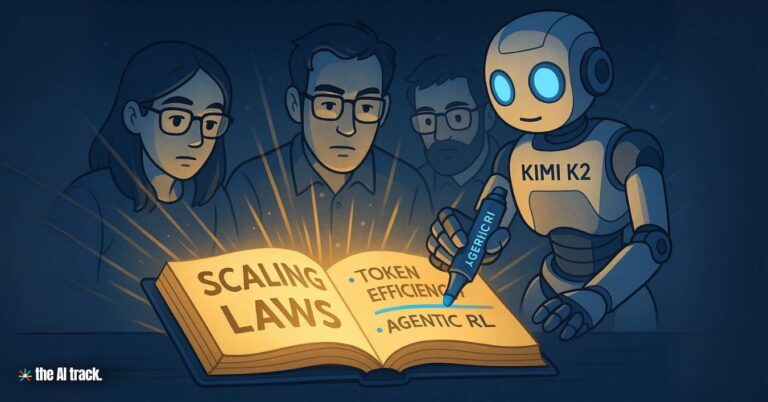
Training Innovations: MuonClip Optimizer with qk-clip
Kimi K2 was trained on a massive (15.5T tokens) dataset using a new method called MuonClip. This method fixes a common problem that causes training crashes in other models (achieved zero training instability). It also helps Kimi learn faster and more efficiently, important now that available human-created training data is running out.
Agentic Intelligence Built on Data Synthesis and RL
Moonshot created fake and real-world environments where Kimi could practice using tools, like calculators, file editors, or booking engines (trained on rubric-based simulations of tool-use scenarios). A smart scoring system filtered out bad examples and trained the model on only the best ones. Kimi also learned from its own mistakes by acting as its own critic, a modern approach based on research from DeepMind (DeepMind’s “Era of Experience” framework (2025).
Licensing Terms Enable Use, Enforce Attribution at Scale
The license lets anyone use Kimi K2 for free, including businesses. If an app using Kimi K2 has over 100 million users or makes over $20 million per month, it must visibly credit it uses Kimi K2.
Limitations and Future Enhancements
Sometimes talks too much or gives incomplete answers in very hard tasks (occasional verbosity or truncation)
Degraded results when asked to do complex things in a single step (in one-shot prompts for complex codebases)
Vision (image understanding) is not yet included
Performance improves in multi-step, ongoing conversations – multi-turn agentic contexts
MCP-based tool calling and general-agent upgrades are in development.
China’s AI Strategy and Moonshot’s Positioning
Kimi K2 follows the 2025 release of Moonshot’s vision model and Kimi K1.5, positioning the company as a Chinese open-weight AI leader, countering U.S. incumbents amid chip export restrictions. It builds on DeepSeek’s momentum and aims to recapture local market share from Zhipu and Baichuan while driving international adoption through open access.
Why This Matters:
Kimi K2 proves that free, open AI models can now compete with, and even beat, expensive commercial systems. It’s not just a chatbot; it’s a real problem solver that can do tasks by itself. That’s a game changer for businesses and developers around the world. And for China, it’s a symbol of how open technology can also serve national goals
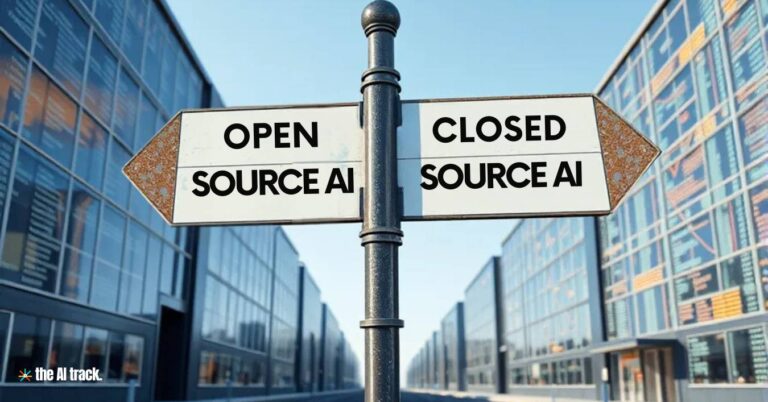
Explore the key differences between open source vs closed source AI, including their benefits, challenges, and implications for the future of AI
Read a comprehensive monthly roundup of the latest AI news!