Key Takeaway:
Anthropic has rolled out upgraded memory features for all paid Claude subscribers, closing the gap with rivals ChatGPT and Gemini by enabling users to retain and manage past conversations transparently. The update builds on recent Pro and Max upgrades, adding broader functionality and deep integration into workflows.

Anthropic Expands Claude Memory – Key Points
Memory for All Paid Users
As of October 2025, Claude’s memory feature is being rolled out to all Pro and Max subscribers. Max users can enable it immediately, while Pro subscribers will receive it “in the coming days.” This follows an earlier release for Team and Enterprise users in September 2025. Free users remain excluded. Pricing context: Pro is $20/month and Max is $100–$200/month, depending on tier and region.
Transparency, Control, and Optionality
Anthropic emphasizes “complete transparency.” Users can see exactly what Claude remembers, toggle specific memories on/off, delete or edit them via natural language, and even ask Claude to “forget” details (e.g., an old job). Users can also disable the feature entirely or launch Incognito chats for memory-free sessions. This optional approach contrasts with other chatbots’ vaguer memory summaries and reflects Anthropic’s stated aim of avoiding sensitive topics while maximizing productivity.
Distinct Memory Spaces
Users can create separate Project-based “memory spaces” to prevent cross-contamination between projects or personal/professional use. This ensures context is maintained for multi-step tasks such as coding, creative projects, or business planning, without overlapping with unrelated conversations. Anthropic notes that “product roadmaps stay separate from creative writing”.
Import and Export Flexibility
Claude supports importing memory from ChatGPT or Gemini via copy-paste, and exporting memories at any time. Imported content may not yet integrate seamlessly into conversations in all cases (support docs caveat). Users can also paste brand rules or tone directly into a Project’s instructions for persistent context. This reduces fears of vendor lock-in and provides portability across platforms. Practical caveat: exporting data between chatbots can be cumbersome, and there is no one-click importer between systems yet.
How Memory Applies to Past Work
When enabling Memory, users can choose whether to build from existing conversations or start fresh and let Claude accumulate new context going forward. This gives finer control over which historical data becomes part of long-term recall.
Expanded Productivity Ecosystem
Memory is part of a broader suite of Claude Pro and Max upgrades in 2025, including:
Web Search for real-time updates
Voice Mode for hands-free use
Claude Code for collaborative coding
Research tools for deeper investigations
File creation (documents, slides, spreadsheets)
Skills to program custom workflows
Integrations with Google Workspace, Microsoft 365, Canva, and Figma
These features all run on the Claude 4 model family (Opus 4.1, Sonnet 4.5, Haiku 4.5), which score among the highest in recent AI intelligence benchmarks. Related capability notes in the ecosystem include expanded context handling in Sonnet, complementing but distinct from persistent Memory.
Competitive Catch-up
OpenAI’s ChatGPT and Google’s Gemini introduced memory features in 2024. Claude added memory in August 2025, initially requiring users to explicitly request recall. The new persistent and project-based memory now brings Claude in line with rivals, strengthening Anthropic’s competitive standing. Competitive nuance: ChatGPT offers long-term memory features even on its free tier, increasing pressure on paid plans to differentiate on control, transparency, and portability.
Concerns Over Risks and Safety Testing
Experts caution that chatbot memory can reinforce unhealthy thought patterns, contributing to what some call “AI psychosis.” Anthropic acknowledges new safety considerations and states that Memory underwent extensive safety testing, including edge cases involving over-accommodation, wellbeing, and safeguard abuse. The company refined operations accordingly to avoid reinforcing harmful behaviors and to avoid sensitive topics, aiming the feature primarily at work settings.
Strategic Vision
Anthropic’s Chief Product Officer Mike Krieger framed the update as more than continuity: “Memory starts with project continuity, but it’s really about creating sustained thinking partnerships that evolve over weeks and months.” The feature is intended to foster long-term collaboration with users across ongoing projects.
Why This Matters:
Claude’s memory expansion signals the growing importance of persistent recall in the chatbot market. The move strengthens Anthropic’s position against OpenAI and Google, potentially reshaping user loyalty and industry standards. By combining memory with a suite of productivity tools, Anthropic positions Claude as a sustained partner for professional and creative work. However, the risks highlight unresolved tensions between AI usability, user privacy, and mental health, suggesting future regulatory or ethical debates.
This article was drafted with the assistance of generative AI. All facts and details were reviewed and confirmed by an editor prior to publication.
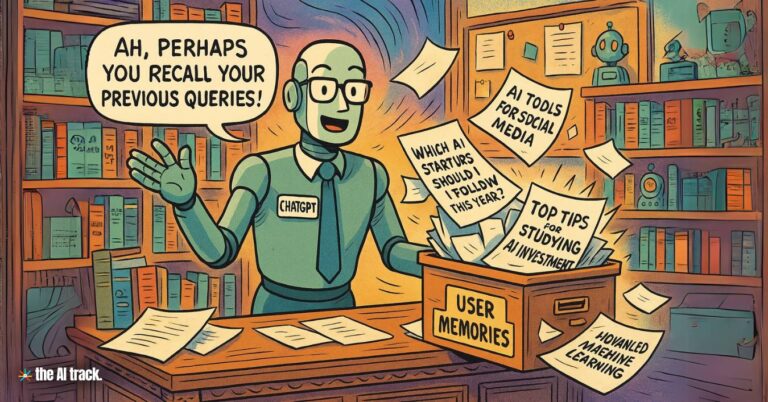
OpenAI’s ChatGPT now features persistent memory, enabling personalized responses by recalling past user interactions, with full user control over data.

xAI expands Grok with memory, live code editing, and Google Drive support. Grok Studio feature turns it into a serious productivity assistant.
Read a comprehensive monthly roundup of the latest AI news!