Key Takeaway
Anthropic has launched Claude Sonnet 4.6, its latest flagship Sonnet model, days after releasing Claude Opus 4.6 on February 5. The model introduces a 1 million token context window in beta, expanded computer-use capabilities, and upgraded performance across coding, long-context reasoning, agent planning, and knowledge work. Claude Sonnet 4.6 is now the default model across free and paid Claude plans, with API pricing starting at $3 per million input tokens and $15 per million output tokens, positioning it as a lower-cost alternative to Opus 4.6 for many everyday tasks.

Anthropic Releases Claude Sonnet 4.6 – Key Points
The Facts
Anthropic rolled out Claude Sonnet 4.6 on Tuesday, shortly after the February 5 release of Claude Opus 4.6, just 12 days apart.
- Model positioning: Anthropic describes Sonnet 4.6 as its most capable Sonnet model yet, delivering upgrades across coding, computer use, long-context reasoning, agent planning, design, and knowledge work. It now serves as the default model for both free and Pro users in Claude and Claude Cowork.
- Model tiers: Anthropic’s lineup includes:
- Opus (largest, most advanced; designed for deep coding, complex reasoning, and long-term planning),
- Sonnet (mid-size, everyday workhorse focused on speed and cost efficiency),
- Haiku (smallest, fastest, lowest cost).
- Context window: The model includes a 1 million token context window in beta, large enough to hold entire codebases, lengthy contracts, or dozens of research papers in a single request.
- Reasoning across context: Anthropic states that Sonnet 4.6 reasons effectively across extended context, improving long-horizon planning and multi-step task execution. However, practical performance at very high token counts remains a focus area for users evaluating long-context reliability.
- Coding improvements:
- Developers with early access preferred Sonnet 4.6 over Sonnet 4.5 roughly 70% of the time in Claude Code testing.
- Users preferred Sonnet 4.6 over Claude Opus 4.5 59% of the time, citing stronger instruction following, fewer hallucinations, fewer false claims of success, and less overengineering.
- Anthropic says the model reads larger chunks of code before editing, consolidates shared logic instead of duplicating it, and delivers more consistent results over long sessions.
- On agentic coding and terminal coding tasks, Sonnet 4.6 performs roughly on par with Opus 4.5 while remaining significantly cheaper.
- Computer use capabilities:
- Sonnet 4.6 builds on Anthropic’s October 2024 introduction of general-purpose computer-using models.
- It interacts with real software environments such as Chrome, LibreOffice, VS Code, spreadsheets, and web forms via simulated mouse and keyboard input.
- On OSWorld—an industry benchmark for AI computer use—Sonnet models have shown steady gains over 16 months.
- Scores from Sonnet 4.5 onward are measured on OSWorld-Verified, a July 2025 upgrade that improved task quality, grading, and infrastructure.
- Anthropic emphasizes office productivity use cases, including web browsing, spreadsheet manipulation, email drafting, and multi-tab workflows.
- Real-world office tasks: Anthropic states that performance previously requiring an Opus-class model, including economically valuable office and financial analysis tasks, is now achievable with Sonnet 4.6. The company highlights strengths in agentic financial analysis, scale tool use, and office workflows.
- Agentic performance: In the Vending-Bench Arena evaluation, which tests long-term business strategy in a simulated competitive market, Sonnet 4.6 invested heavily in early capacity before pivoting to profitability late in the simulation, finishing ahead of competitors. Anthropic uses this as evidence of improved long-horizon reasoning.
- Safety evaluation: According to the Claude Sonnet 4.6 system card, Anthropic conducted extensive safety testing. Researchers concluded the model demonstrated strong safety behaviors, improved resistance to prompt injection attacks compared to Sonnet 4.5, and no major concerns around high-stakes misalignment.
- Availability:
- Default model on claude.ai, Claude Cowork, and Claude Code
- Accessible to Free, Pro, Max, Team, and Enterprise users
- Available via API and major cloud platforms
- Free tier upgraded to Sonnet 4.6 by default, including file creation, connectors, skills, and context compaction
- Usage limits (Free tier):
- Usage depends on demand
- Limits reset every five hours
- Pricing:
- Claude Pro: $20 per month or $17 per month (annual billing)
- API pricing: $3 per million input tokens, $15 per million output tokens
- Claude Opus 4.6 pricing: $5 per million input tokens, $25 per million output tokens
Enterprise Growth Context
In a February funding announcement, Anthropic said it closed a $30 billion funding round at a $380 billion post-money valuation. The company reported that customers spending over $100,000 annually on Claude increased 7x year over year, and customers spending $1 million or more annually grew from about 12 two years ago to more than 500 today.
Why This Matters
- Premium capabilities at default tier: Advanced coding and office-task performance that previously required Opus models are now available to free and Pro users by default.
- Clear use-case split: Opus 4.6 remains strongest for novel problem solving, deep codebase refactoring, multi-agent coordination, and high-stakes reasoning, while Sonnet 4.6 leads in scale tool use, financial analysis, and routine office workflows.
- Performance vs. cost: Sonnet 4.6 narrows the gap with Opus models while maintaining lower API rates, making cost-sensitive deployments more viable.
- Enterprise focus: Emphasis on Claude Cowork, office automation, and computer use signals a push toward broad enterprise and productivity adoption beyond heavy technical users.
This article was drafted with the assistance of generative AI. All facts and details were reviewed and confirmed by an editor prior to publication.

Infosys and Anthropic launch telecom-first enterprise AI deal as AI services reach 5.5% of revenue amid $44.46B Indian IT selloff.

Anthropic unveils Claude for Healthcare (Opus 4.5) with strict safety policies requiring human review. Features include automated prior authorizations, Apple Health sync, and clinical trial tools.
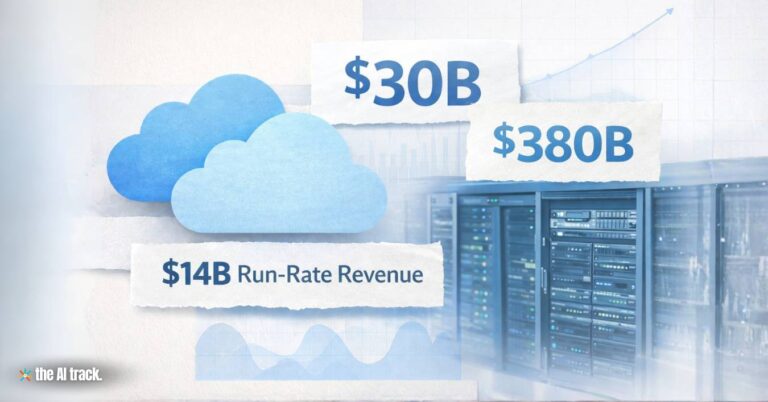
Anthropic Series G funding reached $30B at a $380B AI valuation, reporting $14B run-rate revenue and rapid enterprise AI adoption.

Anthropic launched Claude Opus 4.6 in February 2026 with 1M context (beta), faster coding, finance benchmark gains, and new security claims.
Read a comprehensive monthly roundup of the latest AI news!