Key Takeaway:
Google has activated Deep Think, a new reasoning-focused mode for Gemini 3, offering significantly higher performance on complex tasks through parallel hypothesis evaluation. The mode is now available exclusively to Google AI Ultra subscribers, arrives after the late-November Gemini 3 rollout, and is positioned as Google’s most capable reasoning model to date.
Google Launches Gemini 3 Deep Think – Key Points
Deep Think becomes available to Ultra subscribers (December 2025).
Google activated the feature following a safety testing period that began after the late-November launch of Gemini 3. Deep Think is accessible inside the Gemini app for Google AI Ultra subscribers paying $250/month, and Google continues to frame its rollout as part of a broader expansion of Gemini 3’s capabilities. With Gemini’s rapid user growth (Google reports **650 million monthly users)**the Ultra tier now unlocks both Deep Think and other premium features.
Major architecture difference: parallel hypothesis reasoning.
Deep Think processes multiple hypotheses simultaneously, allowing deeper analytical steps than Gemini 3 Pro, which is optimized for speed. Tulsee Doshi, Senior Director of Product Management at Gemini, emphasized that the mode is designed to handle complex math, science, and logic problems that challenge state-of-the-art models. This architecture allows the system to mimic human problem-solving processes by devoting more time and structured reasoning to difficult tasks.
Benchmark improvements show meaningful gains.
Google states that Deep Think is industry-leading on several high-difficulty reasoning benchmarks. Its internal evaluations show:
41% on Humanity’s Last Exam, a difficult test also cited in Tom’s Guide and Mashable coverage.
93.8% on GPQA Diamond, a PhD-level scientific reasoning benchmark.
Improved performance on ARC-AGI-2, used to assess advanced logical reasoning skills.
These metrics highlight Deep Think’s advantage in structured, multi-step reasoning over the faster Pro model.
Best use cases: coding precision, scientific inquiry, visualization tasks.
Deep Think consistently performs better on refined, nuanced code generation, multi-step logic, scientific reasoning, algorithm design, complex planning, and generating higher-quality visualizations. Google positions it as a tool for researchers, engineers, and professionals who need precision over speed, noting that many routine tasks should still be routed through Gemini 3 Pro.
Industry context: reasoning competition heats up.
Deep Think enters a tense competitive landscape as AI labs race to improve reasoning abilities. OpenAI’s o1 models and Anthropic’s Claude upgrades illustrate this shift toward thinking-mode architectures. Gemini 3’s launch reportedly caused OpenAI to lose 6% of its users in one week, according to Mashable’s reporting based on internal analytics. Despite mixed AI safety report cards across the industry (Google, Anthropic, and OpenAI all received average evaluations) Google continues to expand Gemini aggressively. The rollout also follows Google’s temporary decision to limit free prompts for its Nano Banana image generator, highlighting high demand across its ecosystem.
Activation process is built for simplicity.
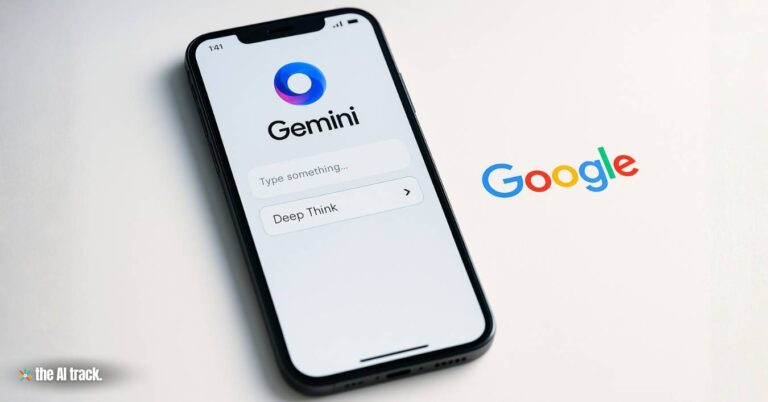
Ultra subscribers activate Deep Think by selecting it from the prompt bar in the Gemini app, switching to the Thinking option, entering a query, and waiting for notification when the response is ready. The interface remains straightforward, but Google encourages users to select Deep Think intentionally, using it only when the depth of reasoning is worth the longer response time.
Why This Matters
Deep Think marks Google’s most advanced entry into consumer-accessible reasoning systems, reinforcing its position in the escalating competition with OpenAI and Anthropic. Its benchmark strength supports applications in scientific research, complex planning, enterprise problem-solving, and high-precision engineering tasks. As Google pushes Gemini 3 deeper into mainstream consumer and enterprise workflows, Deep Think also signals the rise of tiered AI capability models, where the most advanced reasoning features sit within premium subscription tiers. The rapid uptake of Gemini, alongside the reported user losses at OpenAI, illustrates a shifting competitive balance that could shape how reasoning-capable AI systems evolve across both the consumer and professional markets.
This article was drafted with the assistance of generative AI. All facts and details were reviewed and confirmed by an editor prior to publication.
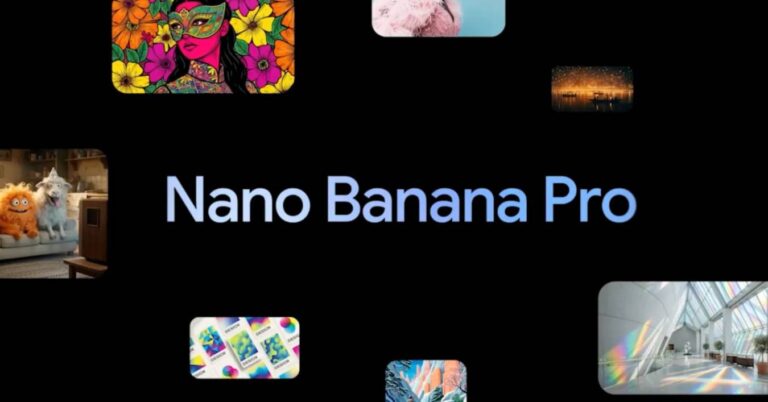
Google released Nano Banana Pro, the Gemini 3 Pro Image model from Google DeepMind, delivering high-fidelity visuals, multilingual on-image text, and SynthID-backed AI image verification across the Gemini app, Search, Workspace, Ads, and developer tools.

Google Translate broadens into learning with AI-personalized practice and Gemini-based live conversations, backed by 1T monthly translated words across Google services.
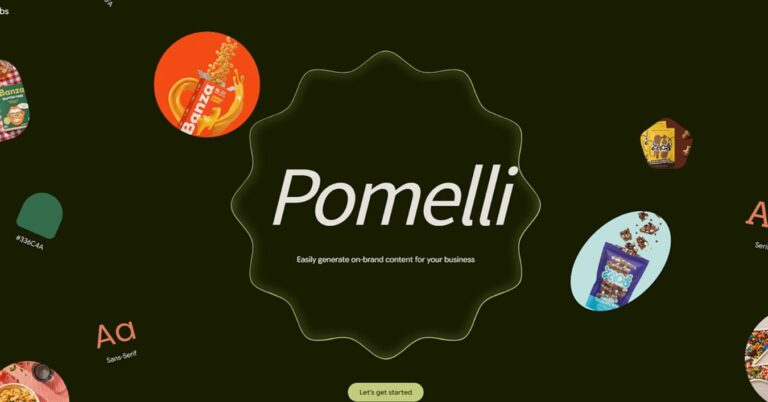
Google Labs and DeepMind launched Pomelli, an AI tool that builds a “Business DNA” to create branded social campaigns for SMBs. Beta in four countries.
Read a comprehensive monthly roundup of the latest AI news!