Key Takeaway
Meta signs content-licensing deals with CNN, Fox News, USA Today Network, People Inc, and several other publishers to supply real-time, link-based news and lifestyle content to its AI chatbot — marking a strategic shift after years of resisting compensation demands from media organizations and reflecting competitive pressure as the company seeks to strengthen its AI offerings.
Meta Signs Content-Licensing Deals with Major Publishers – Key Points
Meta confirms new paid licensing agreements with major publishers
Meta signs content-licensing deals that will pay CNN, Fox News, Fox Sports, Le Monde Group, People Inc, the Daily Caller, the Washington Examiner, USA Today, and the USA Today Network for permission to use their articles in its AI chatbot. The Facebook owner said the deals will enable it to surface “real-time” links and responses across global news, entertainment, lifestyle, and other verticals when users ask questions. Meta described the approach as delivering timely and relevant content tailored to user interests, with publisher material expected to begin appearing in Meta AI within days.
Agreements mirror and extend a previous multi-year licensing deal with Reuters in October 2024
A Meta spokesperson noted that the new commercial agreements are structurally similar to Meta’s multi-year deal with Reuters announced in October 2024, which included compensation terms not publicly disclosed. The current deals with outlets such as USA Today and People Inc are also multi-year and compensated, with publishers confirming that the terms will not be made public. Together, these arrangements continue Meta’s transition toward integrating verified publisher content directly into AI search, summaries, lifestyle recommendations, and news interactions, while contractually requiring attribution and links back to publisher websites.
Financial terms remain undisclosed, signaling sensitivity amid global copyright pressure
Meta has declined to release payment figures for any of the new agreements. The company continues to face scrutiny from regulators and publishers in the US, Canada, and Europe regarding the use of copyrighted text in AI training and output. After ending paid news partnerships in 2022 and removing the Facebook News tab in subsequent years, Meta signs content-licensing deals that indicate a strategic response to mounting demands for compensation, clearer rights management, and stable publisher relationships.
Meta’s competitive pressures and AI strategy shape the timing of the deals
The agreements arrive as Meta seeks to improve adoption of its AI tools following weak reception of its Llama 4 model. The company is investing billions in AI development and is reportedly considering budget reductions in its metaverse division to reallocate resources. With rivals aggressively pursuing their own licensing agreements, Meta aims to position its AI chatbot as a reliable, news-aware assistant grounded in authenticated publisher content.
People Inc becomes Meta’s first lifestyle content partner within a broader multi-platform strategy
People Inc, formerly Dotdash Meredith, serves as Meta’s first lifestyle content partner in the latest series of agreements. The company provides material across entertainment, home, food, health, and finance via brands including People, Allrecipes, Southern Living, Food & Wine, Verywell Health, and InStyle. The multi-year partnership ensures attribution and links back to People Inc websites and reflects the company’s strategy of partnering with AI leaders after earlier agreements with OpenAI and Microsoft.
Political-spectrum diversity is central to Meta’s strategic positioning
The publisher list spans conservative, centrist, and liberal outlets — Fox News, the Daily Caller, and the Washington Examiner alongside CNN and Le Monde. Meta states that integrating a wider set of viewpoints strengthens Meta AI’s ability to remain responsive, accurate, and balanced in fast-moving news cycles, reducing criticism of political bias and improving trust among users across the ideological spectrum.
News/Media Alliance responds with cautious optimism
Danielle Coffey, CEO and president of the News/Media Alliance, welcomed the development, noting that the agreements demonstrate market value for professional journalism and show that large-scale licensing is viable. She emphasized the need for strong legal certainty to ensure rights enforcement and equitable compensation as AI companies rely more heavily on publisher content to power their products.
Historical context: Meta previously reduced or blocked news distribution in several countries
In 2024, Meta removed the Facebook News tab in the US and Australia and blocked news access for Canadian users following legislative requirements for publisher compensation. These actions highlighted the company’s earlier resistance to mandatory payment frameworks. The current voluntary agreements reflect a notable reversal and signal a renewed willingness to cooperate with regulatory expectations and industry standards.
Why This Matters
Meta signs content-licensing deals that reshape how AI companies and publishers interact, setting a precedent for compensated, structured access to journalistic and lifestyle material. As real-time information becomes central to AI assistants, these partnerships may influence global regulation, competitive strategy, and publisher sustainability. They also demonstrate how diversified content sources — across political spectrums and lifestyle verticals — can strengthen AI reliability, trust, and user relevance.
This article was drafted with the assistance of generative AI. All facts and details were reviewed and confirmed by an editor prior to publication.

Explore the vital role of AI chips in driving the AI revolution, from semiconductors to processors: key players, market dynamics, and future implications.
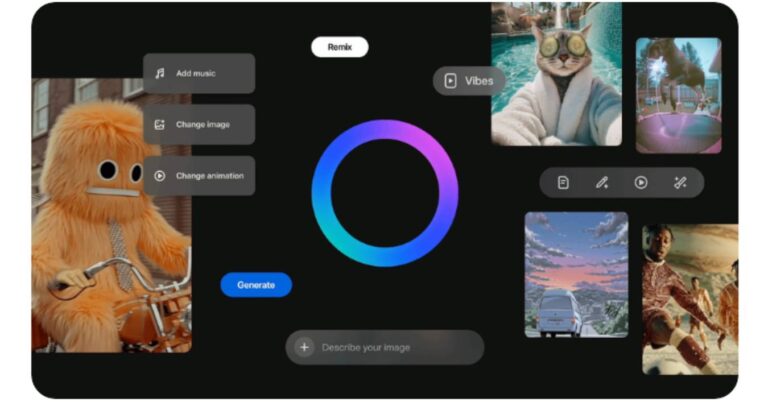
Meta introduces Vibes, a TikTok-style AI video feed in its Meta AI app, partnering with Midjourney and Black Forest Labs, excluding the UK.

Meta’s $14.8B deal with Scale AI secures key data infrastructure, elevates Alexandr Wang, and raises antitrust concerns over market consolidation.
Read a comprehensive monthly roundup of the latest AI news!