Key Takeaway:
Microsoft and OpenAI are finalizing a new agreement to extend their partnership while OpenAI restructures to give its nonprofit parent both control and a $100 billion equity stake in its for-profit arm, creating one of the largest philanthropic entities in the world. The evolving deal also introduces regulatory scrutiny, governance debates, revenue-sharing changes, and competitive implications for the AI industry.
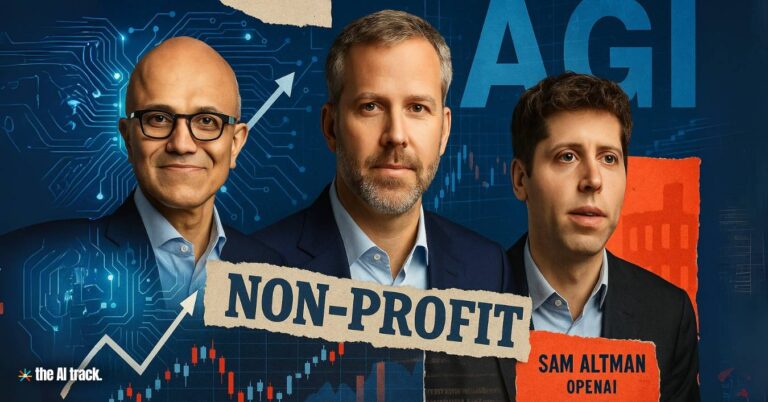
Microsoft and OpenAI Reach New Partnership Agreement – Key Points
Non-Binding Memorandum Signed (Sept. 11, 2025)
Microsoft and OpenAI signed a non-binding memorandum of understanding (MOU) for the “next phase” of their partnership and are working to finalize definitive terms, reaffirming a joint focus on safe, broadly accessible AI tools.
OpenAI Nonprofit Gains Equity Stake Exceeding $100 Billion
OpenAI Chair Bret Taylor said the nonprofit that controls OpenAI will hold an equity stake exceeding $100 billion in the restructured public benefit corporation (PBC), positioning it among the most well-capitalized philanthropic organizations globally.
Mission, Oversight, and Regulatory Scrutiny
The structure reaffirms OpenAI’s mission to ensure AGI benefits all of humanity. California AG Rob Bonta and Delaware AG Kathy Jennings have been reviewing the plan; Bonta’s office emphasized protecting charitable assets for their intended purpose.
Change from December 2024 Plan
In May 2025, OpenAI reversed a December 2024 blueprint that would have ceded voting power for easier fundraising, keeping the nonprofit parent firmly in control after feedback from civic leaders and regulators.
Microsoft’s Investment, Cloud Role, and Evolving Compute Strategy
Microsoft first invested $1 billion in 2019, later committing billions more and serving as OpenAI’s exclusive cloud provider. In January 2025, the pact was adjusted so OpenAI could build its own research compute, including a large Oracle-backed facility in Abilene, Texas; OpenAI is also diversifying infrastructure beyond Azure.
Exclusivity and Access in the New Phase
The non-binding deal signals potential changes to Microsoft’s previous exclusivity as OpenAI broadens partnerships (e.g., Oracle; reports also reference Google participation in broader infrastructure plans). Microsoft is pursuing continued access to OpenAI models under the reworked relationship.
Revenue-Sharing Trajectory Through the Decade
OpenAI is reportedly moving to reduce revenue-share to partners (including Microsoft) to ~8% by the end of the decade, down from about 20%, a shift that could retain $50B+ for OpenAI over time; server rental fees are also being renegotiated. (Reuters)
Conditions Around AGI Commercialization
Existing terms give Microsoft rights over pre-AGI technology only; if OpenAI’s nonprofit board deems AGI reached (outperforming humans at most economically valuable work), Microsoft’s commercialization rights would not apply. Microsoft seeks ongoing access even as governance evolves.
Ongoing Negotiations and Potential Delays
Reports in August 2025 suggested restructuring could slip into 2026 amid unresolved Microsoft-related issues; both firms state they are still working toward a definitive agreement. (PYMNTS.com)
Legal Challenges and Musk Lawsuit
OpenAI’s governance continues to face a lawsuit from Elon Musk, alleging deviation from its founding mission, adding pressure to demonstrate nonprofit control and safety alignment.
Why This Matters:
The Microsoft–OpenAI realignment will shape how frontier AI is governed, funded, and commercialized. A $100B nonprofit stake could redefine philanthropic capacity in technology, while potential shifts in exclusivity, revenue-sharing, and AGI clauses set precedents for platform power dynamics, safety standards, and competitive access across the AI ecosystem.
This article was drafted with the assistance of generative AI. All facts and details were reviewed and confirmed by an editor prior to publication.

Everything you need to know about the AI war: Explore the competitive AI landscape and learn how leading companies and nations are shaping the future with advanced AI technologies

OpenAI abandons for-profit shift and transitions into a Public Benefit Corporation while retaining nonprofit control to align with its AGI mission.

Elon Musk vs OpenAI in legal battle to prevent OpenAI’s transition to a for-profit entity, alleging anticompetitive practices and deviation from its founding principles.
Read a comprehensive monthly roundup of the latest AI news!