Key Takeaway:
At DevDay 2025, OpenAI introduced flashy products like AgentKit (a full-stack toolkit for building, deploying, and scaling AI agents) the ChatGPT App Store (opening third-party apps inside ChatGPT), Sora 2 and Codex (a GPT-5-based autonomous coding agent).
These moves aim at positioning OpenAI not just as a model provider but as the foundation of an AI ecosystem directly competing with Apple and Google in app distribution.
DevDay 2025: AgentKit and ChatGPT Apps – Key Points
Event and Announcements (Oct 6–7, 2025)
OpenAI unveiled GPT-5 Pro, Codex GA, Sora 2 API, and a compute partnership with AMD. But the strategic highlights were AgentKit and the launch of apps inside ChatGPT, signaling OpenAI’s transition from tools to platforms.
AgentKit General Launch
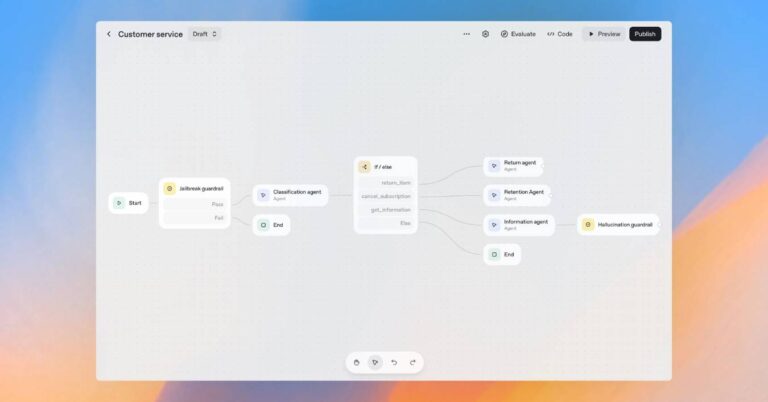
CEO Sam Altman introduced AgentKit as “everything you need to build, deploy, and optimize agent workflows with way less friction.” It unifies fragmented orchestration into a cohesive system:
Agent Builder: A drag-and-drop visual canvas for designing, previewing, and versioning multi-agent workflows, cutting iteration cycles by ~70%. LY Corporation built a work assistant in under 2 hours.
ChatKit: An embeddable, customizable chat interface for websites and apps. Canva Developers saved >2 weeks integrating a support agent; HubSpot now runs customer support agents with ChatKit.
Connector Registry: A centralized admin hub for managing connectors (Dropbox, Google Drive, SharePoint, Teams, MCPs), rolling out in beta via Global Admin Console for enterprise governance.
Evals for Agents: Expanded capabilities including datasets, trace grading, automated prompt optimization, and third-party model support.
Guardrails: Open-source safety layers to prevent jailbreaks, mask PII, and enforce policy.
Reinforcement Fine-Tuning (RFT): Generally available on o4-mini and in beta for GPT-5, adding custom tool calls to boost reasoning.
In a live demo, OpenAI engineer Christina Huang built an end-to-end workflow and two agents in <8 minutes, underscoring time-to-value. Production cases include Klarna’s agent handling two-thirds of tickets and Clay’s sales agent driving 10x growth.
Apps Inside ChatGPT
OpenAI added third-party apps directly to ChatGPT, turning the chatbot into an interactive platform:
Initial partners: Spotify, Canva, Coursera, Expedia, Booking.com, Figma, Zillow, with Target and Uber coming later in 2025.
Apps SDK enables developers to create apps for ChatGPT; monetization and a searchable app directory are planned.
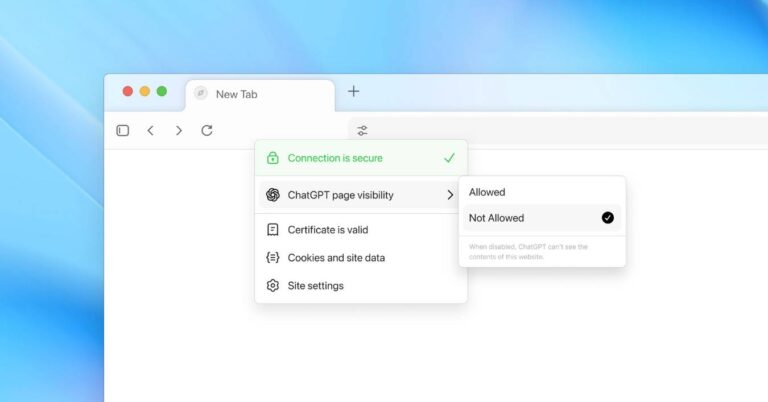
Users can connect apps seamlessly in chat (e.g., ask Spotify to generate a playlist or Zillow to show homes in budget).
The launch rolled out to all logged-in users outside the EU, on both free and paid plans.
CEO Altman: “This will enable a new generation of apps that are interactive, adaptive, and personalized — that you can chat with.”
With 800M weekly active users, the ChatGPT platform directly challenges Apple’s App Store and Google Play as a new digital distribution channel.
GPT-5-Codex Model
A specialized version of GPT-5 powers Codex. It acts as an autonomous teammate: it can work for hours on complex refactoring tasks (one case ran over 7 hours productively). Codex dynamically allocates compute effort depending on task complexity, enabling “adaptive thinking.”
Codex transitioned from research preview to a supported enterprise product. It now includes an SDK, Slack integration, and enterprise security/monitoring features. This upgrade makes Codex suitable for mission-critical work in large companies.
Case Studies and Examples
- Internal hackathons: Codex built “Storyboard,” a creative tool for film, in just 48 hours.
- Cisco adoption: 50% reduction in code review times and shortened project delivery from weeks to days.
- DevDay projects (arcade games, conference website) were built with Codex.
Codex is positioned as the proven ROI agent, unlike experimental consumer-facing agents. The SDK allows companies to embed Codex into workflows (e.g., CI/CD pipelines, self-evolving apps).
Sora 2 API
OpenAI rolled out the Sora 2 API for high-resolution video-audio generation, multi-scene control, watermarking, and a Pro tier. Immediate API access spurred developer demos and automation workflows, alongside renewed debates about deepfakes and content authenticity.
Infrastructure Scale and Environmental Context
These platform expansions will magnify compute demand. The Stargate Project (a US$500B OpenAI, Oracle, SoftBank, MGX joint venture) aims to supply the hyperscale data centers needed. The IEA projects data-center electricity use could hit 1,400 TWh by 2030, with AI a quarter of growth. Transparency rules like the EU AI Act may require OpenAI and its partners to disclose location-based energy and water metrics, tying sustainability to ecosystem scale.
Why This Matters:
AgentKit and ChatGPT Apps mark OpenAI’s evolution from an AI model company to a platform operator. By enabling developers to rapidly build and distribute agents and apps at massive scale, OpenAI is creating the foundations of an AI app economy. This has enterprise, consumer, and infrastructure implications: faster agent deployment, monetization opportunities, competitive pressure on Apple/Google, and an urgent need for sustainable AI infrastructure governance.
This article was drafted with the assistance of generative AI. All facts and details were reviewed and confirmed by an editor prior to publication.

AI Energy consumption is soaring, threatening sustainability. This article explores key challenges in AI energy use and presents solutions to balance innovation

Autonomous AI agents are redefining automation. Learn how major tech players are leading the development of this transformative technology.

OpenAI releases Sora 2, its AI video generator, featuring realistic physics, synced audio, cameo identity protection, provenance tools, and an iOS app.
Read a comprehensive monthly roundup of the latest AI news!