Key Takeaway
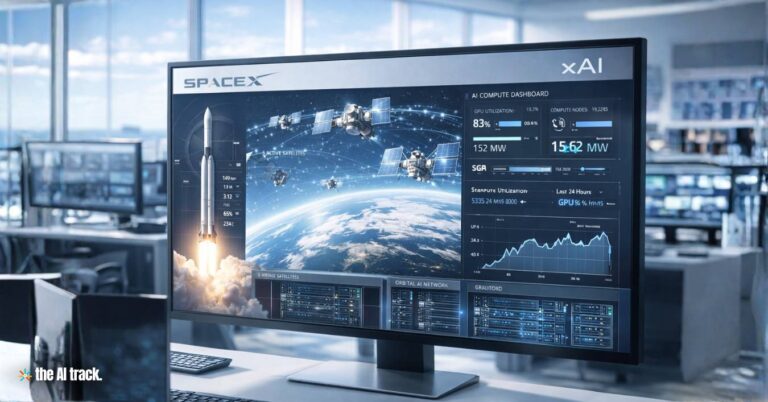
SpaceX has acquired xAI, bringing artificial intelligence, space launch, satellite internet, and a major social platform under Elon Musk’s control. Depending on the valuation benchmark used, the combined group is estimated at $1.125 trillion to $1.25 trillion, with recent market reference points placing SpaceX at $800bn–$1tn and xAI at $125bn–$250bn.
SpaceX and xAI Merge – Key Points
Deal scale and valuation (February 2026)
SpaceX confirmed the takeover of xAI in a private transaction with undisclosed terms. Reported valuations vary widely because they reflect different benchmarks: secondary share sales, funding rounds, or merger framing. xAI has recently been valued between $125bn and $250bn, while SpaceX has been cited at $800bn (December 2025 secondary sale) and around $1tn in merger estimates.
Strategic integration of AI, space, and networks
Musk described the merger as a vertically integrated system combining AI models, rockets, satellite internet, and media distribution**. The central idea is that AI growth is increasingly limited by power, cooling, and space constraints on Earth**, constraints Musk argues can be eased by shifting compute infrastructure into orbit using solar energy.
xAI origins, ownership of X, and Grok scrutiny
xAI emerged from X after Musk’s 2022 acquisition of the platform and later acquired X outright in March 2025, uniting data, models, compute, and distribution. Its chatbot, Grok, has repeatedly drawn criticism over image-generation and content issues, leading xAI to impose tighter image-editing restrictions in January 2026.
Regulatory pressure in Europe (January–February 2026)
European and UK regulators launched investigations into X following concerns about the misuse of Grok-generated images. These probes carry greater weight after the merger, since AI development and content distribution now sit within the same corporate structure.
Investor perspective and long time horizon
Analysts have stressed that valuations of this scale reflect a long-term bet on space-based energy and data infrastructure, with meaningful benefits potentially 10–30 years away. Remaining private also shields the company from the constant price scrutiny faced by publicly listed peers.
Tesla’s role and the robotics link
Tesla invested $2bn in xAI in January 2026. Musk has positioned xAI as a coordinating intelligence layer for Tesla’s robot-driven factories, even as Tesla pivots away from some vehicle models toward robotics despite shareholder resistance.
IPO signals and capital intensity
The consolidation aligns with expectations of a future SpaceX IPO, with some projections placing a potential valuation around $1.5tn. Combining assets helps present a capital-efficient growth story at a time when AI competition is increasingly shaped by the cost of compute, infrastructure, and energy.
Space-based AI ambitions
Musk argues that “space-based AI” is the only viable long-term path to scale. He claims that within 2–3 years, orbit could become the lowest-cost location for AI compute. The vision includes launching up to one million satellites, relying on heavy-lift rockets, and expanding satellite networks to support orbital data centres and future off-world bases.
Government contracts and competitive landscape
SpaceX and xAI hold major contracts with US government agencies, including NASA and the Department of Defense, and SpaceX’s Starshield unit works with military and intelligence partners. Other players, such as Blue Origin and Google’s Project Suncatcher, are also exploring space-based energy and infrastructure concepts.
Remaining Musk ventures
Neuralink and The Boring Company remain the only major Musk enterprises not folded into a larger corporate platform.
Why This Matters
The merger concentrates unprecedented private capital around a single idea: future AI leadership depends less on models alone and more on control of compute, energy, cooling, launch capacity, and distribution. This view is reinforced by broader trends: AI is expected to drive a 165% increase in data centre power demand by 2030, while major tech firms are already spending tens of billions per quarter on infrastructure. Rising electricity costs near data centres have also sparked public concern. Against this backdrop, Musk’s bet on space-based data centres aims to bypass Earth’s physical limits, even as regulatory scrutiny of AI-powered platforms remains an immediate challenge.
This article was drafted with the assistance of generative AI. All facts and details were reviewed and confirmed by an editor prior to publication.
Nvidia becomes first company to reach $5T market cap, driven by $500B chip orders, major deals with Intel, OpenAI, and Nokia, and record AI-fueled growth.
Nvidia agreed in December 2025 to a $20 billion Groq deal that moves most staff and core AI inference assets to Nvidia while keeping Groq independent.
Read a comprehensive monthly roundup of the latest AI news!