Key Takeaway
U.K. autonomous driving startup Wayve has raised 1.2 billion dollars in a Series D round at an 8.6 billion dollar valuation, with Uber able to invest up to an additional 300 million dollars in milestone-based capital, as major tech firms and global automakers back its map-free, end-to-end AI platform ahead of planned London robotaxi trials in 2026.
Wayve Raises 1.2 Billion Dollars – Key Points
The Story
Wayve, a London-based autonomous driving startup founded in 2017 by Cambridge researchers Amar Shah and Alex Kendall, has secured 1.2 billion dollars in Series D funding at an 8.6 billion dollar valuation. The round was led by Eclipse, Balderton, and SoftBank Vision Fund 2, and included Nvidia, Microsoft, Uber, and automakers Mercedes-Benz, Nissan, and Stellantis.
Wayve says it plans public robotaxi trials beginning in London in 2026 with Uber, with a wider rollout to more than 10 markets globally, and it plans deployments of its technology in Nissan vehicles from 2027.
The Facts
1.2 billion dollars raised in Series D, with milestone-based upside from Uber
Wayve raised 1.2 billion dollars. Uber can invest up to an additional 300 million dollars in milestone-based capital tied to progress toward deployment.
Valuation is 8.6 billion dollars
The Series D round values Wayve at 8.6 billion dollars, putting it among Europe’s most valuable startups.
Round leaders and key investors
The Series D round was led by Eclipse, Balderton, and SoftBank Vision Fund 2. It also included Nvidia, Microsoft, Uber, and automakers Mercedes-Benz, Nissan, and Stellantis.
Founded in 2017 by Cambridge machine learning researchers
Amar Shah and Alex Kendall launched Wayve in 2017; Kendall is CEO.
End-to-end deep learning, vision-first approach
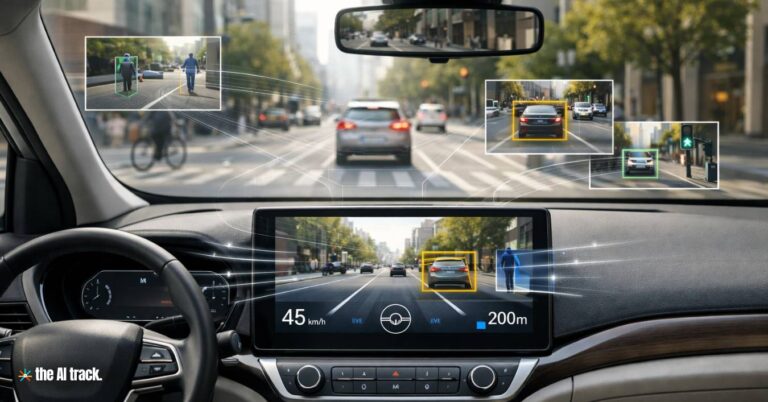
Wayve builds autonomous driving software and AI models using end-to-end neural networks trained on video and driving data, aiming to generalize driving behavior from patterns in the data.
No reliance on high-definition maps
Wayve’s approach avoids detailed 3D mapping and hand-coded rules, using camera-based learning and driving data instead.
Two product tracks: supervised and fully automated autonomy
Wayve develops supervised autonomy (“eyes on”) for assisted driving and fully automated systems (“eyes off”) aimed at robotaxis and certain environments.
Public robotaxi trials planned for London in 2026, with expansion to more than 10 markets
Wayve says public robotaxi trials will begin in London in 2026 with Uber, before expansion to more than 10 markets globally.
Nissan integration timeline: partnership signed in 2025; vehicles planned from 2027
Wayve signed a partnership with Nissan in 2025 to integrate its AI into driver-assistance systems, with vehicles featuring the tech planned to be deployed from 2027.
Prior funding exceeded 1 billion dollars before this round
Wayve had raised upwards of 1 billion dollars prior to the Series D.
Commercial thesis: autonomy layer for any vehicle
Wayve says it is building for a total addressable market spanning “every vehicle that moves,” framing its goal as an “autonomy layer” that can power vehicles broadly.
Sector constraints remain; Level 5 is still elusive
Autonomous driving has faced technical and regulatory hurdles, and Level 5 automation—cars that can self-drive anywhere without humans in the loop—has remained elusive.
Use Cases
Robotaxis in major cities
Wayve plans public robotaxi trials in London in 2026 with Uber, followed by a wider rollout to more than 10 markets.
Consumer vehicles with supervised autonomy
Wayve plans integration into Nissan driver-assistance systems, with vehicles featuring the tech expected from 2027.
Commercial and delivery fleets
Wayve has positioned its platform as deployable across vehicle categories, including commercial vehicles.
Background / Context
Wayve positions itself as a software-and-models company building an autonomy layer intended to work broadly across vehicles. Recent advances in AI have renewed optimism in the sector even as technical and regulatory hurdles persist.
On Tuesday, Alphabet-owned Waymo said it opened its robotaxi service to select public passengers in Dallas, Houston, San Antonio, and Orlando; Tesla CEO Elon Musk has continued promoting Tesla’s autonomous mobility ambitions, and Amazon’s Zoox opened rides to the public in 2025.
Why This Matters
Wayve’s investor mix—top-tier funds, major AI compute players, and automakers—signals a bet that end-to-end, map-light AI can scale into a broadly deployable autonomy layer. If Wayve meets its London 2026 trial plan and 2027 OEM deployment timeline, it strengthens the case that autonomy may reach consumers through advanced driver assistance and fleet rollouts before true Level 5 capability arrives.
This article was drafted with the assistance of generative AI. All facts and details were reviewed and confirmed by an editor prior to publication.

Qualcomm and Amazon partner to integrate advanced AI into vehicles, aiming to deliver more intuitive and personalized in-car experiences.

Autonomous AI Agents are moving from pilots to production. Updated 2026 analysis of Microsoft, NVIDIA, Google, Anthropic, use cases, risks, and governance.

AI predictions 2026 focus on measurable ROI – not demos. Explore 12 evidence-backed trends across enterprise workflows, agents, wearables, data scarcity, chips, robotics, and trust.

A curated collection of the most recent AI breakthroughs in environment and environmental protection, addressing climate challenges and safeguarding wildlife.
Read a comprehensive monthly roundup of the latest AI news!