
Key Takeaway
Elon Musk’s xAI accuses OpenAI of running a coordinated campaign to steal its proprietary source code and data center strategies through employee poaching. OpenAI rejects the allegations, calling them harassment in Musk’s escalating feud with his former company.
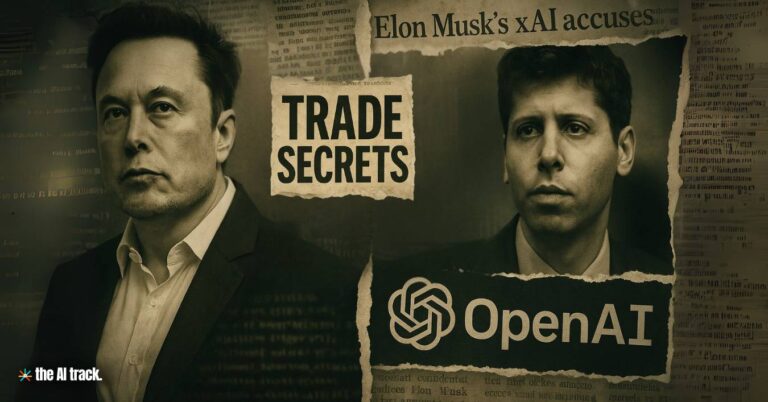
xAI accuses OpenAI – Key Points
Federal Lawsuit Filed in California (Sept 2025)
xAI accuses OpenAI in a federal complaint filed in California of engaging in an “unfair and unlawful campaign” to misappropriate trade secrets. These include its source code, training methods, and advanced data center deployment strategies. The lawsuit claims OpenAI sought unfair advantage in the AI race by targeting employees with inside knowledge.
Named Defendants and Engineers Involved
The lawsuit specifically identifies Xuechen Li, Jimmy Fraiture, and a senior finance executive as individuals who transferred xAI’s confidential material after joining OpenAI. Li is also involved in a separate trade secrets case. Court filings allege they passed along code, presentation materials, and strategic plans once employed by OpenAI.
Employee Poaching with Alleged Code Theft
OpenAI recruiter Tifa Chen allegedly coordinated simultaneous offers to multiple xAI engineers, offering multi-million-dollar compensation. In July 2025, Li uploaded the entire xAI code base to a personal cloud account. He later admitted in a handwritten confession that he misappropriated proprietary code and materials.
Encrypted Communications and Rapid Transfers
Timestamps show Li’s theft occurred within hours of encrypted Signal messages with Chen. When informed of the code copying, Chen allegedly replied “no way!” Shortly afterward, OpenAI extended him a lucrative job offer.
Additional Engineer Misappropriation
Jimmy Fraiture allegedly transferred source code using AirDrop “at least five times” after committing to OpenAI. He allegedly stole the majority of code under his supervision and experimental files tied to four xAI co-founders.
Executive Defection and “Secret Sauce” Claim
A senior finance executive defected to OpenAI, describing xAI’s data center strategy as its “secret sauce.” Despite lacking prior AI expertise, he took a role managing OpenAI’s data center spending strategy. When pressed on confidentiality agreements, he refused to sign termination documents and allegedly responded with expletives.
Expanded Allegations in Filing
The complaint describes OpenAI’s campaign as “deeply troubling” and asserts that the company “by hook or by crook… will do anything when threatened by a better innovator, including plundering and misappropriating the technical advancements, source code, and business plans of xAI.” This is one of several direct passages where xAI accuses OpenAI of intentional misappropriation.
OpenAI’s Response
OpenAI has dismissed the lawsuit, labeling it “the latest chapter in Mr. Musk’s ongoing harassment.” The company denies wrongdoing and has previously countersued Musk, accusing him of harassment and attempting to discredit its operations.
Broader Legal and Business Context
Musk co-founded OpenAI in 2015 with Sam Altman, Greg Brockman, and Ilya Sutskever, but left in 2018 after a failed bid for control and citing conflicts with Tesla. Since founding xAI in 2023 and launching Grok, Musk has become a fierce critic of OpenAI. In August 2025, Musk filed an antitrust lawsuit against Apple and OpenAI over alleged App Store favoritism toward ChatGPT.
Why This Matters
This lawsuit intensifies one of the most high-profile rivalries in AI. If successful, xAI could force OpenAI to dismantle models and workflows worth billions, while courts would set a precedent for how “AI trade secrets” are defined in cases of employee mobility. The case also reflects Musk’s strategy of using litigation to challenge OpenAI’s dominance in AI markets, particularly after the launch of xAI’s Grok chatbot in competition with ChatGPT. OpenAI’s dismissal of the suit as harassment indicates the dispute will likely become protracted, with significant industry implications.
This article was drafted with the assistance of generative AI. All facts and details were reviewed and confirmed by an editor prior to publication.

Explore the vital role of AI chips in driving the AI revolution, from semiconductors to processors: key players, market dynamics, and future implications.
Read a comprehensive monthly roundup of the latest AI news!