Key Takeaway
Google has acquired AI music creation startup ProducerAI (formerly Riffusion) and integrated it into Google Labs, aligning it with its Lyria 3 music model and broader generative AI strategy.

Google Acquires ProducerAI – Key Points
The Story
Google announced on February 24 that it has acquired ProducerAI, the AI music platform previously known as Riffusion, and is bringing its team into Google Labs and Google DeepMind. ProducerAI runs on a preview version of Lyria 3 and integrates with Gemini, Veo, and other Google AI systems, with outputs watermarked via SynthID. Google is also rolling out Lyria 3 music creation inside the Gemini app with 30-second generation as a baseline and an 18+ age gate, as scrutiny continues around AI music training data and copyright.
The Facts
ProducerAI joins Google Labs and DeepMind
The acquisition was confirmed in a Google blog post by Elias Roman, Senior Director of Product Management at Google Labs. LinkedIn posts from ProducerAI executives indicate the full team is joining Google across Labs and DeepMind.
Founded as Riffusion, viral in 2022
ProducerAI was founded by Seth Forsgren and Hayk Martiros. It began as Riffusion, an open-source hobby project that went viral in December 2022.
Raised $4 million in seed funding
In October 2023, the company raised a $4 million seed round led by Greycroft, with participation from South Park Commons and Sky9. The Chainsmokers joined as advisors.
Launched as ProducerAI in July 2025
The platform relaunched in July 2025 as ProducerAI, initially using its own AI model before integrating with Google systems.
Powered by Google AI stack
Under Google, ProducerAI uses:
A preview version of Lyria 3, developed by Google DeepMind, which can turn text and image inputs into audio outputs
Gemini for its conversational interface inside Google’s flagship chatbot app
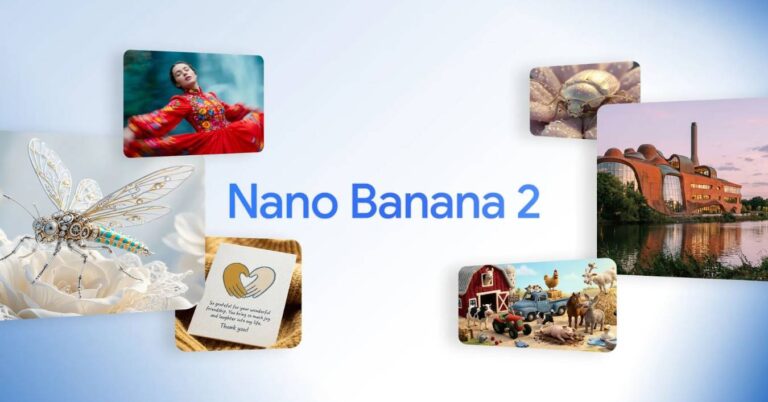
Nano Banana for album art creation
Veo for AI-generated music videos
All outputs include Google’s SynthID watermark to identify AI-generated content.
Competitive market context
ProducerAI enters a market dominated by better-funded competitors such as Suno, which raised $250 million in a Series C round at a $2.45 billion valuation and reports $200 million in annual revenue.
Legal pressure on competitors and industry lawsuits
Suno settled a copyright lawsuit with Warner Music Group and formed a licensing partnership, but continues to face infringement suits from Sony Music, Universal Music Group, and European rights organizations including Koda and GEMA. Separately, music publishers sued Anthropic for $3 billion in January 2026, alleging unlawful use of more than 20,000 copyrighted songs for AI training. A federal judge previously ruled that training on copyrighted data may be legal, but pirating it is not.
Ongoing AI dealmaking
The acquisition follows other AI-focused moves by Google, including bringing in leadership and engineers from voice AI startup Hume AI via a licensing deal.
Lyria 3 in Gemini (What It Does and How It Works)
Public rollout and baseline limits
Google is making Lyria 3 available in the Gemini app in beta, with access rolling out over days. Free subscribers are capped at 30-second outputs, while Google AI Plus, Pro, and Ultra subscribers get higher limits (exact limits not specified).
Eligibility and language availability
Lyria 3 music generation in Gemini is limited to users 18+ and is available globally in English, Japanese, Korean, Hindi, Spanish, Portuguese, German, and French, with more languages planned.
How you use it (Gemini and Workspace)
In the Gemini app, users select “Create music” from the tools menu. For Google Workspace environments, admins control access via existing Generative AI settings in the Workspace Admin console.
Inputs and outputs
Users can generate music using text prompts or uploaded images; Google also describes uploading videos for visual prompting. Gemini returns a track plus AI-generated album art created by Google’s Nano Banana model.
Quality and control claims
Google describes Lyria 3 as its “most advanced” music-generation model, aiming for high-fidelity music with natural flow “from note to note,” and says it was developed with input from producers and musicians to better understand musicality (rhythm through arrangement). Google also claims Lyria 3 generates its own lyrics, offers more control over style, tempo, and vocals, and produces more realistic and musically complex tracks.
Watermarking and detection
Google says tracks are embedded with SynthID and that users can upload an audio clip to Gemini to check whether SynthID is present.
Artist usage and Music AI Sandbox
Google said three-time Grammy-winning artist Wyclef Jean used Lyria 3 and Google’s Music AI Sandbox on his song “Back From Abu Dhabi,” including using Google’s tools to add a flute sound to an already recorded track.
Training data transparency and skepticism
Google has not disclosed specific training data sources for Lyria 3. A Google representative said the company was mindful of copyright and partner agreements and that Lyria 3 was trained only on music that YouTube and Google have a right to use under terms of service, partner agreements, and applicable law; public criticism on X questioned whether this explanation is sufficiently specific.
Why This Matters
Google is pairing an acquired, consumer-facing music product (ProducerAI) with a broader public rollout of Lyria 3 inside Gemini, including distribution controls (age gating, Workspace admin settings) and provenance tooling (SynthID plus detection). That combination could accelerate mainstream adoption of AI music tools while intensifying pressure on unresolved questions around training data rights and licensing norms.
This article was drafted with the assistance of generative AI. All facts and details were reviewed and confirmed by an editor prior to publication.

Universal Music Group and Stability AI announced a global alliance to co-develop artist-centered, responsibly trained AI music tools after Udio licensing deal.

Apple acquires Israeli AI startup Q.ai to expand its on-device audio, imaging, and sensing AI capabilities across AirPods, Vision Pro, and future hardware.
Universal Music Group and Stability AI announced a global alliance to co-develop artist-centered, responsibly trained AI music tools after Udio licensing deal.

OpenAI is intensifying its audio AI push with a new model and audio-first devices planned for 2026, aiming to make voice the primary AI interface.

Explore six free AI music apps that transform music creation and discovery. Isolate vocals, find hidden meanings in lyrics, discover new artists, and more!
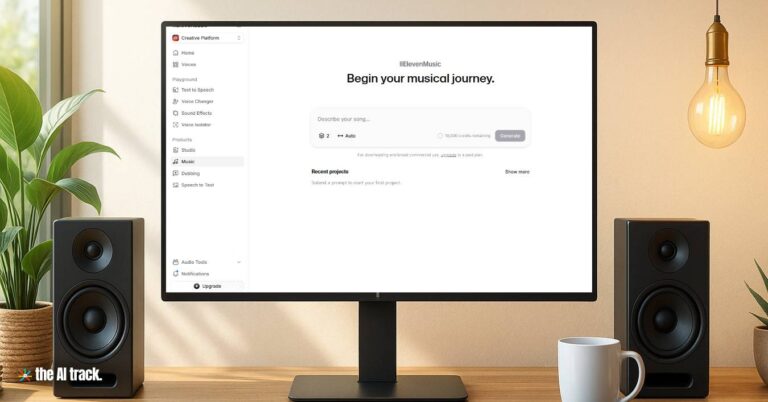
Eleven Music by ElevenLabs creates studio-quality tracks from text prompts in minutes. Discover its features, pricing, and why it’s perfect for beginners.
Read a comprehensive monthly roundup of the latest AI news!