Key Takeaway
Google has significantly upgraded NotebookLM and Video Overviews are now available in 80 languages, while Audio Overviews have been expanded from brief highlights into full-length, in-depth recaps across all supported languages. Built on Google’s Gemini AI model, the system not only translates but processes content natively in each language, preserving nuance, cultural context, and terminology. This positions NotebookLM as a powerful global tool for education, research, business, and content creation.
Google Expands Video Overviews in 80 Languages – Key Points
Video Overviews Expanded to 80 Languages
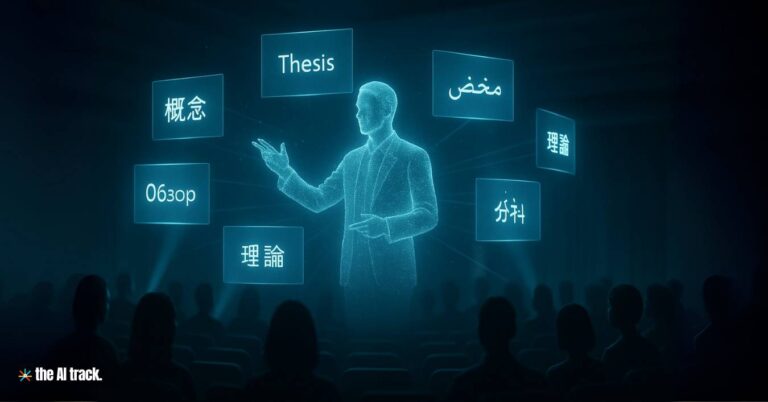
Initially launched in English last month, Video Overviews now support 80+ languages, including French, Spanish, German, Japanese, Tamil, Polish, Catalan, and Portuguese. These narrated videos (~7 minutes) use synthetic voices with slides containing text, charts, or diagrams, providing accessible, digestible presentations of user-uploaded notes, PDFs, and images.
Audio Overviews Now Full-Length Globally
Non-English Audio Overviews, once restricted to short highlights, now deliver comprehensive discussions that rival English versions. They synthesize insights across sources, extend to 10–15 minutes for long documents, and maintain natural pronunciation. Users still have the option to generate shorter highlight versions when needed.
Native Language Processing, Not Translation
Unlike translation-based tools, NotebookLM processes content directly in the original language. For example, a French academic paper is understood and summarized in French without intermediate translation into English. This ensures contextual integrity, accurate use of industry-specific jargon, and respect for cultural and academic conventions.
Cultural Sensitivity in Visual and Audio Output
NotebookLM adapts presentations to regional and cultural norms:
Arabic and Hebrew receive right-to-left layouts.
Japanese content integrates vertical text and proper script handling.
French vs. Quebecois usage (e.g., “week-end” vs. “fin de semaine”) is distinguished.
Spanish is adapted to regional varieties (Mexican, Colombian, Peninsular).
Visual design also varies: Scandinavian slides appear minimalist, Latin American slides more vibrant. Even color psychology adapts—red as good fortune in China, but caution in Western contexts.
Flexible Learning and Professional Applications
NotebookLM now benefits millions of users across education, research, and business:
- Students reviewing lectures before exams.
- Researchers analyzing dense academic material.
- Professionals summarizing meeting transcripts across languages.
- Marketing teams producing localized presentations for global audiences.
- Content creators generating authentic, culturally adapted video scripts and summaries.
Powered by Gemini AI
Built on Google’s Gemini AI language model, NotebookLM integrates advanced translation databases, cultural knowledge graphs, and native-language neural networks. This enables accurate recognition of regional dialects, tone, and cultural nuance, something conventional summarization tools fail to achieve.
Global Rollout and User Feedback Loop
The updates began rolling out this week worldwide under a controlled localization strategy. Google will collect user feedback to refine performance, enhance cultural accuracy, and support future mobile app integration.
Limitations Remain
Despite its sophistication, NotebookLM can still miss subtle nuance or require user verification against original materials. However, its native-language-first architecture, cultural adaptation, and user feedback loop make it one of the most advanced multilingual summarization tools currently available.
Why This Matters
NotebookLM’s expansion represents a paradigm shift in global AI accessibility. For the first time, non-English speakers (who make up ~75% of the world’s population) gain equal access to Google’s full-featured AI summarization tools. This feature enables:
- Education: universities and schools in Africa, Asia, and Latin America to deliver AI-powered summaries in local languages.
- Research: international collaborations without English dominance.
- Business: multinational corporations to work in authentic local languages.
- Content Creation: global creators to serve audiences in their linguistic and cultural contexts.
This article was drafted with the assistance of generative AI. All facts and details were reviewed and confirmed by an editor prior to publication.

Google Translate adds AI practice and Gemini-powered live translation in 70+ languages, launching first in the US, India, and Mexico.
Read a comprehensive monthly roundup of the latest AI news!