
Key Takeaway: OpenAI has launched GPT-5.3-Codex, a specialized “frontier model” designed to manage the entire software development lifecycle. The update introduces agentic capabilities that allow the model to operate a computer, run long-duration tasks exceeding 24 hours, and execute tasks 25% faster while maintaining a “high capability” safety rating for cybersecurity.

OpenAI Releases GPT-5.3-Codex and Frontier Orchestration Platform – Key Points
Model Launch and Accessibility
On February 5, 2026, OpenAI introduced GPT-5.3-Codex, an upgrade over the previous GPT-5.2-Codex and the general-purpose GPT-5.2. The model is currently available via paid ChatGPT plans through the command line (CLI), IDE extensions, the web interface, and the new macOS desktop app, which surpassed 500,000 downloads within days of its release. While API access is currently unavailable, OpenAI confirmed it is coming soon and will feature a 25% increase in interaction speed. Free users currently remain limited to GPT-5.2-Codex. This release was synchronized to land at the exact same moment as Anthropic’s Claude Opus 4.6, marking a high-stakes escalation in the “AI coding wars.”
Benchmarking and Technical Performance
According to OpenAI’s testing, GPT-5.3-Codex sets new industry highs on SWE-Bench Pro (scoring 57%) and Terminal-Bench 2.0 (scoring 77.3%), while showing strong results on OSWorld (64%) and GDPVal. The Terminal-Bench 2.0 result represents a 13-percentage-point leap over GPT-5.2-Codex (64.0%) and significantly outpaces Anthropic’s Opus 4.6 (65.4%). Infrastructure and inference stack optimizations, specifically the use of NVIDIA GB200 NVL72 Blackwell systems, allow the model to run 25% faster while using less than half the tokens of its predecessor for equivalent tasks. This efficiency facilitates long-running agentic processes; in one test, the model spent over 24 hours and millions of tokens to build two fully functional web-based games.
The “Instrumental” Self-Creation Claim
OpenAI clarified that GPT-5.3-Codex was “instrumental in creating itself,” making it the company’s first model to assist in its own development. The Codex engineering team utilized early versions of the model to debug its own training runs, manage its own deployment infrastructure, and diagnose test results. Internal reports indicate the model helped identify context-rendering bugs, causes of low cache hit rates, and assisted in scaling GPU clusters in response to real-time traffic changes during the launch. OpenAI CEO Sam Altman noted that using the model accelerated the shipping of the final product.
Expanded Lifecycle Scope and Intent Understanding
The 5.3 update expands Codex’s utility to “all of the work in the software lifecycle,” including writing Product Requirement Documents (PRDs), user research, monitoring, and non-coding tasks like building slide decks and spreadsheets. A major feature is “mid-turn steering,” which provides frequent progress updates and allows users to guide the model mid-task without a loss of context. Users can also choose between “pragmatic” or “friendly” personalities. Furthermore, the model better understands intent; “underspecified” prompts (e.g., “make me something pretty”) now produce richer, more functional results with sensible defaults and improved design features for web-based interfaces.
Cybersecurity Safeguards and Infrastructure
OpenAI classifies GPT-5.3-Codex as having “high capability” for cybersecurity tasks under its Preparedness Framework,. the first model to receive this classification. It has been trained specifically to identify software vulnerabilities under a safety stack that includes dual-use safety training and automated monitoring. To support the industry, OpenAI launched **”Trusted Access for Cyber,”** an identity-based framework for verified defenders, and committed $10M in API credit grants through its Cybersecurity Grant Program. The company also expanded the private beta of its security research agent, Aardvark, and partnered with open-source maintainers like Next.js for codebase scanning.
Frontier Platform and Governance
To manage these agents at scale, OpenAI launched Frontier, a centralized orchestration platform for building and governing enterprise AI agents. Frontier acts as a “Semantic Operating System” that connects data warehouses, CRMs (like Salesforce), and internal applications to create a shared business context. Unlike traditional models, Frontier assigns agents persistent identities (similar to employee IDs) and includes built-in evaluation dashboards to monitor success rates, accuracy, and latency. The platform supports an open architecture, allowing organizations to govern agents built on OpenAI’s models as well as those from competitors like Google, Microsoft, and Anthropic. Early adopters and pilots include HP, Intuit, Oracle, Uber, State Farm, Cisco, T-Mobile, and the Argentinian financial institution BBVA.
Economic Impact and Market Dynamics
The shift toward agentic platforms occurs as enterprise spending on LLMs reached an average of $7 million in 2025, 180% higher than in 2024, according to research by Andreessen Horowitz. While OpenAI’s enterprise “wallet share” is projected to shrink from 62% in 2024 to 53% in 2026, the company is intensifying its efforts through strategic moves, including a $200 million partnership with Snowflake to bring GPT-5.2 capabilities directly to 12,600 customers. This competition is set against a difficult labor market where nearly 55,000 job cuts were attributed to AI in late 2025, leading U.S. Treasury Secretary Scott Bessent to urge professionals to become “AI native.”
Why This Matters:
The release of GPT-5.3-Codex and the Frontier platform marks a transition from AI as a “coding assistant” to AI as a “software engineer collaborator.” By integrating mid-turn steering, long-running agentic execution, and specialized cybersecurity protections, OpenAI is positioning its models to handle professional, end-to-end workflows that were previously the sole domain of human developers and project managers. The staggering financial stakes, evidenced by OpenAI’s $1 trillion in compute-related obligations and Anthropic’s $350 billion valuation, underscore the race to become the primary “operating system” for the modern enterprise.
This article was drafted with the assistance of generative AI. All facts and details were reviewed and confirmed by an editor prior to publication.

Anthropic launched Claude Opus 4.6 in February 2026 with 1M context (beta), faster coding, finance benchmark gains, and new security claims.
ChatGPT 5.2 launched on Dec 11, 2025 with GDPval 70.9%, long-context gains to 256k tokens, stronger tool use, and 30% fewer errors.

AI predictions 2026 focus on measurable ROI – not demos. Explore 12 evidence-backed trends across enterprise workflows, agents, wearables, data scarcity, chips, robotics, and trust.

Autonomous AI agents are redefining automation. Learn how major tech players are leading the development of this transformative technology.

AWS introduces Kiro, an AI-driven coding assistant designed to enhance developer productivity through real-time code generation and multimodal inputs.
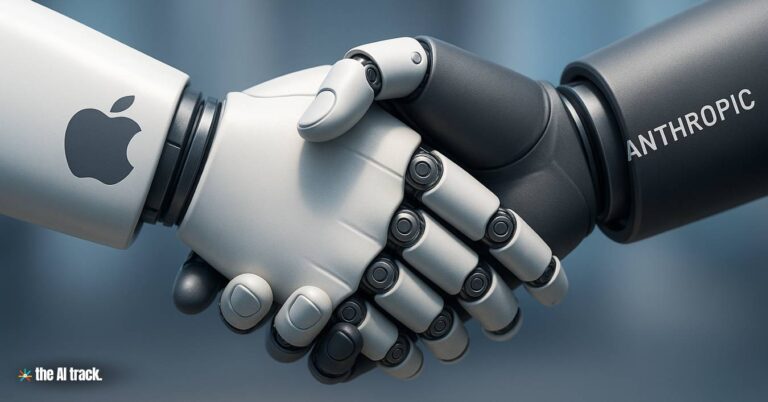
Apple and Anthropic are testing a Claude Sonnet-powered Xcode platform that automates code writing, UI testing, and debugging using vibe coding. Public launch pending.

Alibaba’s Qwen3‑Coder‑480B-A35B-Instruct offers enterprise-grade, long-context open-source AI coding support rivaling top proprietary models.
Read a comprehensive monthly roundup of the latest AI news!