Key Takeaway
Roblox has launched an open beta of its “4D” AI creation toolset, letting developers and players generate interactive, physics-driven 3D objects from prompts. Built on the Cube Foundation Model, it upgrades AI creation from static meshes to functional gameplay objects that move and respond as players expect.
Roblox Releases 4D Creation Toolset – Key Points
Open beta launch of 4D creation tools powered by the Cube Foundation Model (February 2026).
4D creation is now in open beta, following early access since November 2025. Cube was introduced in March 2025 for AI 3D generation, and Roblox says it has already helped generate over 1.8 million 3D objects since rollout. “4D” refers to interactivity over time, not a literal fourth dimension.
From static 3D assets to functional, behavior-aware objects.
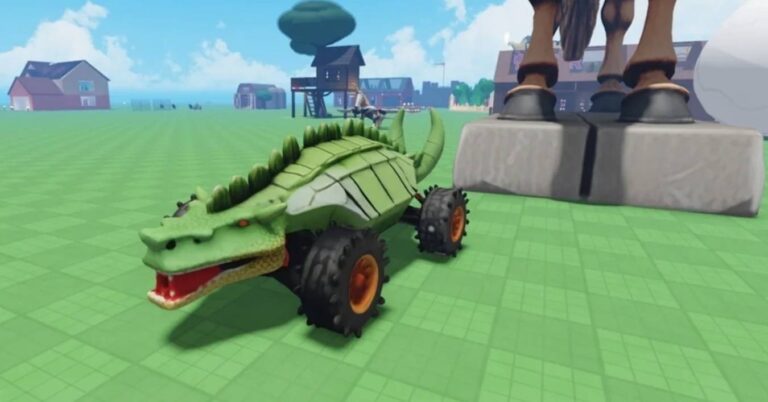
4D generation targets objects that work, not just look right—items can move, react, and support gameplay interactions through built-in behaviors like physics response and player input handling.
Schema-based generation defines structure and function.
The beta launches with two schemas:
Car-5 (a five-part vehicle: body + four wheels)
Body-1 (single-mesh items like a box or sculpture)
Schemas enforce the required structure so scripted behaviors attach correctly, and Roblox frames this as the foundation for an open-vocabulary schema system that can scale toward thousands of object types.
Driveable vehicles with adaptive physics and scripting.
Car-5 enables driveable cars where parts work independently (e.g., spinning wheels and opening doors). Scripts are retargeted to the generated object’s unique proportions so behaviors still work even when shapes and sizes vary—key for reliable real-time generation.
In-experience creation and player-facing prompts.
Roblox is emphasizing in-experience creation: creators can enable 4D generation inside a game so players can prompt functional objects mid-session—generate a car, get in, and drive immediately.
Live production example: Wish Master and measurable engagement gains.
Wish Master, developed by Laksh, demonstrates the system in the wild: players can generate cars, planes, and dragons. During early access, players generated 160,000+ objects using 4D tools, and users who engaged with 4D generation showed an average 64% increase in play time.
Iterative improvement driven by player behavior.
Real-time prompting creates real-world edge cases: players ask for nonexistent items or phrase wishes unpredictably. Ongoing improvements focus on interpreting what players actually mean, not just what they typed.
Roadmap toward full scene generation and broader AI tooling.
The longer-term direction is bigger than objects: Roblox describes a path toward generating full scenes—assets, environments, code, animations, and behaviors—through natural language inside Roblox Studio. The platform is also developing reference-image-to-3D generation to create detailed models that match an image’s style.
Research direction: real-time dreaming and world models.
Roblox is also exploring AI world models via real-time dreaming. In an early demo shown by SVP of engineering Anupam Singh, a Viking-themed world responded to prompts by adding a tsunami and then generating a boat for the character to board. Senior director of product Karun Channa describes the work as research-stage, with no release timeline. CEO David Baszucki has also shared demonstrations of this direction.
Launch amid ongoing child-safety scrutiny and regulatory pressure.
The open beta arrives amid lawsuits and investigations tied to child safety. Roblox has recently implemented mandatory facial age verification for chat access globally, while some countries have restricted or banned the platform. These issues remain central as Roblox expands AI-powered, player-driven creation.
Why This Matters
Roblox is pushing AI creation from “asset making” into gameplay making, objects that come with structure, behavior, and physics baked in. The engagement results from Wish Master (160,000+ objects; 64% more play time among users who engage with 4D creation) suggest this could reshape how players spend time in experiences. At the same time, more powerful player-generated functionality increases the stakes for moderation, safety, and trust, especially under tighter age verification and ongoing scrutiny.
This article was drafted with the assistance of generative AI. All facts and details were reviewed and confirmed by an editor prior to publication.
Meta debuts SAM 3 and SAM 3D, bringing open-vocabulary vision and single-image 3D reconstruction to creators and researchers via a hybrid human-AI data engine.

Discover how World Labs’ AI transforms single images into interactive, immersive 3D worlds, changing the future of content creation.

Tencent’s Hunyuan3D-2.0 offers text-to-3D, game-ready assets, and open-source access, accelerating China’s AI race against U.S. rivals.

Roblox open-sources Cube 3D, a generative AI model for 3D object and scene creation, launching a beta mesh generation API to streamline game development.
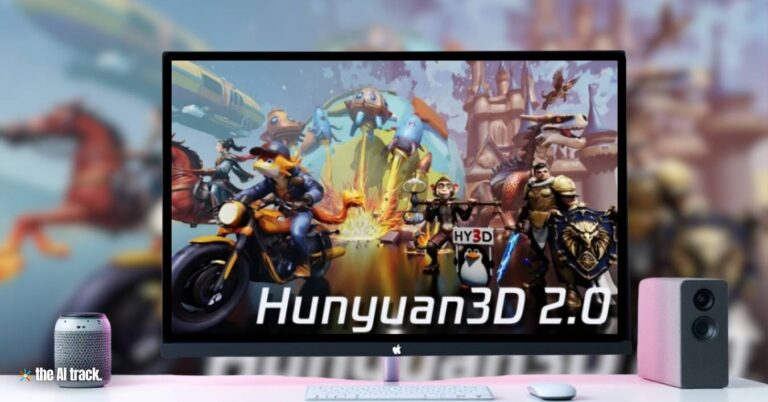
Tencent’s Hunyuan3D 2.0 generates 3D models in seconds from images or text, revolutionizing design workflows. Open-source and accessible worldwide.
Read a comprehensive monthly roundup of the latest AI news!