Key Takeaway
Microsoft has launched its own AI models (MAI Models: MAI-Voice-1 and MAI-1-preview) signaling a move to reduce reliance on OpenAI amid growing tensions over governance, investment clauses, and competition. These models, trained on Microsoft’s own infrastructure and developed by an in-house MAI team, represent a deeper shift toward independence.
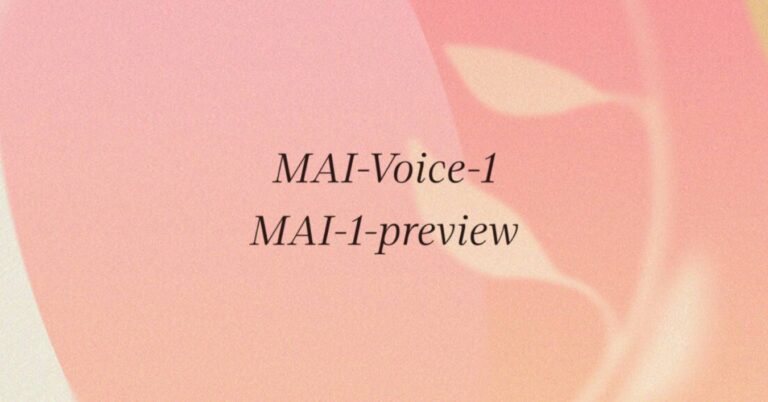
Microsoft Launches MAI Models – Key Points
MAI Models Released
On August 29, 2025, Microsoft announced the laundh of MAI Models: MAI-Voice-1 and MAI-1-preview, the first in-house models branded under “Microsoft AI (MAI).” MAI-Voice-1 converts text to speech, capable of producing 1 minute of audio in under 1 second on a single GPU, according to Microsoft. Independent testing by PCMag reported results closer to 3–4 seconds per clip, still far faster than competing solutions.
Users can try MAI-Voice-1 directly in Copilot Labs (audio-expression demos), selecting “Emotive” for varied voices/styles or “Story” for audiobook-style narration. The model already powers Copilot Daily (news, weather, tips recaps) and Copilot Podcasts (AI-generated multi-speaker dialogue), positioning it against Google’s NotebookLM. Microsoft frames voice as the interface of the future for AI companions, emphasizing high-fidelity, expressive audio across single- and multi-speaker scenarios.
Foundation Model in Testing
MAI-1-preview is Microsoft’s first fully internally trained foundation model, implemented as a mixture-of-experts (MoE) system and trained/prompt-tuned across ~15,000 Nvidia H100 GPUs. It is designed for instruction-following and delivering helpful answers to everyday queries, highlighting a consumer-oriented design. Currently available on LMArena (community benchmarking) and to trusted testers via API application, it will roll out in the coming weeks for targeted text-based Copilot use cases to gather feedback before a broader deployment.
Microsoft’s Investment in OpenAI
Microsoft has invested over $13 billion in OpenAI, supplying Azure cloud infrastructure to run its models. This gave Microsoft privileged early access to GPT-4 and successors, powering Copilot across Microsoft 365, Windows, and enterprise products.
OpenAI’s Growing Independence
OpenAI has grown into a direct competitor, operating subscription products such as ChatGPT Plus, ChatGPT Enterprise, and developer APIs. Its expansion into consumer and business services dilutes Microsoft’s exclusivity and positions OpenAI as a rival in distribution and monetization.
Contractual Tensions over AGI Clause
The Microsoft–OpenAI contract stipulates termination if OpenAI achieves artificial general intelligence (AGI). Reports suggest Microsoft is negotiating changes to preserve access to OpenAI technology and protect its $13B stake should AGI be declared.
Governance Shift at OpenAI
OpenAI plans to transition from a capped nonprofit to a for-profit public benefit corporation (PBC), subject to investor consent, making Microsoft’s position pivotal. The move raises questions about balancing mission commitments with commercial imperatives.
MAI Models Development Strategy and Talent Expansion
Microsoft states the MAI team has been building both models since 2024, reflecting long-term planning rather than a reactive pivot. The company is expanding hiring for MAI (research/engineering roles) and explicitly invited applicants alongside the launch, underscoring a sustained in-house capability build-out.
Compute and Platform Strategy
Microsoft highlights an active roadmap of compute for the MAI Models, noting a next-generation GB200 cluster now operational. Strategically, Microsoft says Copilot will orchestrate specialized models—combining in-house MAI, partner models, and open-source innovations—to optimize outcomes across diverse user intents and use cases.
Microsoft’s Strategic Hedge
By developing the MAI Models in parallel with its OpenAI partnership, Microsoft reduces dependence and prepares for potential contractual or competitive fallout. This hedge ensures resilience whether OpenAI proceeds with structural shifts, pushes toward AGI, or competes more directly in Microsoft’s core markets.
Why This Matters
The launch of the MAI Models marks a structural evolution in Microsoft’s AI strategy. Beyond product diversification, the scale and architecture choices (MoE, ~15k H100s, GB200 ramp), consumer-facing voice and text capabilities, and active recruitment reveal a determined push for independence. This dual-track approach, maintaining ties to OpenAI while building proprietary technology and orchestrating multiple model sources, could reshape competitive dynamics across enterprise, consumer, and developer markets in the next phase of the AI race.
This article was drafted with the assistance of generative AI. All facts and details were reviewed and confirmed by an editor prior to publication.
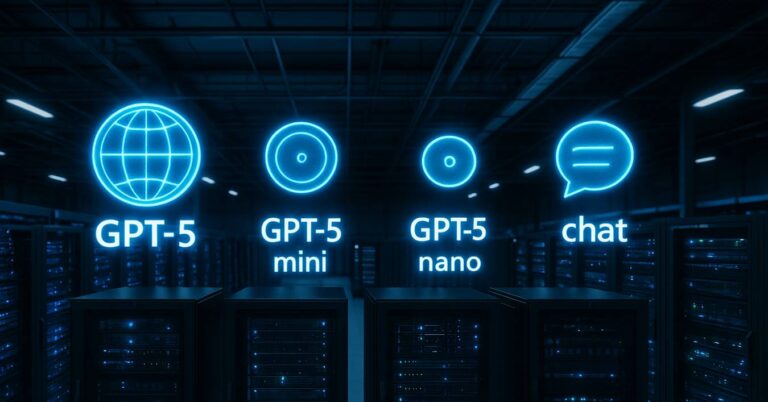
Microsoft integrates GPT-5 into Windows, 365 Copilot, GitHub, and Azure AI, adding Smart Mode, multiple model variants, and enterprise-grade governance.
Read a comprehensive monthly roundup of the latest AI news!