
Introduction (From Hype to Hard Value)
2026 looks like the year AI stops being judged by demos and starts being judged by outcomes. Most organizations already “use AI,” but the hard part is scaling it into mission-critical workflows, proving ROI, and operating it safely under real constraints: data quality, governance, regulation, and compute supply. Research progress will continue, but the competitive edge shifts toward execution, process redesign, data readiness, integration, and measurable performance. In short: fewer magical copilots, more operational discipline. These AI predictions 2026 focus on what actually converts AI investment into durable value.

1) Enterprise AI moves into mission-critical workflows
AI shifts from “side jobs” to core processes: revenue operations, finance close, procurement, customer support, compliance.
- The bottleneck becomes workflow redesign (not prompts): roles, handoffs, exception handling, audit trails.
- “AI value” increasingly means cycle-time reduction + error reduction + throughput, not novelty.
- Scaling remains rare in practice – most organizations still struggle to move beyond pilots.

2) Agents face a reality check: wins go to governance + data + integration
Agentic AI adoption grows, but “autonomy” remains fragile without tight controls.
- Winners treat agents as controlled systems: permissions, tool access, logging, approvals, rollback.
- “Agent failure” becomes a common story: cost overruns, hallucinated actions, security gaps, broken integrations.
- In 2026, agents are mainly about workflow autonomy, not “general intelligence.”
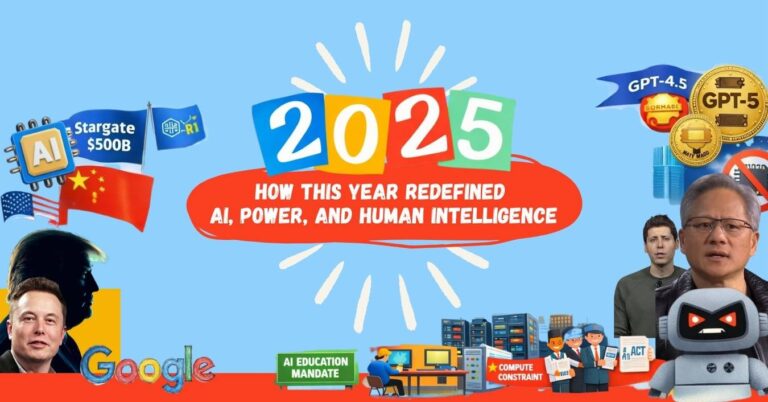
AI Advancements 2025 reviews the breakthroughs, power shifts, and global forces that shaped artificial intelligence this year: from reasoning models and infrastructure to regulation and geopolitics.

3) AI control planes & multi-agent orchestration become a product category
Enterprises try to prevent “agent sprawl” with orchestration layers: routing, policy, monitoring, evaluation.
Multi-agent systems become normal for: research → draft → verify → execute → report loops.
Integration depth (ERP/CRM/ticketing/BI) becomes the differentiator, not model branding.
Across these AI predictions 2026, this is one of the clearest signs that systems, not models, will dominate implementation.

The Best FREE AI Tools, meticulously curated to enhance your daily activities. Every tool is tested by The AI Track team, ensuring we only present the best.

4) The platform war intensifies: distribution beats raw model advantage
As model quality converges, advantage shifts to distribution + default placement (OS, browser, enterprise suite).
- Ecosystems win by bundling: chat + search + tasks + files + meetings + security.
- Brands that “own the desktop” (and the admin console) gain leverage in pricing and lock-in.

5) Wearables & ambient AI expand the battleground
“Personal AI” moves beyond phones/PCs into wearables, especially smart glasses, pushing hands-free, contextual assistance.
- The near-term use case is capture + recall + contextual Q&A, not sci-fi autonomy.
- Expect privacy, consent, and workplace policies to become adoption blockers—and differentiators.
The AI Track AI Dictionary is a comprehensive resource for definitions for all fundamental AI terms, in two ways: in a formal manner and in plain language

6) High-quality data becomes the scarce, valuable asset (and a moat)
Competitive advantage shifts to proprietary, high-signal data + labeling + governance.
Data scarcity is increasingly discussed as a constraint on scaling with human-generated corpora.
Synthetic data grows, but teams learn it must be anchored and validated to avoid drift and contamination.
For many AI predictions 2026, this is the hidden driver: data quality determines reliability and ROI.

All you need to know about the critical components of AI infrastructure, hardware, software, and networking, that are essential for supporting AI workloads.

7) Small/specialized models go mainstream, with hybrid routing
“Right-sized AI” wins in regulated or latency-sensitive environments.
- Hybrid routing becomes standard: small model first, frontier model only when needed.
- Domain tuning (legal, healthcare, industrial) becomes more valuable than generic capability.

Our extensively tested prompts collection equips you with starter phrases to get the most value from ChatGPT for everyday tasks like writing emails, summarizing reports, brainstorming ideas, and more. This guide will demonstrate how strategic prompting can save time.

8) Efficiency becomes the new scaling strategy (and compute sovereignty accelerates)
Performance-per-watt and cost-per-inference become board-level metrics.
- Hardware-aware optimization grows: quantization, distillation, on-device inference, edge deployment.
- Geopolitics keeps shaping compute access: U.S. export controls and China’s responses drive national strategies and supply-chain workarounds.
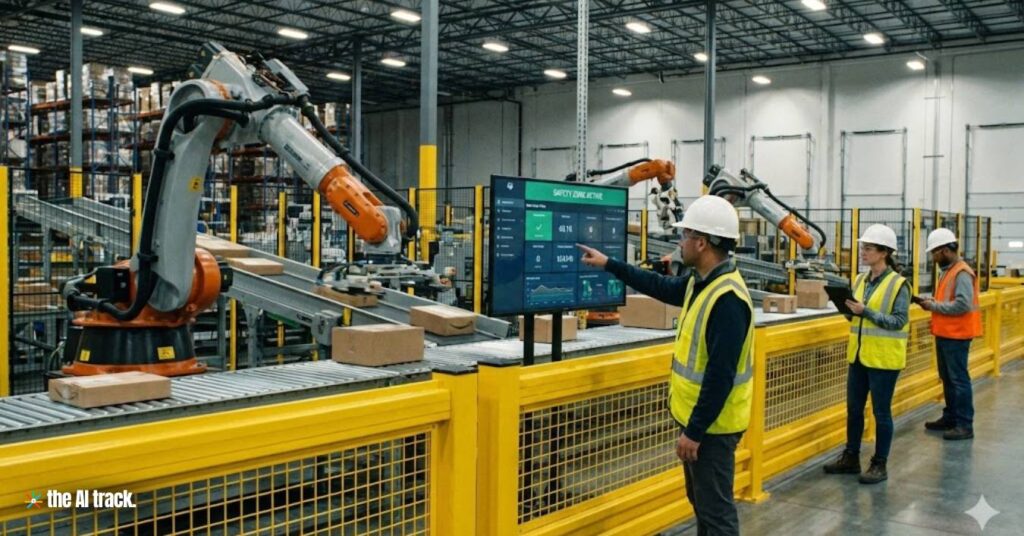
9) Robotics heats up—but “physical AI” is still deployment-limited
Robotics investment expands; “physical AI” is positioned as a strategic category.
- Humanoids show progress, but real-world autonomy, dexterity, and safety remain hard; demos can outpace product readiness.
- Near-term value concentrates in constrained environments (warehouses, factories, assisted operations), not fully general home robots.

Discover the pivotal role of AI in healthcare, from enhancing workflow efficiencies to facilitating personalized medicine, AI is revolutionizing medical practices

10) AI accelerates scientific and medical breakthroughs—practically, not magically
Foundation models for biology/chemistry push discovery workflows forward (structure + interaction prediction).
- Drug discovery pipelines increasingly integrate AI for target ID, screening, and design.
- Expect more “AI as lab infrastructure”: hypothesis generation, experiment planning, and literature-to-protocol automation.

AI disinformation detection tools offer a powerful defense against fake news. This article explores 10 free tools that help fact-check, verify, and fight misinformation.

11) Trust becomes a budget line: deepfakes, identity, liability, and regulation collide
Deepfakes pressure identity systems; a widely cited prediction is that many enterprises will no longer trust face biometrics alone by 2026.
- Disinformation security + provenance tooling shifts from “nice to have” to mandatory in media, finance, and public sector.
- Liability rises: procurement favors vendors with auditable guardrails, evaluations, and incident response.
- Regulation fragmentation persists (U.S. vs states + EU pressure), raising compliance costs and slowing rollouts.

12) The ROI gap persists—adoption rises, scaling remains hard (the 2026 narrative)
Expect more “AI everywhere” headlines, but fewer enterprise-wide rollouts than hype implies.
- Survey signals suggest only a small share report full-scale deployment, reinforcing the “reckoning” theme.
- The winners are the teams that can:
- redesign processes end-to-end
- secure high-quality data
- operationalize governance
- measure outcomes with credible KPIs
The message of AI predictions 2026 is consistent: the gap between “using AI” and “getting value from AI” is still the main battleground.

Explore 50+ viral ChatGPT 4o image prompts—from memes to comic strips to pet makeovers. Try them now and unleash your visual creativity.
2026 Is a Decision Year, Not a Prediction Year
By 2026, the question around AI will no longer be “What can it do?”
That question has already been answered.
The real question is: Who can operate it at scale, safely, and with measurable return?
These AI predictions 2026 point to a clear inflection point. AI is moving out of the innovation lab and into the operational core of organizations. That transition is unforgiving. It exposes weak data foundations, unclear ownership, fragile integrations, and governance gaps that hype conveniently ignored.
The companies that succeed in 2026 will not necessarily have the most advanced models. They will have:
- clearly defined workflows redesigned around AI,
- disciplined use of agents with controls and auditability,
- high-quality proprietary data treated as a strategic asset,
- cost-efficient architectures tuned for real workloads,
- and trust built into systems from day one.
Everyone else will still be “using AI”, but without durable impact.
2026 is not about betting on the future of AI.
It is about deciding whether AI becomes infrastructure or remains an experiment.
And that decision will define who compounds value in the years ahead, and who quietly falls behind.