Key Takeaway
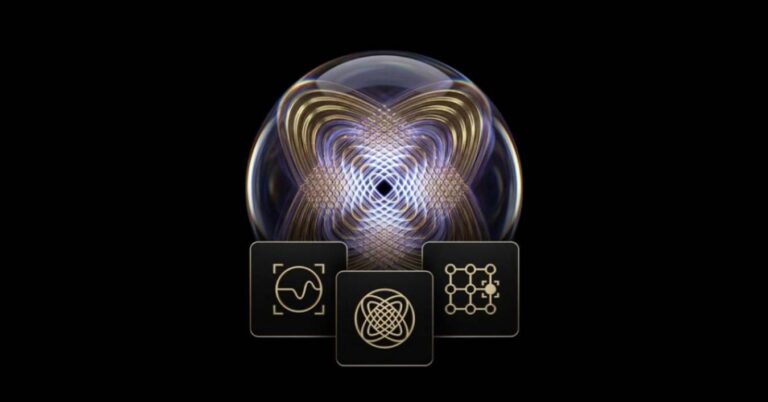
NVIDIA has introduced Ising, an open family of AI models built for quantum computing tasks such as processor calibration and error-correction decoding. The company says the models can reduce calibration time from days to hours, improve decoding speed and accuracy versus pyMatching, and cut training-data needs for decoding.
NVIDIA Launches Ising – Key Points
The Story
NVIDIA has launched Ising, which it describes as the world’s first open source family of quantum AI models, aimed at helping researchers and enterprises build more reliable and scalable quantum processors capable of running useful applications. The release targets two bottlenecks between current quantum hardware and fault-tolerant computing: calibration and real-time error-correction decoding. NVIDIA says Ising includes models, tools, data, training workflows, and NIM microservices, with availability through GitHub, Hugging Face, and build.nvidia.com, and integration with CUDA-Q and NVQLink.
The Facts
Ising is positioned as an open model family for quantum computing.
NVIDIA says the models are designed to support the path toward useful quantum applications by improving two core engineering tasks: processor calibration and quantum error correction.
The release includes two main model groups.
Ising Calibration is described as a 35-billion-parameter vision-language model that reads measurements from a quantum processing unit and infers tuning adjustments. Ising Decoding includes two 3D convolutional neural network variants with 0.9 million and 1.8 million parameters, optimized for speed and accuracy respectively, for pre-decoding in surface-code quantum error correction.
NVIDIA says calibration time can fall from days to hours.
According to the company, the calibration model can interpret experimental QPU measurements and, when paired with an agent, automate a process that otherwise takes much longer.
NVIDIA reports performance gains for error-correction decoding.
The company says Ising Decoding is up to 2.5 times faster and 3 times more accurate than pyMatching, while requiring 10 times less training data.
The benchmark comparison is against a widely used open source decoder.
NVIDIA identifies pyMatching as the current open source industry standard used by many quantum research groups.
The reported benchmark comparison comes from NVIDIA.
The company presents the speed, accuracy, and training-data claims in its launch materials. No independent third-party validation is cited in the provided text.
NVIDIA says the models are customizable and can run locally.
The company states that developers can fine-tune the models for specific hardware architectures and use cases, while local deployment can help protect proprietary data.
The package includes more than just models.
NVIDIA says Ising also comes with workflow cookbooks, training data, and NVIDIA NIM microservices intended to reduce setup effort for researchers and enterprises.
The models fit into NVIDIA’s broader quantum stack.
NVIDIA says Ising complements CUDA-Q for hybrid quantum-classical computing and integrates with NVQLink for real-time QPU-GPU control and quantum error correction.
The open models sit on a proprietary surrounding platform.
The decoder depends on NVQLink’s low-latency interconnect to move measurement data to a GPU within the decoding window, while calibration workflows run through CUDA-Q and deployment tooling targets NVIDIA hardware.
NVIDIA links the launch to expected market growth.
Citing analyst firm Resonance, the company says the quantum computing market is expected to exceed $11 billion by 2030.
Benchmarks / Evidence Check
NVIDIA is the source of the main performance claims in the announcement. Specifically, the company says Ising Decoding is up to 2.5 times faster, 3 times more accurate, and requires 10 times less training data than pyMatching, and that Ising Calibration can reduce calibration timelines from days to hours.
How to Access / Pricing
NVIDIA says Ising models, data, and frameworks are available through GitHub, Hugging Face, and build.nvidia.com.
Numbers that Matter
- Up to 2.5x faster decoding versus pyMatching, according to NVIDIA
- Up to 3x more accurate decoding versus pyMatching, according to NVIDIA
- 10x less training data required for decoding, according to NVIDIA
- Calibration time reduced from days to hours, according to NVIDIA
- Quantum computing market projected to surpass $11 billion by 2030, according to Resonance
- Ising Calibration size: 35 billion parameters
- Ising Decoding variants: 0.9 million and 1.8 million parameters
Why This Matters
Quantum computing has long been held back by fragile hardware, calibration complexity, and error rates. NVIDIA is betting that open AI models can become part of the control layer that makes quantum systems more practical, but the update also clarifies the business model: the models may be open, while the high-performance path to deploy them remains closely tied to NVIDIA’s proprietary hardware and software stack.
This article was drafted with the assistance of generative AI. All facts and details were reviewed and confirmed by an editor prior to publication.

All you need to know about the critical components of AI infrastructure, hardware, software, and networking, that are essential for supporting AI workloads.
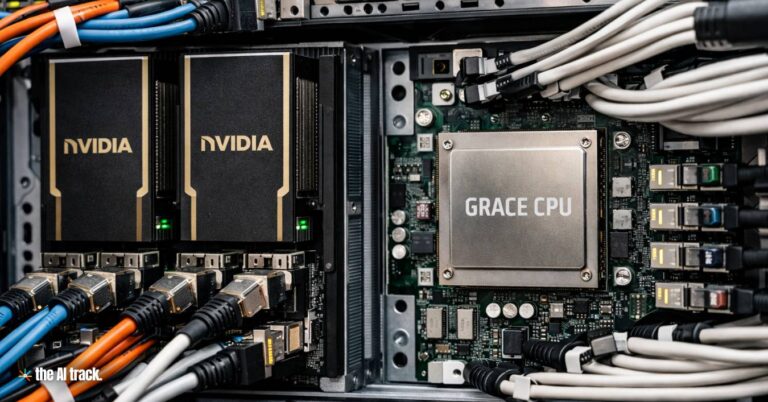
Meta – Nvidia deal scales to millions of Nvidia GPUs and adds standalone Grace CPUs, plus confidential computing designed for WhatsApp AI processing.
Explore the vital role of AI chips in driving the AI revolution, from semiconductors to processors: key players, market dynamics, and future implications.
Nvidia becomes first company to reach $5T market cap, driven by $500B chip orders, major deals with Intel, OpenAI, and Nokia, and record AI-fueled growth.
Read a comprehensive monthly roundup of the latest AI news!