
Key Takeaway
OpenAI has launched GPT-Rosalind, a new life sciences AI model series built to support biological research, drug discovery, and translational medicine. The company is rolling it out in a limited research preview for qualified Enterprise customers in the U.S., while also releasing a free Codex plugin that connects models to more than 50 scientific tools and data sources.
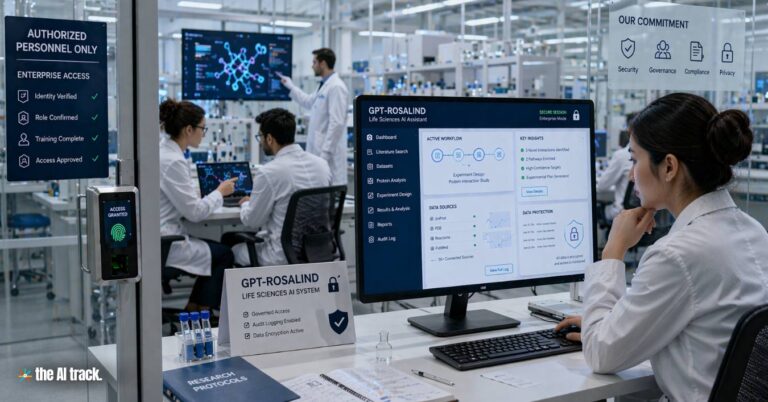
OpenAI Launches GPT-Rosalind – Key Points
The Story
OpenAI says GPT-Rosalind is designed for scientific work across published evidence, data, tools, and experiments, with a focus on helping researchers move faster through complex biological workflows. The model is meant to support tasks such as reasoning over molecules, proteins, genes, pathways, and disease biology, as well as multi-step work like literature review, experimental planning, and data analysis. OpenAI is making the system available through a trusted access program in ChatGPT, Codex, and the API for qualified customers, while broadening access to life sciences tooling through a new Codex plugin. The launch adds to the company’s broader push into domain-specific AI for health and biological research.
The Facts
- OpenAI announced a new life sciences AI model series called GPT-Rosalind.
- The model is named after Rosalind Franklin, whose research helped reveal the structure of DNA and laid foundations for modern molecular biology.
- OpenAI says GPT-Rosalind is built for modern scientific work across published evidence, data, tools, and experiments and is designed to accelerate work in biology research, drug discovery, and translational medicine, especially in the early stages of discovery.
- The company says GPT-Rosalind performs best on reasoning tasks involving molecules, proteins, genes, pathways, and disease-relevant biology, and is more effective at using scientific tools and databases in workflows such as literature review, sequence-to-function interpretation, experimental planning, and data analysis.
- OpenAI positions the system as a way to help scientists work faster by surfacing connections, exploring more possibilities, and reaching better hypotheses sooner, while supporting evidence synthesis, hypothesis generation, experiment design, and analysis rather than replacing scientists or real-world validation.
- OpenAI says the system includes enterprise-grade security controls and strengthened access management for governed scientific environments.
- GPT-Rosalind is being launched in research preview in ChatGPT, Codex, and the API through a trusted access program for qualified Enterprise customers in the U.S..
- OpenAI says early users, customers, and partners include Amgen, Novo Nordisk, Moderna, Thermo Fisher Scientific, Oracle Health and Life Sciences, NVIDIA, the Allen Institute, Benchling, and the UCSF School of Pharmacy. The company also says it is continuing work with Los Alamos National Laboratory on AI-guided protein and catalyst design.
- OpenAI says it plans to continue expanding GPT-Rosalind’s biochemical reasoning capabilities across long-horizon, tool-heavy scientific workflows as the first release in a broader life sciences model series.
- OpenAI says drug development in the U.S. takes about 10 to 15 years from target discovery to regulatory approval, and that only 1 in 10 drugs entering clinical trials ultimately gets approved.
- The company says more than 30 million Americans and 300 million people globally living with rare diseases are still waiting for better treatments.
- OpenAI says its new Life Sciences research plugin for Codex is freely available and connects researchers to more than 50 public multi-omics databases, literature sources, and biology tools.
How to Access
OpenAI says GPT-Rosalind is available in research preview through its trusted access program for qualified Enterprise customers in the U.S. The company says participating organizations must be conducting legitimate scientific research with clear public benefit, maintain governance and misuse-prevention controls, restrict access to approved users in secure environments, and comply with the research preview terms and usage policies. During the preview, OpenAI says use of the model will not consume existing credits or tokens, subject to abuse guardrails, with pricing and wider availability to be shared later.
Numbers that Matter
OpenAI says drug development in the U.S. takes about 10 to 15 years from target discovery to regulatory approval. The company also says only 1 in 10 drugs entering clinical trials ultimately gets approved, while more than 30 million Americans and 300 million people globally living with rare diseases are still waiting for better treatments. Separately, OpenAI says its new Life Sciences research plugin for Codex connects researchers to more than 50 public multi-omics databases, literature sources, and biology tools.
Limitations
OpenAI is limiting access in part to reduce misuse risks in sensitive biological research. The company says the deployment structure includes controls around eligibility, access management, and organizational governance, and that customers may need to provide additional information during onboarding or continued participation. OpenAI has also said only a small number of AI-discovered or AI-designed drugs have reached clinical trials, and none has made it through phase 3.
Background
OpenAI says biology research is becoming increasingly computational, especially in genomics, protein analysis, and biochemistry, while research workflows remain fragmented, time-intensive, and hard to scale. To support those workflows more broadly, the company is also releasing a freely accessible Life Sciences research plugin for Codex on GitHub. OpenAI says eligible Enterprise users can pair that plugin with GPT-Rosalind, while other users can use the plugin package with its mainline models.
Why This Matters
GPT-Rosalind shows OpenAI moving deeper into domain-specific AI for regulated scientific work rather than focusing only on general-purpose chatbots. The combination of a restricted life sciences model, benchmark claims tied to scientific workflows, a broader plugin layer for research tools, and a widening partner roster suggests OpenAI is building not just a model, but a full workflow stack for life sciences teams.
This article was drafted with the assistance of generative AI. All facts and details were reviewed and confirmed by an editor prior to publication.
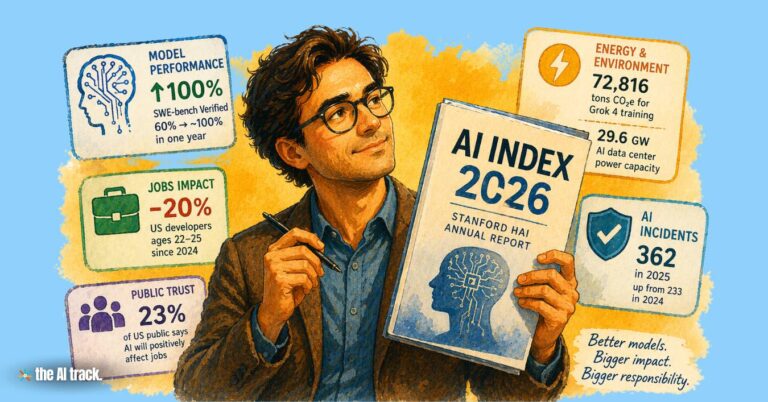
Stanford AI Index 2026 finds rapid AI gains, rising incidents, job disruption, weaker transparency, and a widening expert-public trust gap.
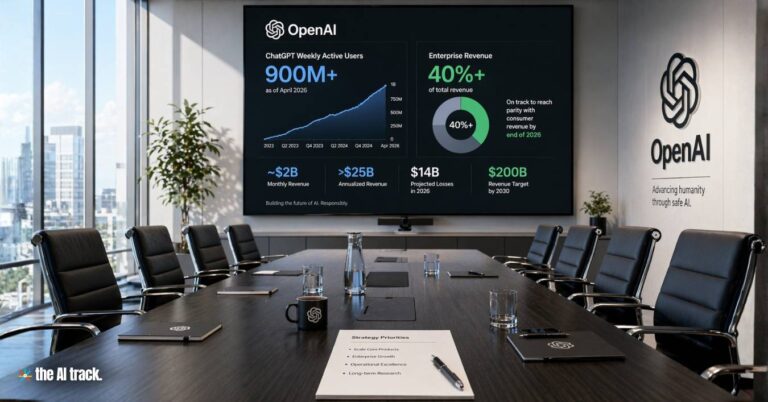
OpenAI loses three senior executives as it shuts down Sora, folds OpenAI for Science into other teams, and pushes harder into enterprise AI.

Anthropic unveils Claude for Healthcare (Opus 4.5) with strict safety policies requiring human review. Features include automated prior authorizations, Apple Health sync, and clinical trial tools.
Read a comprehensive monthly roundup of the latest AI news!