Key Takeaway
Anthropic has expanded its enterprise AI agents strategy with new plug-ins for Claude, targeting finance, HR, engineering, and design teams. The move shifts the company beyond model APIs into direct competition with SaaS vendors by embedding Enterprise AI Agents inside core business systems.
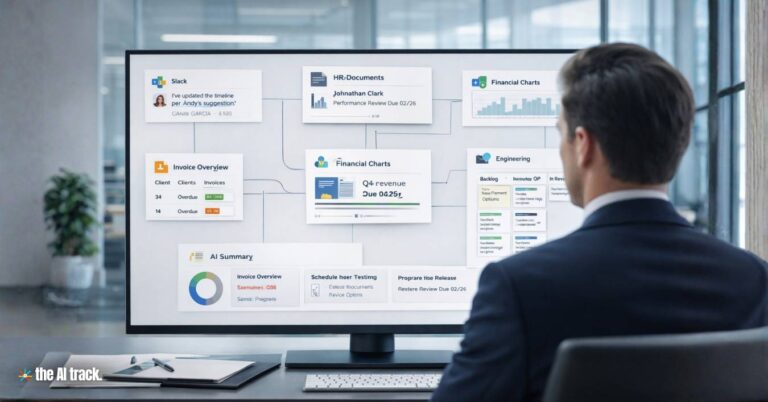
Anthropic Expands Enterprise AI Agents Strategy – Key Points
What Was Announced
- A new plug-in architecture for Claude designed to deploy enterprise AI agents directly within enterprise workflows.
- Pre-built and customizable workflows across:
- Finance (financial close, deal review, portfolio analysis, compliance processes).
- HR (document drafting, internal policy workflows).
- Engineering and design (sprint management, issue tracking, mockup iteration).
- Native integrations with widely used platforms including Slack (Salesforce-owned), Intuit, DocuSign, LegalZoom, FactSet, and Google’s Gmail.
- Administrative controls enabling organizations to configure enterprise AI agents through templates or custom integrations aligned to internal systems.
- Positioning enterprise AI agents as cross-system workflow orchestrators rather than standalone copilots.
- Anthropic specifically refers to the workplace platform as Claude Cowork.
- These agents are powered by the newly released Claude 4.6 (Sonnet and Opus), which includes advanced “computer use” and “agentic coding” capabilities.
The rollout builds on earlier vertical integrations and reflects Anthropic’s accelerated push to establish enterprise AI agents as an operational layer inside large organizations.
Competitive Context
This marks Anthropic’s most aggressive enterprise expansion to date and intensifies competition in the AI agents market.
Anthropic now competes directly with:
- Microsoft and Google, which embed AI agents inside Office and Workspace ecosystems.
- OpenAI, which is scaling enterprise AI agents deployments through partnerships with Accenture, Boston Consulting Group, Capgemini, and McKinsey.
- SaaS incumbents such as Salesforce, Intuit, DocuSign, and Thomson Reuters integrating AI capabilities defensively into their platforms.
Markets reacted immediately. After Anthropic’s enterprise agents event, Salesforce shares rose about 4%, Thomson Reuters gained more than 11%, FactSet climbed nearly 6%, and DocuSign and LegalZoom rose over 2%. Wedbush analysts argued fears of wholesale SaaS replacement are overstated, noting that deeply embedded enterprise infrastructure limits immediate displacement by AI agents.
Why This Matters
Enterprise software represents a ~$650 billion global market. Finance, HR, engineering, and design platforms account for tens of billions in annual spending.
If enterprise AI agents can reliably orchestrate:
- Compliance workflows and audit trails
- Portfolio and deal analysis
- Sprint planning systems
- Cross-platform document and collaboration processes
then vendor power shifts from application ownership to workflow intelligence control.
However, analysts suggest near-term impact centers on augmentation rather than replacement. AI agents are positioned as productivity accelerators that reduce cycle time and manual effort rather than eliminate entrenched systems overnight.
Strategic Hypothesis
Anthropic is testing whether enterprises will:
- Consolidate tools into a centralized enterprise AI agents layer to unify workflows and reduce operational friction.
- Maintain existing SaaS platforms while embedding AI agents as orchestration layers across systems.
Investor reaction indicates expectations of coexistence. AI agents remain dependent on data access, governance structures, and permissions architecture ,limiting their ability to fully replace enterprise ecosystems in the near term.
Adoption is expected to be incremental as organizations weigh productivity gains against governance, integration complexity, and compliance requirements.
Market Timing
The AI agents market is projected to exceed $50 billion by 2028. Volatility in software and cybersecurity stocks over recent weeks demonstrates how sensitive markets remain to perceived disruption risk from AI agents.
Key Risk Factors
- Enterprise risk tolerance in regulated industries.
- Integration complexity across identity systems and data silos.
- Governance, auditability, and access control constraints.
- Effectiveness tied to underlying enterprise data environments.
- Reliability in production-scale deployment.
AI agents create concentrated operational leverage, but their value depends on secure integration rather than system replacement.
Bottom Line
Anthropic’s expansion signals that AI agents are evolving into an intelligence layer across corporate systems. Market reaction suggests augmentation and ecosystem integration are more likely than rapid SaaS displacement. The strategic contest now centers on who controls the workflow layer inside enterprises: the application vendors or the AI agents that connect them.
This article was drafted with the assistance of generative AI. All facts and details were reviewed and confirmed by an editor prior to publication.

Autonomous AI Agents are moving from pilots to production. Updated 2026 analysis of Microsoft, NVIDIA, Google, Anthropic, use cases, risks, and governance.

Anthropic launches Claude Sonnet 4.6 as default for free and Pro users, adding 1M token context and strong coding at 40% lower API cost than Opus.

Explore how AI in business is revolutionizing operations, from data analysis and cybersecurity to content creation. Discover real-world examples, and use cases.
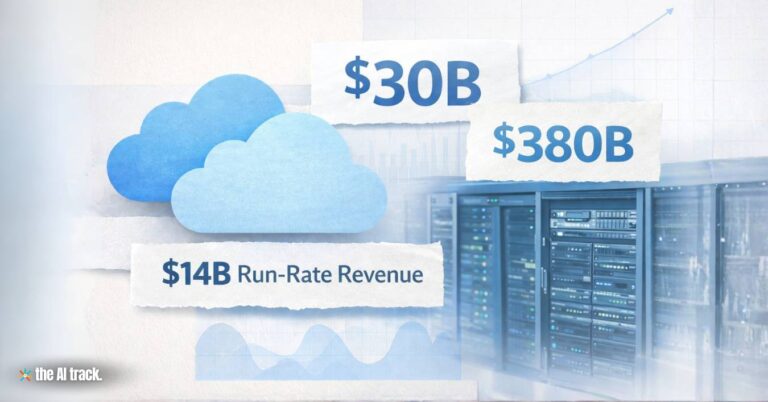
Anthropic Series G funding reached $30B at a $380B AI valuation, reporting $14B run-rate revenue and rapid enterprise AI adoption.
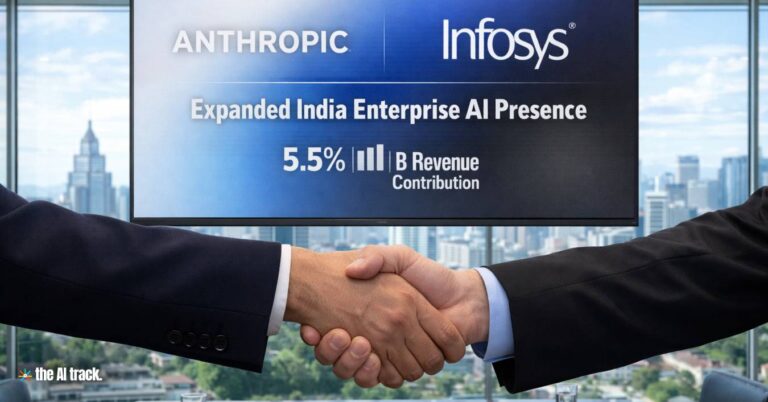
Infosys and Anthropic launch telecom-first enterprise AI deal as AI services reach 5.5% of revenue amid $44.46B Indian IT selloff.
A curated collection of the most important recent AI breakthroughs in business and manufacturing, optimizing processes and driving innovation.
Read a comprehensive monthly roundup of the latest AI news!