
Independent publishers argue Google’s AI Overviews reduce their traffic and revenue, with no ability to opt out unless sacrificing search visibility, prompting a formal EU antitrust complaint. The summaries, which now appear in over 12% of “People Also Ask” results and often pull from publisher content, are also alleged to be used in training Google’s language models without consent.

Antitrust Complaint Over AI Overviews – Key Points
Complaint Filed (June 30, 2025):
The Independent Publishers Alliance, backed by the Movement for an Open Web and Foxglove Legal, submitted a formal antitrust complaint to the European Commission. The group accuses Google of abusing its dominance in online search by positioning AI-generated Overviews above traditional search results, siphoning traffic and ad revenue from original content creators.
Feature Scope & Timeline:
- Google launched AI Overviews globally in May 2024 across more than 100 countries.
- In May 2025, ads began appearing in AI Overview results, signaling the monetization phase of the feature.
- By July 2025, 12.6% of answers in the “People Also Ask” feature were AI Overviews, with 87.4% remaining as traditional, website-cited snippets.
- The AI Overviews appear above regular hyperlinks, prominently displayed at the top of Google’s general search engine results page (SERP), according to the complaint.
Allegations:
- Google is accused of misusing publisher content in AI Overviews and training its large language models (LLMs) on that content without permission.
- The complaint stresses there is no way for publishers to opt out of content ingestion or summary crawling without also being de-indexed from standard search results, a choice seen as coercive and harmful to press freedom.
- This dual use—both for summaries and model training—allegedly disadvantages original content and undermines fair competition in digital publishing.
- The complainants argue Google’s practices result in traffic, readership, and revenue loss for media outlets, with no transparency or control for content creators.
Impact Statistics:
- 37 of the top 50 US news websites experienced traffic declines since the introduction of AI Overviews (SimilarWeb data).
- Zero-click searches rose from 56% (mid‑2024) to 69% (May 2025), showing users increasingly get answers without visiting websites.
- Visits to external publishers from Google Search dropped from over 2.3 billion (mid-2024) to under 1.7 billion (May 2025).
- Foxglove Legal described the development as an “existential threat” to independent journalism.
Demand for Interim Measures:
- The publishers have requested an interim measure from the EU Commission to temporarily suspend AI Overviews, citing “irreparable harm” to competition and news access if the practice continues unchecked.
- A parallel request was submitted to the UK’s Competition and Markets Authority, echoing concerns filed in a U.S. lawsuit by an edtech company facing similar losses.
Regulatory Context:
- The UK’s CMA confirmed receipt of the complaint and is reviewing it.
- The EU’s Digital Markets Act (DMA) prohibits dominant tech firms from unfairly prioritizing their own services and imposes penalties of up to 10% of global annual revenue for violations.
- Google has a history of antitrust scrutiny and large EU fines, particularly related to Search and Shopping.
Google’s Response:
- Google asserts AI Overviews “create new opportunities for content and businesses to be discovered.”
- A spokesperson stated traffic changes stem from multiple factors including seasonality, user interest, and Search algorithm updates.
- Google maintains it delivers “billions of clicks” daily and contests that the data used to support publisher claims is “incomplete and skewed.”
- The company did not address specific concerns about the lack of opt-out or LLM training consent.
Organizations Involved:
The Independent Publishers Alliance is a nonprofit collective of unnamed publishers advocating for fair treatment in tech platforms.
The Movement for an Open Web represents digital advertisers and media entities advocating against platform monopolies.
Foxglove Legal, a UK-based public interest law firm, co-led the filing, with co-director Rosa Curling stating:
“Independent news faces an existential threat: Google’s AI Overviews.”
Why This Matters
Google’s AI Overviews mark a structural transformation in the online information ecosystem. By prioritizing AI summaries trained on publisher content—without user clicks, clear attribution, or consent—Google redefines how news is accessed and monetized. This case may set global precedent on AI transparency, search neutrality, and the rights of digital content creators under competition law. Interim measures may also shape how AI is regulated during active investigations to prevent disproportionate harm.

OpenAI has introduced ChatGPT Search enabling real-time information retrieval. This development positions ChatGPT as a direct competitor to Google.
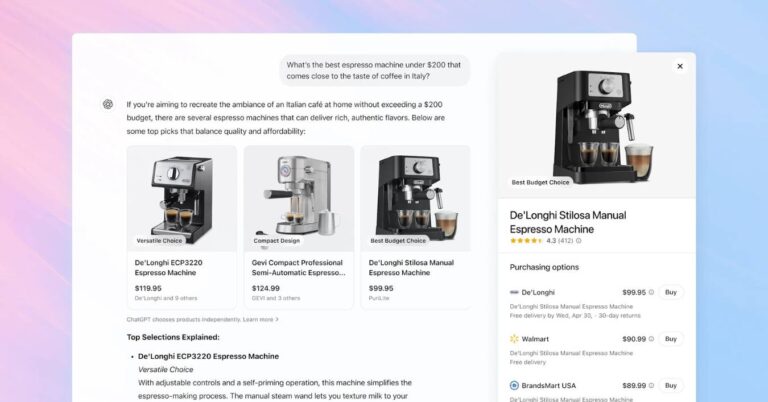
OpenAI enhances ChatGPT shopping with GPT-4o, structured data, WhatsApp support, and memory integration. Personalized commerce is now live globally.

Moonshot AI introduces Kimi k1.5, offering free real-time web search, file analysis, and advanced reasoning. Learn how it rivals GPT-4 and Claude.
Read a comprehensive monthly roundup of the latest AI news!