Nvidia and AMD will each hand over 15% of revenues from specific AI chip sales in China to the US government in exchange for export licences — a first-of-its-kind arrangement that breaks with standard US export licensing practice.
The deal has triggered bipartisan criticism, constitutional debate, and strategic concerns over national security, trade policy, and the precedent it sets for corporate concessions in the US–China tech rivalry.
Nvidia and AMD Agree to Pay 15% of China Chip Revenues to US Government – Key Points
The Agreement Details
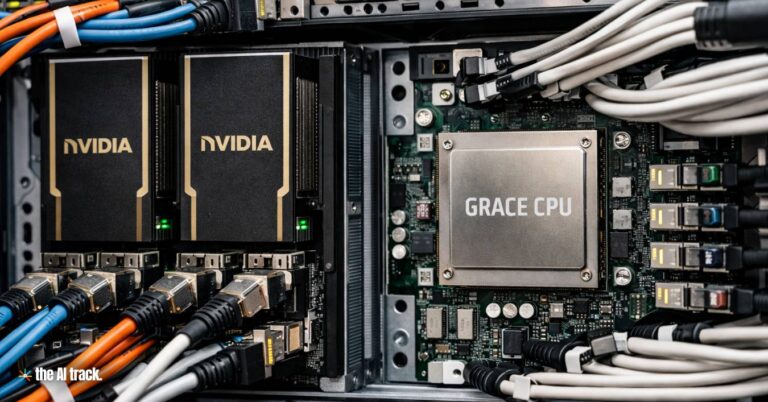
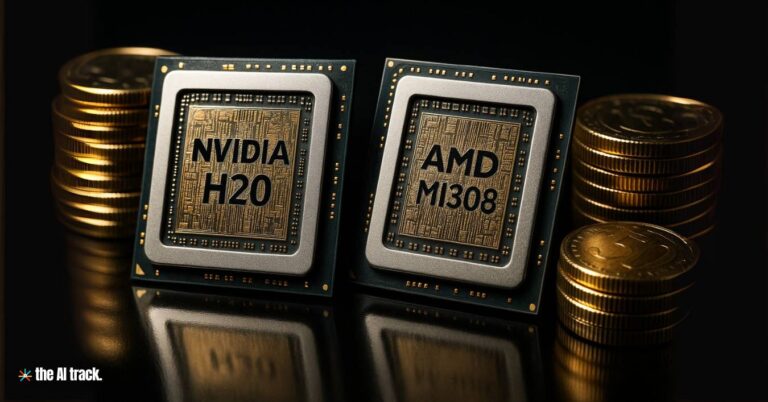
Nvidia will pay 15% of revenues from its H20 AI chip sales in China, and AMD will do the same for its MI308 AI chips. Both products are high-performance accelerators developed for AI applications, with the H20 specifically tailored for the Chinese market. The agreement, called “unprecedented” by Forrester VP Charlie Dai, follows an April 2025 ban on such sales by the Trump administration.
President Trump disclosed he initially demanded 20% “for the country” during a meeting with Nvidia CEO Jensen Huang, ultimately settling on 15% after negotiation. White House spokesperson Karoline Leavitt confirmed the deal’s framework is still being finalised and suggested similar revenue-sharing terms could be extended to other firms.
The arrangement is highly unusual — export licences generally carry no fees, and companies typically do not share export revenues with the federal government.
Background on Restrictions
US export controls imposed in 2023 under the Biden administration restricted advanced AI chip sales to China to address security concerns. Nvidia designed the H20 to comply, but the Trump administration banned its sale in April 2025. AMD’s MI308 was similarly blocked. Commerce Secretary Howard Lutnick later linked the resumed sales to a US–China trade agreement involving rare earth magnets.
The US Commerce Department has stated these controls were “strategically crafted” to counter China’s efforts to acquire semiconductor manufacturing equipment critical for next-generation advanced weapons systems.
Security Concerns Raised
In July 2025, 20 security specialists warned that Nvidia’s H20 could significantly enhance China’s military AI, enabling autonomous weapons, intelligence gathering, and rapid battlefield decision-making. Trump dismissed the concerns, calling the H20 “obsolete.”
Experts like Ray Wang (Constellation Research) noted ongoing uncertainty about the chips’ security implications. Proponents of the restrictions argue they are essential to maintain the US technological edge in the global AI race; opponents say loopholes could still enable China to advance rapidly. The debut of China’s DeepSeek AI chatbot in January 2025 has intensified these concerns.
Trump Administration Stance
Trump has described the deal as a pragmatic way to allow sales while generating revenue for the US. He has not outlined how the funds will be used. The administration is considering similar agreements with other technology firms. Critics say monetising export control exemptions risks undermining the credibility of security-driven restrictions and could shift priorities toward revenue generation.
Industry, Legal, and Political Reactions
Former Biden official Peter Harrell warned the deal may violate the constitutional ban on export taxes.
Bipartisan criticism has come from Rep. John Moolenaar (R), chair of the House Select Committee on China, and Rep. Raja Krishnamoorthi (D), the committee’s ranking member, both warning against using export controls as bargaining chips. Krishnamoorthi called the arrangement “a dangerous misuse” that “gambl[es] with our national security to raise revenue.”
Derek Scissors (American Enterprise Institute) argued the 15% payment is functionally a tax and unlikely to be durable, as it either sets a broad precedent for taxing exports or risks national security for fiscal gain.
Corporate Responses and Investor View
Nvidia has stated it follows US rules and warned that restrictive export controls could cost it $5.5 billion and push markets toward Chinese AI technology. AMD has not commented. Beijing has condemned the US for “unilateral bullying.”
Stocks for both Nvidia and AMD rose slightly after the announcement. Investors welcomed renewed access to the Chinese market but analysts like Dan Niles (Niles Investment Management) cautioned that unpredictable policy swings could destabilise corporate strategy.
Lobbying and High-Level Meetings
Nvidia CEO Jensen Huang has been lobbying for months and met with Trump shortly before the agreement. AMD CEO Lisa Su also engaged in discussions. Trump’s personalised, “hands-on” negotiation style has encouraged direct CEO–White House engagement.
Intel’s Separate Meeting
Intel CEO Lip-Bu Tan met Trump the same day. Trump had called for Tan’s resignation over alleged China ties, which Tan dismissed as “misinformation.” Their meeting focused on Intel’s role in strengthening US manufacturing.
Wider Context — Big Tech Paying to Avoid Tariffs
The Nvidia–AMD deal is part of a broader trend of corporate concessions to secure favourable trade terms. Apple CEO Tim Cook recently pledged $600 billion in US investment over four years, widely seen as a move to avoid punitive tariffs.
Earlier in August, Trump proposed a 100% tariff on imported semiconductors, with exemptions for domestic production. Analysts say Apple’s move could trigger a “domino effect” across the industry as companies seek tariff relief.
Why This Matters:
The Nvidia–AMD arrangement marks a significant shift in US trade and export control policy — effectively monetising access to restricted foreign markets in exchange for revenue-sharing. It raises constitutional, security, and policy consistency concerns, with bipartisan lawmakers warning against turning security controls into fiscal tools. It also reflects a growing pattern in which major tech companies make substantial financial or strategic concessions to navigate the twin pressures of US–China rivalry and protectionist trade policy.
This article was drafted with the assistance of generative AI. All facts and details were reviewed and confirmed by an editor prior to publication.
Everything you need to know about the AI chip business and the geopolitical factors shaping the global race for AI (chip) dominance

Explore the vital role of AI chips in driving the AI revolution, from semiconductors to processors: key players, market dynamics, and future implications.

Nvidia launches Cosmos World Models, including Reason and Transfer-2, to accelerate robotics, digital twins, and smart city AI with advanced simulation.
Read a comprehensive monthly roundup of the latest AI news!