Key Takeaway:
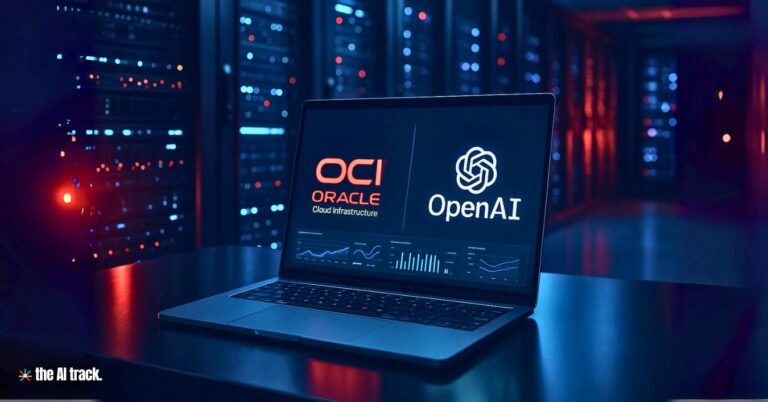
Oracle has signed a record-breaking $300 billion, five-year cloud contract with OpenAI. The deal elevates Oracle Cloud Infrastructure (OCI) into the top tier of hyperscale providers, raises questions about OpenAI’s financial sustainability, and signals a major shift in enterprise cloud and AI strategies.
Oracle – OpenAI Cloud Deal – Key Points
Historic Scale & Financial Impact
Oracle’s five-year, $300 billion agreement with OpenAI is among the largest cloud contracts in history. CIO reporting attributes a 359% surge in Oracle’s future contract revenue this quarter and a $317B increase in remaining performance obligations, implying runway to ~$1T cloud revenue by 2030 if momentum holds. Market reaction was dramatic—Oracle shares spiked intraday (up to ~43%), briefly lifting Larry Ellison’s net worth by ≈$100B and, for a short window, past Elon Musk as richest person before closing pullbacks reversed the ranking. Oracle’s pipeline of purchase commitments jumped to $455B (up 359%), and Oracle projects its cloud infrastructure revenue to crest $144B by 2031 (from $18B this year).
OpenAI’s Massive Compute Appetite & Timeline
The agreement reflects exceptional compute demand and reportedly kicks in from 2027. OpenAI’s Oracle commitment is tied to ~5 gigawatts of compute capacity (after a previously announced 4.5 GW expansion), roughly two million additional GPUs at peak scale. To service the contract, OpenAI would need ≥$60B annual revenue, roughly 6× its ~$10B ARR (2025); bridging that gap depends on enterprise uptake, API expansion, and consumer subscriptions.
Analyst Perspectives on Oracle’s Position
Matt Kimball (Moor Insights & Strategy) and Chirag Dekate (Gartner) frame the pact as validation of Oracle’s execution and engineering. OCI’s uniform datacenter design and disciplined capacity planning aim to ensure consistent experience across regions, reinforcing Oracle as a differentiated AI infrastructure provider alongside AWS, Azure, and Google Cloud, and augmenting, rather than displacing, its core ERP/database franchises (CIO). Strategic alliances with Microsoft and Google (Vertex/Gemini) extend OCI reach for AI workloads.
Customer Confidence & Enterprise Implications
Oracle’s operations are “very execution focused,” with identical-region buildouts to preserve performance parity. Net effect: existing Oracle customers can expand into GPU capacity as it becomes available while maintaining ERP/database roadmaps. The deal also broadens sourcing optionality for AI workloads beyond the traditional “big three,” and may be implemented in progressively larger phases tied to demand growth.
Skepticism, Funding & Risk Factors
Key questions persist: OpenAI’s profitability and payment capacity, plus energy sourcing for multi-GW data centers. Data centers could reach ~14% of U.S. electricity consumption by 2040, sharpening focus on solar, batteries, geothermal, and nuclear.
Strategic Differentiation of Oracle
Since launching OCI in 2016, Oracle has emphasized engineering-first, AI-forward infrastructure, “built from the ground up,” high reliability, and enterprise trust, rather than a fully integrated, consumer-centric cloud. The OpenAI pact cements OCI’s role in model hosting/inference at extreme scale, influencing enterprise choices on hybrid deployments, data locality/residency, egress economics, and multi-cloud risk management.
Why This Matters:
This deal redefines Oracle’s place in the cloud hierarchy and OpenAI’s industrial scaling path. Enterprises gain another credible hyperscale option for AI workloads while confronting constraints around compute access, vendor concentration, and power availability. The agreement underscores compute and energy as the binding bottlenecks of the AI decade.
This article was drafted with the assistance of generative AI. All facts and details were reviewed and confirmed by an editor prior to publication.

Everything you need to know about the AI war: Explore the competitive AI landscape and learn how leading companies and nations are shaping the future with advanced AI technologies

All you need to know about the critical components of AI infrastructure, hardware, software, and networking, that are essential for supporting AI workloads.

AI Energy consumption is soaring, threatening sustainability. This article explores key challenges in AI energy use and presents solutions to balance innovation

Explore the U.S. government’s strategic push in semiconductor manufacturing, featuring TSMC’s and Samsung’s major investments and technological leaps.
Read a comprehensive monthly roundup of the latest AI news!