
Key Takeaway:
The European Commission is considering postponing enforcement of major provisions of the EU AI Act, including fines and high-risk AI obligations, as part of a simplification package to be adopted on November 19, 2025. The move, driven by lobbying from U.S. tech giants, European industrial leaders, and geopolitical pressure from the Trump administration, marks a recalibration of Europe’s regulatory ambitions to balance competitiveness with oversight.

European Commission Weighs Delays to EU AI Act – Key Points
Timing and Context:
The EU AI Act, remains the world’s first comprehensive legal framework for artificial int\elligence. Its most demanding obligations, covering “high-risk” AI systems used in healthcare, policing, or employment, are set to take effect in August 2026. The European Commission is now weighing a pause or delay to selected sections before they come into force, citing the need to simplify compliance and maintain transatlantic stability.
Grace Periods and Deferred Enforcement:
The draft proposal reviewed by the Financial Times outlines a one-year grace period for companies operating high-risk AI systems that breach regulatory provisions under the EU AI Act. Providers of generative AI models (those producing text, images, or video) already on the market before the enforcement date would also receive a one-year adjustment window to realign their practices “without disrupting the market.”
Additionally, the Commission is considering delaying fines for transparency rule violations until August 2027, allowing time for developers and deployers of AI systems to meet disclosure and monitoring obligations.
Regulatory Adjustments and Flexibility:
The proposed revisions include making monitoring requirements for high-risk AI systems less prescriptive, enabling developers to follow flexible guidance rather than rigid compliance formulas. This aligns with proposals from the specialist site MLex, which first reported on a draft allowing centralized oversight through an expanded EU AI Office, a move intended to reduce bureaucratic fragmentation among member states.
U.S. and Big Tech Influence:
The revisions follow sustained pressure from Meta, Alphabet, and other American tech firms, who argue that the EU AI Act could stifle innovation by imposing heavy compliance costs. Act’s heavy compliance burdens could hinder innovation and restrict access to state-of-the-art models.
The Trump administration has warned Brussels that overregulation could “cripple innovation” and prompt retaliatory trade tariffs. At the Paris AI Summit in early 2025, Vice President J.D. Vance criticized the EU’s “excessive” approach, while President Donald Trump later threatened tariffs against countries imposing what he called discriminatory digital taxes or tech restrictions on U.S. companies.
European Industry Joins the Push for Delay:
Domestic momentum for a pause has grown. An open letter signed by 46 leading European companies, including Airbus, Lufthansa, and Mercedes-Benz, urged a two-year pause on enforcement to ensure “reasonable implementation” and strengthen the bloc’s “competitiveness agenda.”
These companies argue that the EU AI Act’s complexity could discourage investment and leave European innovation behind the U.S. and China.
Geopolitical and Economic Motivations:
EU officials remain cautious not to escalate tensions with Washington, particularly amid dependencies on U.S. support for Ukraine and ongoing trade negotiations. The proposal thus fits within a broader EU-U.S. rapprochement, as evidenced by a tentative trade deal reached in August 2025 to prevent potential tariff disputes and protect intelligence cooperation.
Internal Debate and Criticism:
Commission spokesperson Thomas Regnier confirmed internal deliberations are ongoing but stressed the bloc remains “fully behind the EU AI Act and its objectives.” However, Italian MEP Brando Benifei, one of the law’s co-authors, warned that delaying the legislation could create “legal uncertainty” and weaken protections for citizens from AI-related risks. Final revisions remain subject to European Parliament and member-state approval before the November 19 adoption.
Strategic Simplification Initiative:
The EU AI Act delay proposal forms part of a larger simplification package introduced in September 2025, aiming to streamline EU digital and cybersecurity laws, reduce bureaucracy, and enhance Europe’s competitiveness amid rapid advances in generative AI.
Regulatory Identity at Stake:
The debate underscores a key question for Europe: whether to preserve its status as a global leader in ethical AI governance or adapt to market and geopolitical pressures. The EU AI Act’s possible delay could improve innovation conditions but risks undermining the EU’s credibility as a principled regulator.
Why This Matters:
The proposed delay to the EU AI Act represents a critical turning point in Europe’s technological and political strategy. It reflects the struggle to balance innovation with ethical oversight and competitiveness. Adjusting the EU AI Act timeline could attract investment and ease transatlantic tensions but might also erode Europe’s long-standing role as a pioneer in responsible AI regulation.
This article was drafted with the assistance of generative AI. All facts and details were reviewed and confirmed by an editor prior to publication.
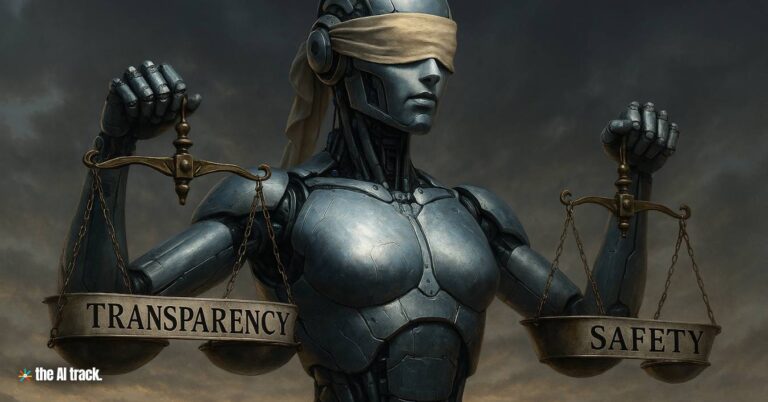
EU AI regulation and the DSA require platforms and AI providers to assess systemic risks and implement transparency, safety, and copyright measures.
Read a comprehensive monthly roundup of the latest AI news!