Key Takeaway:
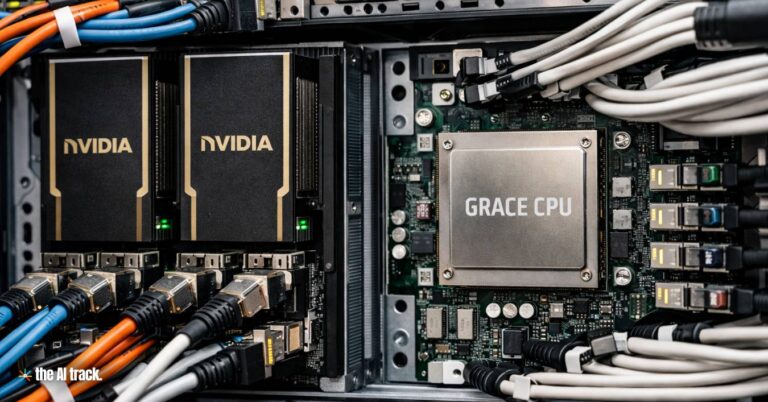
China bans foreign AI chips from all state-funded data-centre projects, mandating the exclusive use of domestically produced processors. The move threatens major U.S. chipmakers such as Nvidia, AMD, and Intel, while fast-tracking Beijing’s pursuit of AI-hardware independence and consolidating its position in the global semiconductor race.

China Bans Foreign AI chips – Key Points
Directive and Retroactive Enforcement (Nov 2025):
China bans foreign AI chips in any data-centre projects funded with state money, accorging to a Reuters exclusive. Facilities less than 30% complete must strip or cancel foreign components, while those further along will be evaluated individually. This converts previous informal guidance into a legally binding exclusion policy and underlines China’s drive for chip sovereignty during a temporary thaw in U.S.–China trade tensions
Scope and Governance Ambiguity:
Applicability nationwide vs. provincial remains unclear. With most Chinese data centres receiving some state support, a large share of facilities is likely covered. The CAC and NDRC have not commented publicly; the directive text has not been published, adding to uncertainty over implementation timelines and provincial discretion.
Scale of Affected Investment:
Since 2021, China’s AI data-centre program has attracted over $100 billion in state-linked funding. Several facilities, including one in a northwestern province, have already been halted or redesigned after the announcement that China bans foreign AI chips. The new rule could reshape hundreds of in-progress builds across the country.
Commercial Impact on U.S. Vendors:
Nvidia’s China AI-accelerator share has fallen from ~95% (2022) to ~0%. Covered parts include H20 (China-compliant) and higher-end H200/B200 (export-restricted yet present via grey channels). The guidance pressures grey-market inflows that had supplied restricted parts and effectively closes the door on near-term Nvidia re-entry via bespoke, compliant SKUs. AMD and Intel AI/server parts also become ineligible for state-funded builds.
Trade-Tension Context and Policy Signals:
U.S. export controls cite military end-use risks. After late-October talks, Washington indicated China may access non-“most advanced” Nvidia parts. Inside China, port crackdowns in early Oct 2025 tightened Nvidia imports; the new guidance heightens scrutiny on procurement and installation for clusters already under construction.
Winners and Ecosystem Frictions at Home:
Domestic vendors positioned to gain include Huawei, Cambricon (688256.SS), and startups MetaX, Moore Threads, Enflame. While performance and software-stack maturity (CUDA parity, tooling) remain hurdles, policy-driven demand reallocation improves sales visibility for these firms; Huawei Ascend is viewed as the most deployment-ready but still trails on developer familiarity and ecosystem breadth.
Link to Earlier Tech-Sovereignty Steps:
The action extends a pattern that includes Micron’s 2023 critical-infrastructure ban, 2025 discouragement of Nvidia H20 purchases, and public showcases of data centres powered solely by domestic AI chips. Meanwhile, SMIC capacity remains constrained by equipment-export sanctions, limiting advanced-node supply and influencing price/performance trajectories.
Capacity Gap Risk vs. Global Build-Out:
U.S. hyperscalers (Microsoft, Meta, OpenAI) have earmarked hundreds of billions of dollars for Nvidia-based build-outs (e.g., multi-hundred-billion “Stargate” planning). China’s reliance on domestic nodes and constrained tooling risks a computational gap for training frontier models, even as procurement mandates channel demand to local suppliers.
Open Question on Private Builds:
It is uncertain whether the guidance will extend to privately funded deployments without state support, a key determinant of remaining addressable market for foreign chip vendors and of pace of CUDA-to-domestic stack migration in China’s private sector.
Why This Matters:
By ensuring that China bans foreign AI chips in state-funded infrastructure, Beijing has redrawn the global semiconductor map. The decision accelerates its tech-independence agenda, reduces reliance on Western suppliers, and introduces an AI “hardware divide” that could define the next decade of global innovation and competition.
This article was drafted with the assistance of generative AI. All facts and details were reviewed and confirmed by an editor prior to publication.

Explore the vital role of AI chips in driving the AI revolution, from semiconductors to processors: key players, market dynamics, and future implications.
Read a comprehensive monthly roundup of the latest AI news!