Key Takeaway:
HP will eliminate 4,000–6,000 jobs globally by fiscal 2028 as part of HP restructuring efforts designed to streamline operations and accelerate its AI-driven product and service strategy, while managing rising costs linked to memory-chip price increases, structural changes in its printing business, and broader industry-wide shifts caused by rapid AI adoption.
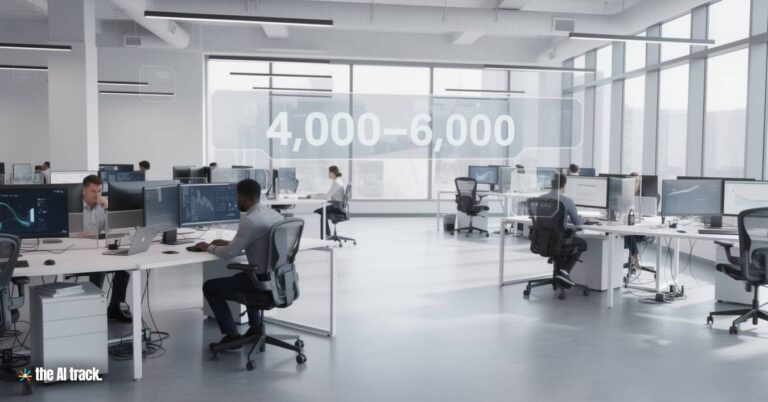
HP restructuring – Key Points
4,000–6,000 job cuts by fiscal 2028
HP Inc announced on 25 November 2025 that it will cut 4,000–6,000 roles worldwide by fiscal 2028. CEO Enrique Lores stated during a media briefing that the reductions target teams in product development, internal operations, and customer support. The initiative is a central component of HP restructuring, tied to the company’s future-ready program launched in 2022 under its fiscal 2026 plan. It is expected to generate $1 billion in gross run-rate savings over three years, with HP estimating total savings of roughly $1 billion annually by 2028, alongside restructuring costs of around $650 million, including $250 million in fiscal 2026.
Earlier layoffs of 1,000–2,000 staff in February 2025
The restructuring follows an additional 1,000–2,000 layoffs executed in February 2025 under a prior cost-reduction plan. External trackers indicate that roughly 2,000 workers had already left the company in 2025. With approximately 56,000 employees, these combined measures reflect the scale of HP restructuring and the long-term contraction of its global workforce between 2022 and 2028.
AI-enabled PC demand surpasses 30% of Q4 shipments
Demand for AI-capable PCs continues to rise, with such devices accounting for over 30% of HP’s shipments during the fourth quarter ending 31 October 2025. This trend is central to HP’s strategy to embed AI across product innovation, customer experience, and internal workflows. Internally, HP reports that AI PCs and AI tools have boosted team productivity by about 16%, and the company plans to continue investing in AI-enabled initiatives to accelerate product innovation, improve customer satisfaction, and increase operational efficiency as AI systems increasingly “plug the gaps” left by workforce reductions.
Rising memory-chip prices expected to pressure margins
Analysts from Morgan Stanley have warned that global price increases for DRAM and NAND—driven by datacenter demand and Big Tech’s AI infrastructure buildout—will affect manufacturers including HP, Dell, and Acer. Memory accounts for 15–18% of the cost of a typical PC. HP has highlighted rising memory costs as a key concern as cloud providers stockpile components to support AI model developers such as OpenAI and Anthropic. This intensifies pressure on the entire PC market as AI infrastructure investment drives up component demand.
Higher component costs likely to hit HP in H2 fiscal 2026
Lores said HP expects increased memory costs to materially affect results in the second half of fiscal 2026. The company is mitigating the impact through supplier diversification, reduced memory configurations, pricing adjustments, and tariff management. These measures operate alongside formal HP restructuring charges totaling about $650 million, with a significant portion allocated to 2026.
Lower-than-expected profit forecasts for fiscal 2026 and Q1
HP projected fiscal 2026 adjusted EPS of $2.90–$3.20, below the $3.33 analyst consensus. For Q1, HP expects $0.73–$0.81, slightly below the $0.79 midpoint forecast. Tariff costs, rising memory prices, and restructuring expenses continue to affect near-term profitability.
Q4 revenue slightly above expectations and modest full-year growth
HP reported $14.64 billion in Q4 2025 revenue, above expectations of $14.48 billion, with quarterly growth at 4.2% and full-year revenue up 3.2%. Printing net revenue declined 4% year-over-year, underscoring pressure on legacy business segments. HP shares fell as much as 6% after the job-cut announcement and remain down about 20% year-over-year despite a partial six-month recovery.
Global employment risks from AI adoption
The UK’s National Foundation for Educational Research warned that up to 3 million low-skilled UK jobs could disappear by 2035 due to automation and AI. A report by the McKinsey Global Institute found that 40% of US jobs may be impacted by AI, with over half of current work hours automatable using existing technologies. The report estimates $2.9 trillion in value could be unlocked in the US by 2030.
Industry-wide cuts linked to AI transformation
Companies across sectors are adjusting their workforces as AI adoption reshapes operational needs. Clifford Chance cut its business-services staff by 10%, PwC reduced hiring projections by tens of thousands of roles, and Klarna’s workforce shrank nearly 50% over three years through AI-enabled efficiencies. These parallel trends underscore the broader context surrounding HP restructuring.
Why This Matters
The HP restructuring underscores the deep transformation underway in hardware, software, and enterprise technology markets. Rising memory-chip costs driven by AI datacenter expansion, tariff pressures, and declining printing revenue are reshaping the company’s cost structures. At the same time, AI-enabled PCs have become a central growth vector, representing more than 30% of shipments and delivering measurable productivity gains internally. With global labour-market research forecasting significant AI-driven job displacement through 2035, the scale and direction of HP restructuring will influence the company’s competitiveness, innovation capacity, and financial resilience between 2025 and 2028.
This article was drafted with the assistance of generative AI. All facts and details were reviewed and confirmed by an editor prior to publication.
Explore how AI is reshaping jobs and workplaces, emphasizing the need for human-AI collaboration and upskilling in the AI-driven workforce. Read now for insights on adapting to AI in work
AI in Human Resources is reshaping HR by automating tasks and providing data-driven insights, impacting recruitment, talent management, and HR operations.
A curated collection of the most important recent AI breakthroughs in business and manufacturing, optimizing processes and driving innovation.
A new IBM study reveals that 40% of workers will need reskilling in the next three years due to AI. Here’s how to prepare for the inevitable change.
Discover the top 6 free AI Resume Builders. Explore how these AI tools are transforming the art of resume crafting, making job applications more effective.
Read a comprehensive monthly roundup of the latest AI news!