
Key Takeaway
OpenAI has hired Peter Steinberger, creator of the open-source AI agent OpenClaw, reinforcing a strategic shift toward autonomous agents that act across applications rather than chat-based assistants. On Feb. 15, 2026, CEO Sam Altman said Steinberger will drive the “next generation of personal agents,” and that OpenClaw will move into a foundation as an open-source project that OpenAI will continue to support. Steinberger said the project will “stay open and independent,” while corporate security concerns continue to mount around workplace use.
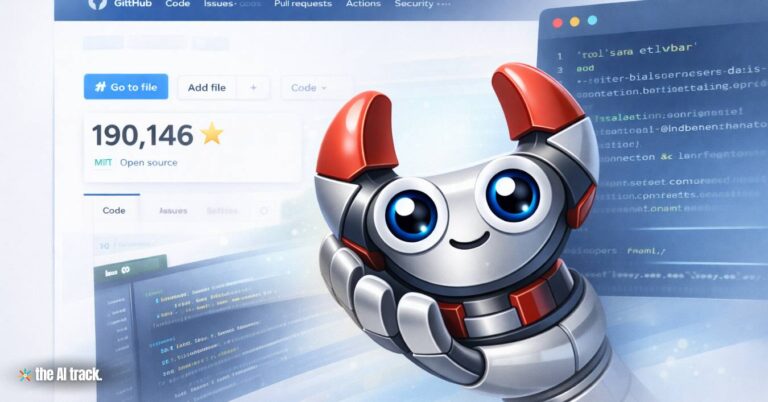
OpenAI Hires OpenClaw Creator – Key Points
The Overview
Peter Steinberger, founder of OpenClaw, said he is joining OpenAI to “work on bringing agents to everyone.” Altman confirmed the move on Feb. 15, 2026, and said OpenClaw will become a foundation-backed open-source project supported by OpenAI.
The Facts
Project Origins & Growth
- OpenClaw began as “ClawdBot” and was later known as “Moltbot,” before settling on its current name.
- Released in November 2025, it saw rapid adoption through December 2025 and early 2026, particularly among developers.
- Steinberger wrote that OpenClaw surpassed 100,000 GitHub stars and drew 2 million visitors in a single week.
- Early coverage described a surge of 60,000+ GitHub stars within 72 hours. The repository has since climbed above 190,000 stars, placing it among the most starred projects on GitHub.
Capabilities
- OpenClaw is described by users as a personal agent capable of managing email, handling insurance queries, checking in for flights, conducting web research, and shopping online.
- It runs directly on a user’s operating system and can browse, click, execute code, manage files, and interact with other applications autonomously.
- It combines tool access, sandboxed code execution, persistent memory, and integrations with messaging platforms including Telegram, WhatsApp, Discord, Slack, and iMessage.
- The system operates as a local gateway that connects AI models to files, scripts, and browsers. Persistent memory can be stored locally, and users can run it in a sandbox or grant broader system access.
- OpenClaw is model-agnostic: users connect it to a large language model of their choice, such as Claude, ChatGPT, Gemini, Grok, or local models. The software is free; users pay underlying model API costs.
Security & Regulatory Scrutiny
- Early deployments raised enterprise security concerns due to system-level access and configuration risks.
- In February 2026, China’s industry ministry warned that improperly configured open-source AI agents could expose users to cyberattacks and data breaches.
- Security professionals have highlighted risks including prompt injection, exposure to untrusted content, and agents acting on sensitive credentials stored on a device.
- Multiple companies have issued internal restrictions or bans on installing OpenClaw on corporate hardware. Reported examples include a Jan. 26 internal warning at Massive and a “strictly banned” directive at Valere. Some organizations have limited testing to isolated machines disconnected from production systems.
- In at least one reported case, a company authorized a 60-day internal security evaluation to determine whether OpenClaw could be hardened for business use.
Acquisition Details
- Altman said Steinberger is joining OpenAI to drive the next generation of personal agents and that OpenClaw will “live in a foundation” as an open-source project that OpenAI will continue to support.
- Steinberger said joining OpenAI gives him access to frontier research and models needed to build an agent “even my mum can use,” with stronger safety foundations.
- He confirmed that OpenAI already sponsors OpenClaw and that he is working to formalize the foundation structure to keep the project open and independent.
Industry Reaction
- LangChain CEO Harrison Chase described OpenClaw’s rise as a “lightning in a bottle” moment driven by public building and social momentum.
- LangChain prohibited employees from installing OpenClaw on company laptops due to security concerns.
- Some AI and security experts argue OpenClaw is largely an integration layer that combines existing model capabilities with expanded system access, rather than introducing new foundational AI breakthroughs.
Competitive Landscape
- AI agents are gaining attention as tools shift from conversational interfaces to task execution across apps and operating systems.
- OpenAI previously launched Agents API, Agents SDK, and the Atlas agentic browser, which did not achieve comparable viral traction.
Context
OpenClaw’s rise reflects a broader transition from chatbot-style AI toward autonomous agents capable of executing multi-step workflows. Unlike earlier agent waves such as AutoGPT in 2023, OpenClaw packaged persistent memory, tool execution, messaging integrations, and local system access into a single open-source runtime. Its viral growth coincided with social media hype, including the creation of Moltbook, a bot-driven social network that amplified public fascination with agent autonomy.
Timeline
- November 2025: OpenClaw released under earlier names.
- December 2025–February 2026: Rapid developer adoption and viral growth.
- February 2026: Regulatory and corporate security concerns escalate.
- February 15, 2026: Altman confirms Steinberger joins OpenAI; OpenClaw transitions toward a foundation-backed open-source structure.
Why This Matters
The hire signals that major AI labs are prioritizing systems that act across digital environments rather than simply generate text. At the same time, OpenClaw’s trajectory highlights a central tension in agentic AI: the same deep system access that enables productivity gains also introduces cybersecurity risk, regulatory scrutiny, and workplace resistance.
This article was drafted with the assistance of generative AI. All facts and details were reviewed and confirmed by an editor prior to publication.

Autonomous AI Agents are moving from pilots to production. Updated 2026 analysis of Microsoft, NVIDIA, Google, Anthropic, use cases, risks, and governance.

OpenAI and Paradigm release EVMbench, a benchmark testing AI agents on smart contract security. GPT-5.3-Codex scores 72.2% on exploit tasks across 120 vulnerabilities.
Explore the key differences between open source vs closed source AI, including their benefits, challenges, and implications for the future of AI
Read a comprehensive monthly roundup of the latest AI news!