
Key Takeaways
- The pursuit of AI supremacy is a multipolar contest led by the U.S., China, the EU, India, and emerging alliances like BRICS.
- Semiconductors and AI compute infrastructure have become strategic assets, fueling export controls, trade wars, and investment races.
- The U.S. leads in private sector AI innovation and global expansion strategies, leveraging initiatives like Stargate and the UAE megadeal.
- China combines state-led industrial policy with global open-source influence, a hardware-software dual push, and rare earth leverage.
- India’s development-first model focuses on agriculture, healthcare, and MSMEs, underpinned by massive infrastructure and talent training.
- The European Union seeks to lead through regulation, with landmark investments in sovereign compute and initiatives like InvestAI.
- France is positioning itself as Europe’s infrastructure anchor via its low-carbon grid and UAE-backed data centers.
- South Korea and the UAE represent strategic hedgers—one investing in sovereign compute, the other using capital to buy influence.
- The BRICS+ AI Alliance aims to build a non-Western AI value chain, further fragmenting the global AI ecosystem.
- Competing visions of AI governance—from China’s proposed Shanghai-based org to the UAE-WEF’s GRIP—signal a global clash over norms.
- Absolute dominance is increasingly unrealistic; the winners will be those who control talent, energy, and trust.
Introduction: The Dawn of the Algorithmic Age
The year 2025 marks a watershed moment in global affairs. The abstract concept of “AI supremacy” has crystallized from a distant technological aspiration into the central organizing principle of 21st-century geopolitics. It now actively drives national strategies, fuels multi-billion-dollar investments, and triggers a fundamental realignment of global power. In a dramatic shift likened to a modern “Sputnik moment,” models from Chinese firms like DeepSeek and Alibaba now rival—and in some benchmarks surpass—their Western counterparts. This signals not only the end of unchallenged American dominance but the emergence of a multipolar technological landscape.
The global race for AI supremacy is no monolithic contest. It is a complex, multipolar struggle waged across several strategic dimensions:
- the physical infrastructure of compute,
- the strategic allocation of capital,
- the global war for talent,
- and a foundational battle over ideology.

True leadership will be defined not merely by owning the most advanced model, but by mastering an integrated “sovereignty stack”: the combined control over hardware, software, data, energy, and regulatory frameworks that underpin AI systems.
This report charts the contours of the new global order:
- It begins by examining the bipolar contest between the U.S. and China, each pursuing radically divergent paths to AI supremacy.
- It then broadens to the emerging constellation of middle powers—the EU, UK, and India—each carving independent trajectories to technological influence.
- It deconstructs the core instruments of power—compute, talent, and capital—to expose the intricate dependencies that undermine any narrative of complete self-reliance.
- Finally, it critiques the very notion of “supremacy,” highlighting its strategic risks, ethical dilemmas, and the alternative futures championed by nations prioritizing social equity over dominance.
The struggle for AI supremacy is not just about who will lead the world—but what kind of world artificial intelligence will shape in the decades to come.

Global AI Supremacy Scorecard (2025)
| Nation / Bloc | Key National Strategy | Flagship Investment / Initiative | Core Philosophy |
|---|---|---|---|
| United States | AI Action Plan / Stargate / UAE Megadeal | $500B Stargate Initiative; CHIPS Act ($7.86B to Intel); Abu Dhabi 5GW AI Campus | Private-sector-led dominance; global expansion via alliance-based infrastructure |
| China | “Independent & Controllable” Stack / Open-Source Gambit | $1.4T AI+ Initiative; $47B “Big Fund”; 1,509 LLMs; rare earth export leverage; AI in school curriculum | State-led sovereignty stack; open-source proliferation; talent and resource control |
| European Union | Brussels Effect / InvestAI / France’s AI Pivot | €200B InvestAI; €109B French Sovereign Compute Plan; €30–50B UAE-backed data center | Regulation-first sovereignty; low-carbon compute; rights-based leadership |
| India | “AI for India 2030” / Full-Stack Development | Reliance $30B AI campus; Microsoft $3B; $1.2B gov’t funding; AI literacy for 10M+ citizens | Development-first model; social equity and UN SDG alignment |
| United Kingdom | AI Opportunities Action Plan | £47B economic goal; 20x compute increase; flexible regulatory framework | Pro-innovation, agile regulation; public-private partnership |
| UAE | Capital-as-a-Strategy / Neutral Broker Role | G42-backed 5GW AI Campus; GRIP initiative; MGX AI investments | Sovereign capital deployment; geopolitical hedging via multilateral alliances |
| Russia / BRICS+ | AI Sovereignty / Anti-Western Stack | BRICS+ AI Alliance; expansion of supercomputing; Code of AI Ethics | Tech decoupling; multipolar world order; battlefield-centric AI vision |
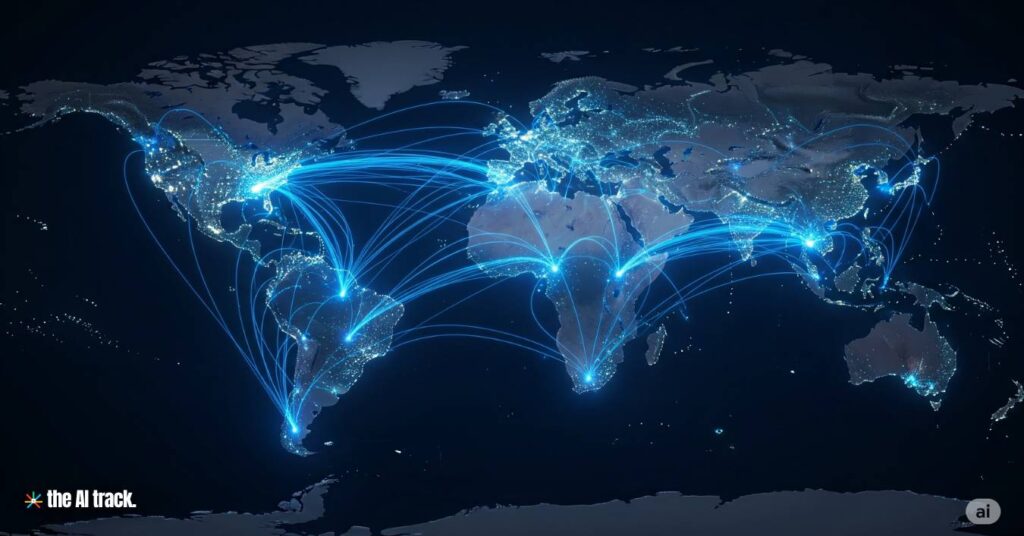
Part I: The Two Titans – A New Cold War in a Digital World?
At the heart of the race for AI supremacy lies a fierce contest between the United States and China: two superpowers locked in a struggle that spans infrastructure, ideology, and international influence. While often framed as a new Cold War, the AI competition is far more intricate: not a binary standoff but a deeply entangled technological arms race between structurally distinct systems. Each is executing a radically different strategy shaped by its domestic institutions, industrial base, and geopolitical vision.
America’s Blitzscaling Playbook: Capital, Deregulation, and Scale
The United States continues to lean on its most formidable asset: the unmatched scale and speed of its private sector. Its strategy for AI supremacy blends massive capital mobilization, deregulation, and increasingly, strategic chokepoints to control the global AI value chain. This playbook—described as “blitzscaling at the national level”—is defined by three core pillars:
- Massive investment in compute infrastructure
- Aggressive deregulation to accelerate deployment
- Export controls to contain rivals
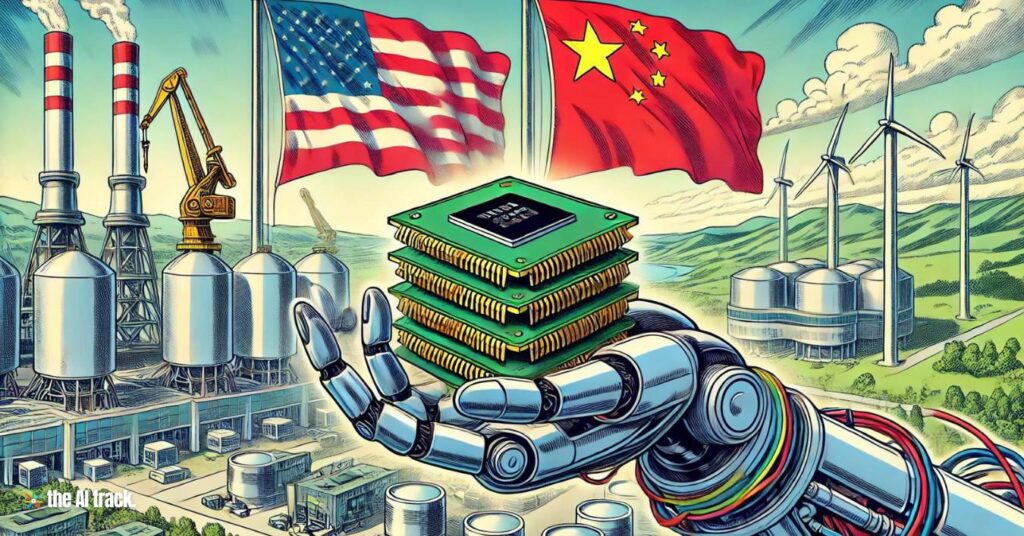
Pillar 1: Stargate and the Industrialization of AI Compute
At the center of this push is the Stargate Initiative, a $500 billion private-public megaproject launched in early 2025. Backed by OpenAI, Microsoft, Oracle, NVIDIA, SoftBank, and the UAE’s MGX, Stargate aims to construct ten hyperscale data centers—each over one million square feet—across the U.S., starting in Texas. These facilities represent a new breed of AI-first infrastructure, purpose-built to train and deploy frontier models at scale.
In parallel, the CHIPS and Science Act is restoring America’s chip sovereignty. The Act has already allocated $7.86 billion in direct funding to Intel, catalyzing over $100 billion in planned domestic investment across sites in Arizona, Ohio, New Mexico, and Oregon. The strategy is clear: repatriate semiconductor fabrication, reduce dependence on East Asian supply chains, and ensure the United States controls the foundational hardware for the AI era.
Pillar 2: Deregulation as a Competitive Weapon
The 2025 executive orders under the “America’s AI Action Plan” have recentered U.S. policy around speed over safeguards. Earlier mandates like watermarking synthetic content and mandatory AI safety audits have been revoked. The regulatory mood now favors acceleration—streamlining approvals, fast-tracking environmental permits, and unleashing private capital.
Pillar 3: Export Controls and Tech Denial Strategy
The third prong is less visible—but more consequential: strategic export controls on AI chips and tooling. Through a combination of Commerce Department restrictions and diplomatic pressure on allies like the Netherlands, South Korea, and Taiwan, the U.S. has moved to sever China’s access to cutting-edge GPUs, lithography equipment, and even chip design IP.
A 2024 directive explicitly blocked TSMC and Samsung from fulfilling Chinese orders for advanced AI chips using U.S.-origin technology. The goal is clear: cripple China’s ability to train frontier models and widen the compute gap.
However, these measures come with risks:
- They accelerate Beijing’s self-reliance push, potentially strengthening China’s domestic supply chain in the long run.
- They complicate relations with key allies who profit from Chinese semiconductor demand.
- They increase the stakes of tech decoupling, pushing the world closer to a bifurcated AI ecosystem.

Emerging Fault Lines
While America’s strategy for AI supremacy has produced short-term dominance, its long-term sustainability is in question:
- The energy crisis looms large: Each Stargate site requires 500–700 megawatts of power—equal to powering half a million homes. A 2024 DoE report warns that data centers could consume 12% of U.S. electricity by 2028.
- Capital Vulnerability: Foreign capital from SoftBank and the UAE increases U.S. leverage but opens avenues for external pressure.
- Ethical Backlash: Deregulation has created unease around election manipulation, model safety, and public trust.
To mitigate these risks and expand its compute supply chain, the U.S. is pursuing an alliance-first strategy, exemplified by its $200 billion tech deal with the UAE. This partnership establishes a secure, capital-rich expansion node for American AI infrastructure abroad, offering a replicable blueprint to counter the China-Russia axis through economic leverage and allied infrastructure.
The U.S. model for achieving AI supremacy is fast, well-funded, and globally expansive—but also brittle. It dominates in compute, investment, and private-sector agility, but remains exposed to shocks in energy, ethics, or ecosystem fragmentation. What it gains in scale, it may sacrifice in resilience.
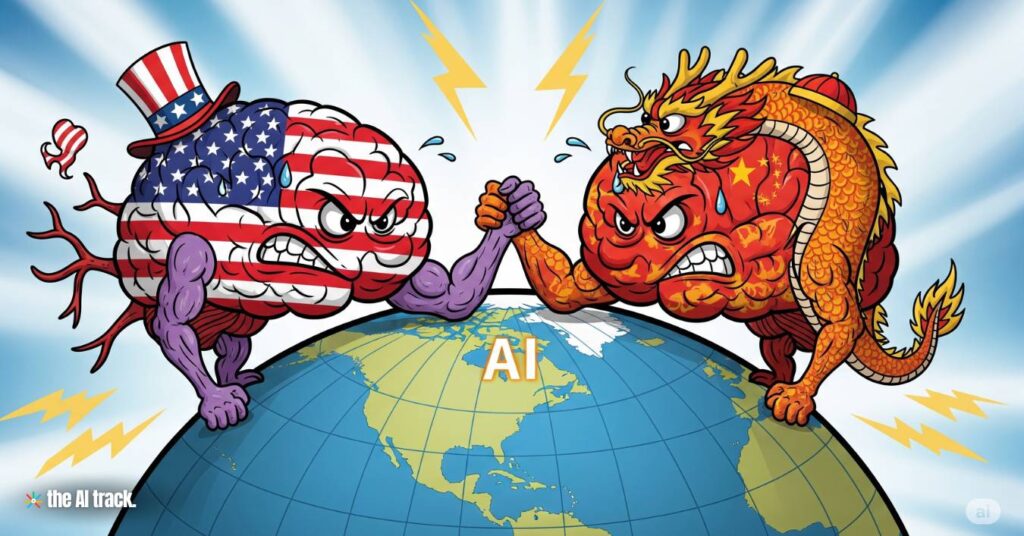
China’s Strategic Confluence: Self-Reliance, Software Leverage, and Systemic Scale
China is executing a disciplined, multi-vector strategy rooted in self-reliance, platform control, open-source proliferation, and systemic scale. Under the “Independent & Controllable” doctrine reaffirmed at the 2025 Politburo study session, Beijing is building an end-to-end AI stack—from silicon and software to talent and ideology—to achieve long-term technological autonomy.
This is not a retreat from globalization. It is a dual-front campaign: combining top-down industrial policy with bottom-up open-source diffusion to neutralize U.S. sanctions and reshape the global AI landscape on Chinese terms.
Turning Sanctions into Software Leverage
Facing U.S. export controls on NVIDIA’s top-tier AI chips, China has launched an asymmetric software offensive—flooding the global market with powerful, open-source LLMs that run on mid-range hardware. Firms like DeepSeek, Alibaba, Baidu, and MiniMax have released models such as Qwen3 and DeepSeek-V2 that now outperform Meta and Google’s open counterparts across major benchmarks (MMLU, ARC, GSM8K).
This “open-source gambit” achieves several strategic goals:
- Neutralizes hardware chokepoints: Mixture-of-Experts architectures allow for efficiency on locally sourced chips, bypassing reliance on top-tier U.S. silicon.
- Disrupts Western business models: Free access to high-performing models pressures Western firms to compete on utility, not paywalls.
- Builds soft power at scale: By seeding models, datasets, and developer tools globally, China is reframing itself as a technological contributor to the AI commons, particularly in Southeast Asia, Africa, and Latin America.
As NVIDIA CEO Jensen Huang warned, “If China can’t buy the chips, it will build them—and dominate the model layer in the meantime.”
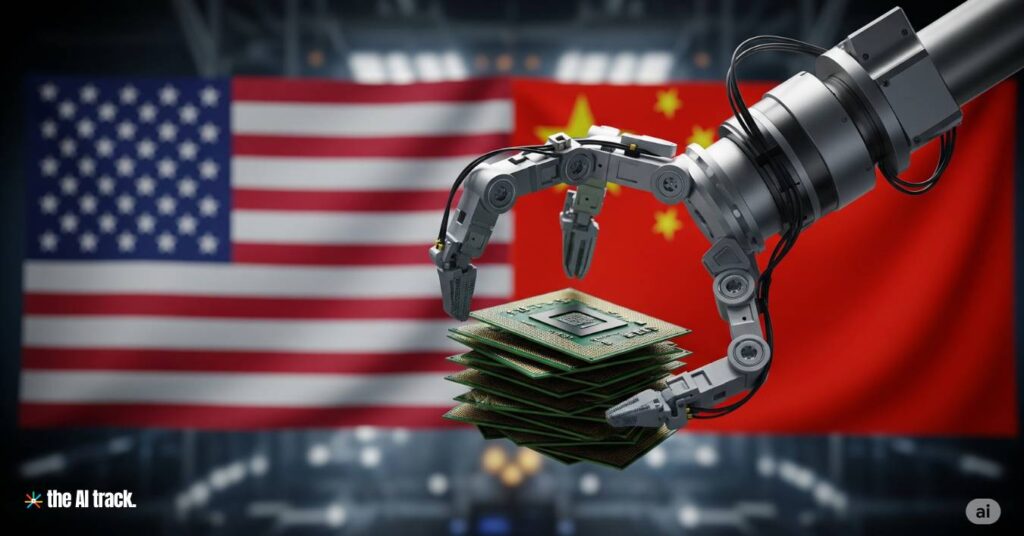
Backing Software with State Muscle and Rare Mineral Leverage
This software-led push is fortified by a massive state-backed hardware and industrial apparatus:
- The $47B “Big Fund” is scaling national fabs like SMIC and Huawei’s HiSilicon.
- The “Eastern Data, Western Computing” plan is redistributing compute infrastructure inland to balance capacity and power grid pressure.
- China leads the world in AI patents, holding 70% of all global filings as of mid-2025.
Beijing has also escalated the resource front of the tech war. In 2025, China imposed a retaliatory export ban on gallium and germanium, two rare minerals critical to advanced semiconductors and defense systems. Given that China controlled 98% of global raw gallium output in 2023, the move exposed Western supply chain fragility and created a potent economic weapon in future negotiations.
This willingness to leverage material dominance shows that China’s AI push is not just digital—it is grounded in resource strategy, production control, and coercive leverage.
Cultivating the AI-Native Generation
In parallel, China is undertaking an unparalleled national-scale investment in human capital.
Beginning in September 2025, AI literacy is now mandatory in all Chinese primary and secondary schools, starting with a national pilot in Beijing. All students—from age six onward—must receive at least eight hours of AI education annually. The long-term aim: embed AI fluency at the earliest stage to create an AI-native generation by 2030.
This is part of a broader human infrastructure strategy that includes:
- A dense domestic research ecosystem of 5,100 AI firms and 71 unicorns;
- A global leadership position in model development, with 1,509 large models released by mid-2025—more than 40% of all LLMs worldwide;
- And a growing edge in model performance, with Chinese open-source LLMs frequently outscoring Western counterparts on standardized benchmarks.
This is not simply scale—it is the emergence of a state-engineered AI ecosystem operating at national depth and global breadth.
Contradictions of Control
Yet China’s model for AI supremacy remains riddled with internal contradictions:
- Evidence of political bias in its LLMs has raised adoption concerns in democratic markets, where CCP-aligned outputs are flagged as trust risks.
- The tension between open-source proliferation and narrative discipline continues to mount. Can the Party tolerate truly open systems without sacrificing ideological control?
Still, the dual-front strategy is working. U.S. sanctions have not contained China—they’ve catalyzed it. The country is building not only its own sovereign hardware, but also weaponizing open-source, rare-earth leverage, and mass education to reshape the global AI terrain towards AI supremacy.

Part II: The Emerging Constellation – Middle Powers Assert Strategic Agency
Beyond the U.S. – China rivalry for AI supremacy, a new bloc of technologically ambitious nations is asserting strategic agency in the AI landscape. These middle powers—the European Union, United Kingdom, India, and others—are not merely reacting to the global AI supremacy race; they are crafting sovereign strategies rooted in national values, sectoral strengths, and long-term geopolitical positioning. Their collective actions are reshaping the contours of AI supremacy into a more multipolar contest.
Europe’s “Regulate to Lead” Doctrine: Rights, Sovereignty, and Strategic Infrastructure
The European Union has positioned itself as the world’s regulatory vanguard in AI. Anchored by the AI Act, which enters enforcement in August 2025, the EU’s strategy is to codify risk-based governance: banning “unacceptable” uses like social scoring and imposing stringent compliance frameworks for high-risk systems in healthcare, transport, and law enforcement.
This approach—known globally as the “Brussels Effect”—seeks to project European legal norms across borders by compelling multinationals to adapt or exit. Yet the high-friction model has triggered backlash. Meta and key EU industrial players like Airbus have warned that overregulation may stifle innovation, delay time-to-market, and jeopardize Europe’s competitiveness in foundational model development.
To counter these concerns, the EU has launched InvestAI, a sweeping €200 billion initiative aimed at transforming Europe’s regulatory edge into industrial leverage. The plan targets three pillars: converting the region’s deep talent pool into applied innovation, building sovereign data and compute infrastructure, and ensuring that European firms of all sizes—not just tech giants—have access to world-class AI tools.
At its core lies a €20 billion public-private fund to construct a network of “AI Gigafactories”: massive compute campuses equipped with 100,000+ next-gen chips each, designed to support the training of large-scale AI models for scientific discovery, industry, and defense. European Commission President Ursula von der Leyen has dubbed the vision “a CERN for AI”—a continental-scale R&D infrastructure built on openness, collaboration, and sovereignty.
Within this broader EU strategy, France is executing a bold national pivot to dominate the infrastructure layer. Backed by a €109 billion AI investment plan, Paris is leveraging its nuclear-powered grid to offer stable, low-carbon compute at scale. Its flagship project: a 1 GW AI data campus, co-funded with the UAE’s MGX, designed to anchor Europe’s sovereign AI stack and attract foundation model developers and hyperscalers.
France’s wager is clear: in a future of compute scarcity and grid constraints, energy-stable, sovereign AI infrastructure will be a geopolitical asset. As the U.S. and China wrestle with regulatory backlash, chip bottlenecks, and energy surges, Europe is crafting a distinct model—one that pairs rights-based governance with continental-scale capability.
Whether this dual strategy can scale fast enough to make Europe more than a regulator and turn it into a true AI power capable of competing for AI supremacy is the defining question of its next decade.

The United Kingdom: Deregulated, Agile, and Growth-Oriented
The UK, post-Brexit, is leveraging its regulatory independence to pitch itself as a “pro-innovation” AI hub. Its AI Opportunities Action Plan, launched in 2024, emphasizes flexible governance, testbed zones, and sovereign compute investments. By rejecting the EU’s high-regulation model and resisting U.S.-style deregulation, the UK hopes to offer a hybrid model attractive to startups, researchers, and international capital.
With goals of increasing compute capacity 20x and delivering a £47B economic impact by 2030, the UK has launched new “AI growth zones,” eased planning restrictions, and created a National Data Library to safely open NHS and public datasets for model training.
At the same time, it is pursuing soft power diplomacy in AI governance. After hosting the 2023 Bletchley Park AI Safety Summit, the UK has positioned itself as a convener for global AI ethics—without being bogged down in enforcement mechanisms.
India’s Full-Stack Development Strategy
Amid the intensifying race for AI supremacy, India is charting an independent course—neither regulation-first like the EU nor capital-first like the U.S. Instead, its approach is unapologetically development-first, grounded in national autonomy and inclusive growth.
At the heart of this vision is the AI for India 2030 initiative, a comprehensive national strategy aiming to contribute $500 billion to India’s GDP by embedding AI into the country’s core economic sectors. Rather than pursuing benchmarks or military applications, India focuses on applying AI to address enduring developmental challenges.
The initiative targets three foundational pillars:
- Agriculture, where AI is used to improve yields, optimize supply chains, and assist farmers;
- Healthcare, particularly in rural areas, where AI enables diagnostics, telemedicine, and predictive public health tools;
- MSMEs (Micro, Small, and Medium Enterprises), supporting India’s economic backbone with AI-driven logistics, automation, and financial services.
Backing this vision is one of the world’s most ambitious infrastructure buildouts. Reliance Industries is constructing a $20–30 billion, 3-gigawatt AI compute complex in Jamnagar—set to become the largest of its kind globally. Co-located with a 5,000-acre green energy park, it positions India as a future leader in sustainable AI infrastructure.
The momentum is further reinforced by Microsoft’s $3 billion investment in cloud and AI infrastructure, and the Indian government’s commitment of $1.2 billion in public funding to scale AI projects nationwide.
India’s most significant long-term asset, however, may be its human capital. Historically a top exporter of tech talent, India is now reversing the brain drain. As the domestic ecosystem matures, more elite researchers are choosing to remain and innovate within India’s borders. Microsoft’s pledge to train 10 million citizens in AI skills by 2030 underscores both the scale of this opportunity and India’s demographic advantage.
India’s model stands apart. It is not a derivative of the U.S. or Chinese playbooks, but a homegrown paradigm—one that builds across the entire “sovereignty stack”: compute, talent, software, and policy. Crucially, it aligns with the UN Sustainable Development Goals, offering a vision of AI as an engine of empowerment rather than geopolitical dominance.
If successful, India could provide the Global South with a scalable “third path”—a full-stack AI strategy rooted in national priorities and developmental equity. In doing so, it challenges the notion that AI supremacy must be won through hegemony, and instead proposes that leadership can emerge through inclusion, sustainability, and purpose-driven innovation.

The Strategic Hedgers: South Korea and the UAE
Beyond the major powers competing for AI supremacy, a handful of countries are adopting calculated hedging strategies to navigate the great-power contest without becoming subordinate to either bloc. South Korea and the United Arab Emirates (UAE) exemplify two distinct but effective approaches: one centered on building sovereign AI capabilities, the other on becoming a global capital nexus for AI infrastructure.
South Korea: Technological Sovereignty through Infrastructure
As a close U.S. ally and advanced tech economy, South Korea faces a delicate balancing act. There is growing anxiety within Seoul’s innovation ecosystem about being relegated to a peripheral role in a U.S.-dominated AI landscape—as a downstream developer rather than a sovereign model creator.
To assert independence, the government has launched an ambitious plan to establish a National AI Computing Center, with a target of acquiring 10,000 high-performance GPUs by end-2025. This public-private infrastructure will equip domestic companies and academic institutions with the compute needed to train advanced foundation models.
The long-term objective is clear: create a Korean-language, culturally attuned foundation model that achieves at least 95% parity with the world’s leading AI systems. This would ensure that South Korea remains a sovereign AI innovator—rather than a consumer of foreign models—and maintains its geopolitical autonomy in the AI age.
UAE: Capital as Geopolitical Leverage
The UAE is taking a radically different path: deploying capital at global scale to embed itself in multiple AI ecosystems simultaneously. Through MGX, its sovereign AI investment fund, the UAE has become an indispensable player in some of the world’s largest AI infrastructure projects.
- It is a key backer of the $500B U.S.-led Stargate Initiative, alongside Microsoft, OpenAI, and SoftBank.
- It is the lead investor in the €30–50 billion Franco-Emirati data center program, the cornerstone of France’s sovereign compute strategy.
This capital-as-a-strategy approach allows the UAE to achieve several strategic goals: access to frontier technology, deep integration into the value chains of multiple AI superpowers, and geopolitical insulation. In a landmark demonstration of this power, the UAE finalized a $200 billion tech agreement with the United States, headlined by the construction of the world’s largest AI campus outside of U.S. borders. This Abu Dhabi complex will be operated by American firms and reportedly receive up to 500,000 Nvidia Blackwell chips annually. In exchange, the UAE agreed to divest from Chinese hardware, fully aligning this part of its infrastructure with U.S. security protocols in a model of capital-rich “friend-shoring.”
Together, South Korea and the UAE exemplify how middle powers can shape the AI landscape through targeted bets—either by securing compute sovereignty or by becoming indispensable financial stakeholders in global infrastructure. In a world fixated on AI supremacy, these hedging strategies offer a pragmatic model for nations unwilling to choose sides.

The Rise of an Alternative Axis: Russia, China, and the BRICS AI Alliance
As the West consolidates its AI strategies, a parallel power bloc is quietly taking shape—anchored by deepening strategic ties between Russia and China. Pushed together by U.S. sanctions, Moscow now views Chinese tech as both a lifeline and blueprint, seeking to emulate Beijing’s self-reliant model to reduce Western dependency across its AI stack.
In 2024, this bilateral alignment expanded into the BRICS+ AI Alliance, with Russia at the helm. The initiative now includes Brazil, India, China, South Africa, Iran, and the UAE, and aims to construct a non-Western AI value chain—complete with its own chips, data infrastructure, model governance, and talent pipelines.
Key pillars include:
- Joint research programs and sovereign compute campuses.
- Adoption of common frameworks such as Russia’s “Code of AI Ethics.”
- Strategic positioning as an alternative regulatory and technological model to U.S.-led standards.
Far from symbolic, this coalition now represents 35% of the global economy, with explicit ambitions to erode Western military-technological advantages and reframe global AI development around multipolar norms.

Part III: The Geopolitics of the Stack – Power, Dependency, and Fragility
The race for AI supremacy is not only a contest of algorithms. It is a race to master the foundational layers of the AI “stack”—compute infrastructure, energy, talent, and capital. These components are no longer neutral inputs; they are geopolitical assets. The nations that control them shape not just innovation trajectories, but global dependencies, alliances, and influence.
Compute & Energy: Infrastructure as Strategic Terrain
Compute has become the new strategic terrain. Hyperscale data centers, GPU clusters, and sovereign cloud infrastructure are the physical enablers of AI development. But compute without energy is inert—and AI compute is ferociously power-hungry.
- In the U.S., each Stargate node demands up to 700 megawatts. The DOE forecasts that AI compute may consume up to 12% of national electricity by 2028.
- France is leveraging its 65% nuclear-powered grid to offer low-carbon compute zones, attracting investments from AWS and MGX.
- India’s 3 GW Reliance AI park is co-located with a green energy hub to address both compute growth and sustainability goals.
This competition has created an “AI-energy nexus,” where access to clean, scalable, and sovereign power becomes a gating factor for national AI ambitions. Governments are now exploring radical options—from small modular nuclear reactors (SMRs) for data centers in the UK, to long-term hydropower contracts in Canada, to methane capture sites in Texas.
In this environment, nations that once led in AI software but neglected energy policy (e.g. Germany) are at risk of losing ground. Energy is no longer a utility—it is AI leverage.
Talent: The Battle for Minds
AI supremacy also depends on human capital. The training and retention of elite AI researchers has become a national security priority.
- The U.S. hosts 60% of top-tier AI research institutions, benefiting from open immigration, H-1B visa pipelines, and world-class universities.
- China is producing nearly half of the world’s top AI researchers, many trained at home due to growing domestic opportunities and geopolitical frictions with the West.
- India, long a net exporter of tech talent, is now retaining more of its AI scientists, reversing decades of brain drain through ecosystem growth and targeted incentives.
The talent ecosystem is deeply interdependent. Many of the most cited AI papers have co-authors across continents. But this interdependence is under strain. Visa restrictions, national security reviews, and talent repatriation programs are slowly hardening the flow of expertise into regional blocks.
Nations are beginning to treat AI researchers like strategic resources, akin to rare earth minerals or chip fabs—scarce, competitive, and vulnerable to disruption.

Capital: Sovereignty Meets Global Finance
Despite its nationalist overtones, the AI supremacy race is still lubricated by global capital.
- The U.S. model is privately led but globally financed: Stargate includes capital from the UAE and Japan.
- France’s sovereign compute plan is underwritten by foreign sovereign wealth.
- India’s compute ambitions depend on multinationals like Microsoft and chip imports from the U.S. and Taiwan.
This exposes a paradox: national AI sovereignty often rests on international financing and supply chains. No nation—despite rhetoric—controls the full stack.
The result is a web of interlocking dependencies:
- The U.S. leads in talent and investment, but is constrained by energy bottlenecks and foreign capital exposure.
- China leads in scale and manufacturing, but lacks access to top-tier chips and remains excluded from U.S. GPU supply.
- Europe leads in governance and energy stability, but trails in model development and capital deployment.
- India is scaling talent and infrastructure but still depends on imported hardware and external financing.
This structural reality undermines the idea of total independence. Instead, power is now measured by a country’s ability to navigate, negotiate, and mitigate these dependencies, not eliminate them. The future of AI supremacy lies not in isolation, but in orchestrated resilience across a fragile, multipolar system.

Part IV: Beyond the Race – Critiques, Risks, and Alternative Futures
As the pursuit of AI supremacy accelerates, a growing body of thinkers, ethicists, and policymakers are challenging the assumptions underpinning this global contest. While most national strategies frame AI as a zero-sum competition for power, critics argue that this mindset could create more risks than rewards. This section explores the emerging backlash against the “supremacy” narrative and maps out alternative paths for global cooperation and ethical leadership.
The AI Supremacy Trap: When the Metaphor Becomes the Mission
The metaphor of an “AI arms race” has become the dominant frame for national strategies. But unlike nuclear weapons, AI is a general-purpose technology—diffuse, dual-use, and primarily developed by private actors across borders. The race framing conflates competitive urgency with military logic, obscuring the collaborative foundations of AI research.
This militarization of AI discourse has real-world consequences:
- It justifies massive defense spending and accelerates the deployment of under-tested systems in high-stakes environments.
- It empowers regulatory rollback, with companies invoking national security to resist scrutiny.
- It discourages global cooperation, even on shared risks like synthetic media, autonomous weapons, or runaway models.
Critics argue for a shift in metaphor—from an arms race to a “space race” model: one where competition coexists with structured collaboration on global infrastructure, safety standards, and scientific progress.
The Battle for Global Governance
The AI supremacy race is no longer just about compute or models—it is now a fight to define the rules of global AI governance.
In 2025, China proposed a new multilateral body—a “Global Artificial Intelligence Cooperation Organization” based in Shanghai—to provide an alternative to Western-led governance frameworks. Marketed as a voice for the Global South, the body would promote open-source access, shared infrastructure, and non-hegemonic standards, positioning Beijing as the benevolent architect of global AI norms.
Meanwhile, the United Arab Emirates, in partnership with the World Economic Forum, launched the Global Regulatory Innovation Platform (GRIP)—a real-world policy sandbox that allows countries to prototype and co-develop AI regulations. Rather than enforce top-down rules, GRIP offers:
- Agile policy toolkits and testbeds for governments
- Multistakeholder collaboration models
- A “think-do tank” architecture for proactive, cross-border regulation
As competing governance models crystallize, the world faces a critical choice: adopt U.S.-aligned, market-driven rules, support China’s state-led multilateral alternative, or co-create neutral governance hubs like GRIP. The outcome will define not only global AI standards—but the balance of ideological power in the algorithmic age.

The Ideological Rift: Competing Visions for AI’s Role in Society
Beneath the policy differences lies a deeper conflict of values. The race for AI supremacy is also a contest between competing visions for how societies should govern intelligence itself.
- The U.S. strategy emphasizes deregulated innovation and market control, seeing AI as a lever for geopolitical and economic dominance.
- China uses AI to reinforce state control and project its techno-authoritarian model abroad—often embedding surveillance functions in its exported tools.
- The EU envisions AI as a regulated utility—governed by law, accountable to citizens, and aligned with fundamental rights.
Meanwhile, countries like India are pioneering development-first models, using AI to tackle healthcare access, education gaps, and rural poverty. Their approach challenges the idea that AI must serve power, suggesting it can instead serve public goods.
Competing Regulatory Philosophies
| Region | Core Principle | Key Legislation / Initiative | Stance on Data / Privacy |
|---|---|---|---|
| United States | Market-led, innovation-first | AI Action Plan; voluntary commitments | Corporate access prioritized; national security alignment |
| China | State control + open-source diffusion | CAC AI rules; AI+ Initiative; education mandates | State access to data; ideological censorship; ecosystem standardization |
| European Union | Rights-first, enforceable, globally exportable | AI Act; InvestAI; GDPR | Strict compliance; transparency; bans on high-risk or opaque systems |
| United Kingdom | Sector-specific, agile, pro-growth | AI Opportunities Action Plan | Innovation-friendly; NHS public data use with anonymization safeguards |
| UAE | Multilateral, anticipatory governance | Global Regulatory Innovation Platform (GRIP) with WEF | Balanced oversight; cross-border sandboxes; adaptive regulatory frameworks |
| Russia / BRICS+ | Technonationalism, norm-building | Code of AI Ethics; BRICS+ AI Alliance | Data localization; alternative governance stack; limited transparency |
The future of global AI governance may well hinge on which of these philosophies—dominance, control, or empowerment—sets the norms for the coming decade.

Fragmentation Risks: Toward a “Splinternet of AI”
The world is not just racing—it is fragmenting. The digital stack that once enabled global cooperation is now fracturing into regional blocs defined by incompatible legal regimes, data sovereignty laws, and platform restrictions.
- The EU’s AI Act and GDPR limit data transfers and impose rigorous compliance hurdles.
- China’s CAC rules mandate algorithmic conformity with state ideology and restrict foreign LLM deployment.
- The U.S. has no binding federal AI law, opting instead for voluntary safety commitments and market self-regulation.
This divergence could lead to a “splinternet of AI”, where different models cannot legally operate—or interoperate—across jurisdictions. Businesses face rising compliance costs, researchers encounter data silos, and global cooperation on AI safety becomes harder.
Worse, these legal walls are mirrored in technical incompatibilities: different foundation model architectures, language models fine-tuned for local ideologies, and cloud infrastructures siloed by export controls.
Without shared protocols or governance frameworks, the global AI ecosystem risks becoming balkanized—fractured, duplicative, and less safe.
Alternative Futures: Ethics, Alignment, and Collective Leadership
Despite these trends, a new coalition is emerging around the idea of responsible AI. International organizations and smaller states are beginning to chart third paths that emphasize:
- Global coordination on frontier risks (e.g. the UK’s AI Safety Summits, GPAI, and the UN’s AI Advisory Body)
- Ethical standards grounded in transparency, explainability, and non-discrimination
- Inclusion, with a focus on Global South participation and equitable access to AI benefits
The most influential actors of the next decade may not be those that deploy the most powerful models, but those that build trustworthy frameworks for their use—frameworks that align AI systems with human values, democratic oversight, and sustainable development.
As this global negotiation unfolds, AI supremacy may come to mean not just dominance in compute or models—but leadership in defining how intelligence is governed, shared, and applied for collective survival.

Conclusion: AI Supremacy in a Fractured World
The race for AI supremacy has matured into a dense, multipolar competition—no longer a binary standoff, but a high-stakes strategic choreography involving superpowers, middle states, and sovereign investors. What began as a rivalry between the U.S. and China has expanded into a complex geopolitical alignment around control of the full sovereignty stack: compute, capital, talent, energy, regulation, and ideology.
Each major actor is now pursuing a distinct playbook:
- The United States is scaling aggressively, weaponizing capital, deregulation, and infrastructural ambition to assert dominance—but at growing cost to resilience and trust.
- China has turned constraint into strategy, coupling centralized control with a global open-source offensive to erode Western technological monopolies.
- The European Union, led by France, is pushing a values-first model: slower, but grounded in human rights, energy efficiency, and digital sovereignty.
- India is redefining ambition—not through global conquest, but through inclusive deployment. Its full-stack strategy reframes AI as a development tool for the Global South.
- Powers like South Korea and the UAE are executing hedging strategies—securing autonomy through compute or capital rather than taking sides.
This global AI ecosystem is not converging on one model—it is diverging. Rather than a clear “winner,” the world is witnessing the rise of regional blocs, bespoke infrastructures, and incompatible governance regimes.
The idea of a singular, unchallenged AI hegemon is not just outdated—it’s structurally implausible. The interdependencies are too deep: no nation controls the entire supply chain, from silicon to software to talent. Energy demands alone are becoming a critical bottleneck. Regulation is fragmenting. And no model is politically or ethically universal.
In the decade ahead, the most successful actors will not be those who simply scale the fastest—but those who can:
- Anchor AI development in domestic capability while remaining globally interoperable,
- Build resilient infrastructure without collapsing under ecological or political strain,
- Attract and retain world-class talent without stoking societal backlash,
- And shape not just tools—but the values, standards, and systems in which those tools operate.
In short, AI supremacy is no longer a destination. It is a dynamic process of governance, negotiation, and adaptation—playing out across a fractured global terrain. The world’s future with AI will not be dictated by a single codebase or capital center, but by a mosaic of strategies, visions, and contradictions. Mastering that complexity—not escaping it—will define leadership in the algorithmic century.
Frequently Asked Questions
Glossary of Key Terms
- AI (Artificial Intelligence): The ability of a computer or machine to mimic human intelligence processes, such as learning, reasoning, and problem-solving.
- AI Chip: A specialized electronic circuit designed to accelerate artificial intelligence workloads, such as machine learning and deep learning.
- Generative AI: A type of AI that creates new content, like text, images, audio, and video, based on the data it has been trained on.
- Large Language Model (LLM): An AI model trained on a massive dataset of text and code, capable of generating human-quality text, translating languages, and writing different kinds of creative content.
- Semiconductor: A material that has electrical conductivity between that of a conductor and an insulator, essential for making integrated circuits used in computers and other electronic devices.
- GPU (Graphics Processing Unit): A specialized electronic circuit designed to rapidly manipulate and alter memory to accelerate the creation of images in a frame buffer intended for output to a display device.
- Venture Capital: A form of private equity financing provided by investors to startup companies and small businesses they believe have long-term growth potential.
- Unicorn Startup: A privately held startup company valued at over US$1 billion.
- Open Source: Software with source code that anyone can inspect, modify, and enhance.
- Digital Sovereignty: The ability of a nation-state to have control over its own digital destiny, including data, infrastructure, and technology.
Why is there such high demand for AI talent, and who are the key players?
The rapid rise of AI technologies like ChatGPT has created a massive demand for skilled professionals who can develop and implement these systems. This has led to fierce competition between companies, often described as an “AI talent war.”
Key players in this war include established tech giants like Google (DeepMind), Microsoft, Amazon, and Nvidia, as well as ambitious startups like OpenAI, Mistral AI, and Inflection AI. These companies are offering lucrative salaries, stock options, and other benefits to attract and retain top talent.
How is the AI chip race reshaping global politics and security?
AI development relies heavily on powerful computer chips, particularly AI accelerators like those produced by Nvidia. However, the manufacturing of these chips is concentrated in a few key locations, notably Taiwan, raising geopolitical concerns.
China’s ambition to become an AI superpower is hindered by US export controls on advanced chips, leading to a race for technological self-sufficiency. This situation has placed Taiwan’s semiconductor industry, particularly TSMC, in a geopolitically sensitive position, with potential disruptions to chip supply chains posing a global risk.
What strategies are countries employing to gain an edge in the AI supremacy race?
Countries are employing a multi-pronged approach to secure their position in the AI supremacy race:
- Investment in Research and Development: Nations are increasing funding for AI research and development, including establishing dedicated funds and supporting university programs.
- Attracting and Retaining Talent: Governments are implementing policies to attract and retain AI talent, including offering visa incentives and fostering collaborative research environments.
- Developing Domestic Chip Manufacturing: To reduce reliance on foreign chipmakers, countries are investing heavily in building domestic semiconductor manufacturing capabilities.
- Fostering AI Startups: Incubator programs, tax incentives, and other initiatives are being used to support the growth of domestic AI startups.
Is China falling behind in the AI supremacy race despite its ambitions?
While China harbors ambitions to achieve AI supremacy, it faces challenges due to limited access to advanced AI chips and software. US export controls have restricted the flow of high-end Nvidia chips to China, impacting the development of advanced AI models.
However, Chinese companies are investing heavily in domestic chip manufacturing and developing their own AI models, like Baidu’s Ernie, showcasing resilience and innovation in the face of sanctions.
How are different regions outside the U.S. and China positioning themselves in the global AI supremacy race?
Regions outside the U.S. and China are actively positioning themselves in the global AI landscape with distinct strategies towards AI supremacy. Europe recognizes AI’s potential to generate €2.7-€4.1 trillion in annual value by 2030, contributing up to 19% of its GDP, with significant opportunities in healthcare, manufacturing, and energy. However, it lags behind the U.S. in private AI investment and the production of notable AI models, prompting calls for increased investment, structural reforms, and talent retention. The EU AI Act is a landmark comprehensive regulatory framework, taking a risk-based approach and emphasizing ethical and responsible AI. Countries like France are investing heavily in AI infrastructure (e.g., Microsoft’s €4Bn investment), leveraging strong math talent, and offering research tax credits to attract AI startups, aiming to become a global leader.
Southeast Asian nations (ASEAN) are vying to become a top AI hub, leveraging their youthful, tech-savvy populations and government support to boost productivity and create new jobs. Singapore, in particular, is leading in R&D and has pledged $1 billion in AI investment. Vietnam is focusing on assembly, testing, and packaging for chips and aims to be an R&D center for AI solutions. The region is developing localized AI models (like Vietnam’s PhoGPT) to address linguistic diversity and overcome Western biases, while adopting a “light touch” governance and ethics framework that prioritizes international cooperation over strict regulation.
The United Arab Emirates (UAE), particularly Abu Dhabi and Dubai, is investing billions to transform into an AI power by 2031, aiming for AI to generate 40% of its GDP. This includes major investments in data centers and leading AI firms like OpenAI through its $330-billion sovereign wealth fund Mubadala, and the launch of the ‘One Million AI Prompters’ initiative to develop AI skills. Japan is also boosting its AI infrastructure with government investment and partnerships with companies like Nvidia, which is investing in Sakana AI to advance AI development. Malaysia aims to attract over $100 billion in semiconductor industry investment, reflecting the critical role of chip manufacturing in the AI ecosystem.
These regions are adopting diverse approaches, from regulatory leadership and significant infrastructure investments to talent development and localized AI solutions, all while navigating geopolitical tensions and the global competition for AI supremacy.
How is the global competition for AI supremacy unfolding, particularly between the U.S. and China?
The global competition for AI supremacy is intensifying, primarily between the U.S. and China, extending across talent, technology, and policy. The U.S. currently leads in private AI investment, producing the most notable AI models and holding 60% of top AI institutions. However, China is rapidly closing the performance gap in AI models and leads in AI publications and patents. Both countries are heavily subsidizing their chip industries, recognizing chips as a “strategic commodity.” The U.S. has introduced initiatives like the “Stargate Initiative” with a $500 billion public-private partnership for AI infrastructure, while also imposing export restrictions on advanced AI chips to China to curb its technological advancements. China, despite these restrictions, is making significant strides, as evidenced by DeepSeek’s cost-efficient models and Baidu’s shift to open-sourcing its ERNIE models, accelerating a “price war” and a global shift in AI economics. This competition extends to talent, with both nations vying to attract and retain top AI researchers, though a recent trend shows a decline in AI researcher mobility, with more talent staying rooted in their home countries. Geopolitical tensions are evident in discussions, with the U.S. raising concerns about China’s “misuse of AI” and China emphasizing technological self-sufficiency and “controllable” AI.
How is DeepSeek challenging established AI leaders and traditional market dynamics?
DeepSeek is making significant waves in the AI landscape by offering a low-cost, open-source model, directly competing with industry giants like ChatGPT and Llama 3.1. Its innovative DeepSeek-R1 model operates at one-tenth the computing power and cost under $6 million to train, demonstrating game-changing efficiency. DeepSeek achieves this through architectural breakthroughs like a mixture-of-experts system (DeepSeekMoE) that activates only a fraction of its parameters and Multi-head Latent Attention (MLA), significantly reducing memory usage and inference costs. By managing its own data centers, DeepSeek avoids hyperscaler fees, further slashing costs to as low as 1 RMB per million tokens, far below competitors. Its open-source strategy and affordable API rates have ignited a price war among Chinese tech giants, earning it the moniker “the Pinduoduo of AI.” DeepSeek’s focus on foundational innovation and its ambition to build AGI through original architectural and algorithmic advancements, rather than mere imitation, positions it as a major disruptor in global AI development.
What role does education and talent development play in the global AI supremacy race?
Education and talent development are absolutely critical in the global AI supremacy race, with countries focusing on building a robust and diverse workforce. There’s a growing recognition that AI competencies, encompassing both technical skills and ethical understanding, are essential for future readiness. In the U.S., access to and enrollment in high school computer science (CS) courses is increasing, though disparities by state, race/ethnicity, and socioeconomic status persist. The number of master’s degrees in CS in the U.S. nearly doubled between 2022 and 2023, and the number of institutions offering AI-specific bachelor’s and master’s degrees has sharply increased.
Globally, the U.S. leads in producing information, technology, and communications (ICT) graduates, followed by Spain, Brazil, and the UK. Countries are making significant investments in AI education; for example, Google.org committed $5.8 million to support AI skilling in Sub-Saharan Africa, and Microsoft is investing €4 billion in France to train 1 million people and support 2,500 AI startups by 2027. Despite these efforts, a significant challenge is equipping educators, as less than half of U.S. CS teachers feel prepared to teach AI, and 88% identify a need for more professional development resources. Gender disparity in AI-related fields remains a global challenge, with women comprising only about a quarter of ICT graduates at most levels, although some countries like Turkey are achieving better gender parity. The push for talent development also manifests in intensified competition for top AI researchers, with major tech firms in China, like Xiaomi and ByteDance, actively boosting AI manpower and offering “fast tracks” for hiring.
How is the AI industry addressing concerns related to safety, bias, and data privacy?
The AI industry is increasingly focusing on addressing safety, bias, and data privacy concerns, though significant challenges remain. Efforts include developing new benchmarks for responsible AI (RAI), such as HELM Safety and AIR-Bench, to evaluate models’ adherence to safety and ethical metrics. Transparency is improving, with the Foundation Model Transparency Index showing a rise in disclosures from model developers. Organizations are also increasing investments in operationalizing RAI, with more companies securing CEO support and improving AI risk identification.
However, issues persist: the number of AI incidents, including misidentifications by facial recognition and harmful chatbot interactions, reached a record high in 2024. LLMs still struggle with factual inaccuracies and “hallucinations,” leading to the development of harder factuality benchmarks like FACTS and SimpleQA. Implicit biases in even explicitly unbiased LLMs continue to disproportionately associate negative terms or stereotypes with certain demographics, highlighting the need for transparent dataset curation and open access for independent audits. In terms of data privacy, a large-scale audit revealed systemic issues in dataset licensing and attribution, with over 70% of datasets lacking adequate license information, posing legal and ethical risks. Furthermore, data use restrictions have significantly increased, indicating a shrinking pool of publicly available web data for AI training. Researchers are exploring solutions like “targeted latent adversarial training” to enhance model robustness against harmful behaviors and eliminate backdoor vulnerabilities.
What are the economic implications and market trends driven by AI's rapid advancement?
AI’s rapid advancement is driving profound economic implications and market trends. Global private AI investment hit a record high of $252.3 billion in 2024, with generative AI alone attracting $33.9 billion, an 18.7% increase from 2023. Business adoption of AI accelerated significantly in 2024, with 78% of organizations reporting AI use, up from 55% the previous year, and 71% using generative AI in at least one business function. This increased usage is translating into financial impact, with many companies reporting cost savings (e.g., 49% in service operations) and revenue increases (e.g., 71% in marketing and sales), although often at low initial levels.
A notable trend is the dramatic decrease in the cost of querying AI models, dropping over 280-fold in 18 months for performance equivalent to GPT-3.5. AI training costs, however, remain high, with frontier models costing millions. The demand for AI skills in the labor market is surging globally, with generative AI skills seeing a nearly fourfold increase in U.S. job postings in a year. AI is also boosting productivity, with studies showing gains from 10% to 45% in various tasks and helping to narrow skill gaps. The increasing energy demand for AI data centers is also a significant economic factor, requiring substantial new power generation. The open-source movement in AI, exemplified by DeepSeek and Baidu’s ERNIE models, is intensifying price competition and forcing proprietary players to reassess their economic models. Overall, AI is a central driver of business value, reshaping cost structures, job markets, and industrial practices globally.
Sources
- US raises concerns to Chinese officials about AI misuse | Reuters, 2024-05-15
- China Asking Its Tech Giants to Ditch Nvidia Chips and Buy Local | Business Insider, 2024-05
- Microsoft announces the largest investment to date in France to accelerate the adoption of AI, skilling and innovation | News Centre, 2024-05-13
- China is falling behind in race to become AI superpower | Semafor, 2024-05-08
- US delays AI chip exports to Middle East by Nvidia, AMD over concern that China can access the tech via data centres | South China Morning Post, 2024
- China will focus on AI in its new chip fund amid U.S. export curbs: professor | CNBC, 2024-05-29
- Saudi fund invests in China effort to create rival to OpenAI | Financial Times, 2024
- Malaysia targets over $100 bln in semiconductor industry investment | Reuters, 2024-05-28
- UAE releases new AI model to compete with big tech | Reuters, 2024-05-13
- In first AI dialogue, US cites ‘misuse’ of AI by China, Beijing protests Washington’s restrictions | AP News, 2024
- Japan’s Push for Open-Access Research | Perplexity.ai, 2024
- France is an AI hub, but a wrinkle in tax policy is holding it back | Semafor, 2024-05-29
- AI Talent Wars Have Big Tech CEOs Recruiting and Paying Huge Packages | Business Insider, 2024-04
- What Happens if Russia Catches Up in the AI Race? | AI Business, 2024
- US delays AI chip exports to Middle East by Nvidia, AMD over concern that China can access the tech via data centres | South China Morning Post, 2024
- Microsoft partners with Tencent to dominate China’s tech market | Rest of World, 2024
- China Welcomes U.S. AI Technology – A Leap Towards Global Cooperation | The AI Track, 2024
- China Asking Its Tech Giants to Ditch Nvidia Chips and Buy Local | Business Insider, 2024-05
- Dubai becomes the world metropolis for artificial intelligence | Yahoo Finance, 2024
- Chinese AI firms showcase resilience, innovations at AI event despite US sanctions | Reuters, 2024-07-05