Key Takeaway:
OpenAI has released Sora 2, its most advanced AI video generator to date, alongside an invite-only iOS app in the U.S. and Canada.
The release of OpenAI’s Sora 2 marks a decisive moment in the escalating competition for AI-generated video. Once a research preview, Sora has now advanced into a model capable of simulating realistic physics, synchronizing audio with visuals, and sustaining multi-shot narratives, while also preparing for API integration and Android expansion. By moving beyond the limitations of earlier systems (where basketballs teleported into hoops and motion appeared fragmented) Sora 2 positions OpenAI to reassert itself in a crowded field dominated by rivals like Google’s Veo, Runway, Luma, and Kling.

OpenAI Introduces Sora 2 Pro – Key Points
Launch & Availability (Sept. 30, 2025):
Sora 2 rolled out in the U.S. and Canada via an invite-only iOS app. A Pro version, API access, Android app, and web tools will follow in coming weeks. Free access is available with usage limits; ChatGPT Pro subscribers receive Sora 2 Pro. OpenAI confirms access via sora.com post-invite and that Sora 1 Turbo remains available; monetization at launch is limited to charging for extra videos during high demand. Waitlist cadence: early users receive invites with a small number of friend passes; OpenAI indicates prioritization for Sora 1 power users, then ChatGPT Pro, followed by Plus and Team plans (push notifications via the ChatGPT app).
Model Improvements:
Compared to the original (Dec 2024), Sora 2 represents a leap in physical realism, audio-video sync, and multi-shot storytelling. It handles complex tasks like Olympic-level gymnastics, paddleboard backflips modeling buoyancy/rigidity, and realistic rebounds on missed basketball shots—shifting from “teleporting” objects to physics-consistent outcomes. Demos highlight strong motion realism but also show occasional artifacts (e.g., a flexible staff in a koi-pond martial arts clip), underscoring that the system is still imperfect.
Audio Integration:
Sora 2 adds AI-generated synchronized sound (speech, ambient soundscapes, SFX) across photorealistic and stylized formats, enabling cohesive audio-video outputs—capabilities the original Sora lacked.
Cameo Feature & Identity Controls:
Users can insert themselves or friends after a one-time video + audio recording to capture likeness and verify identity. Permissions can be limited (self-only, contacts/mutuals, or everyone), are revocable at any time, and owners can delete any video using their likeness, including drafts. Public figure generation remains blocked without opt-in cameo.
App & Social Features:
The app enables create/remix, a customizable feed, and collaborative workflows. The feed is designed to inspire creation over time-spent scrolling and can be instructed via natural language; OpenAI also polls users on wellbeing to nudge adjustments. The recommendation system can consider in-app activity, IP-based location, prior post engagement, and (optionally) ChatGPT conversation history, which users can turn off. Clip length & social mechanics (reporting): Tom’s Guide highlights 10-second in-app generations (positioned as 2 seconds longer than Veo 3 in its tests) and “remix chains” akin to duets; creations can remain private until published.
Teen Safety & Parental Controls:
Defaults include limits on continuous scrolling for teens, stronger privacy defaults, and ChatGPT-linked parental controls (override scroll limits, disable personalization, manage DMs/cameo permissions). OpenAI states that moderators are being scaled up to address bullying; guardrails check both prompts and multi-frame video + audio transcripts at creation time.
Copyright, IP & Provenance:
OpenAI distinguishes between fictional IP (referencable unless blocked) and real people (requires verified cameo). For provenance, visible watermarks and C2PA metadata ship on Sora outputs, with internal tracing to verify AI origin. External coverage reiterates opt-out sensitivities for studios and agencies regarding copyrighted franchises.
Safety Stack & Moderation:
Layered defenses include multimodal input/output moderation, red-teaming across extremism, nudity, self-harm, and political manipulation, plus extra scrutiny on feed content. Reporting, blocking, and takedown flows are available, and teen accounts include time limits.
Upcoming Tools:
OpenAI will launch storyboard tools on sora.com for shot-by-shot control and a Sora 2 API “in the coming weeks,” enabling third-party editor integrations and pro workflows.
Altman’s Perspective:
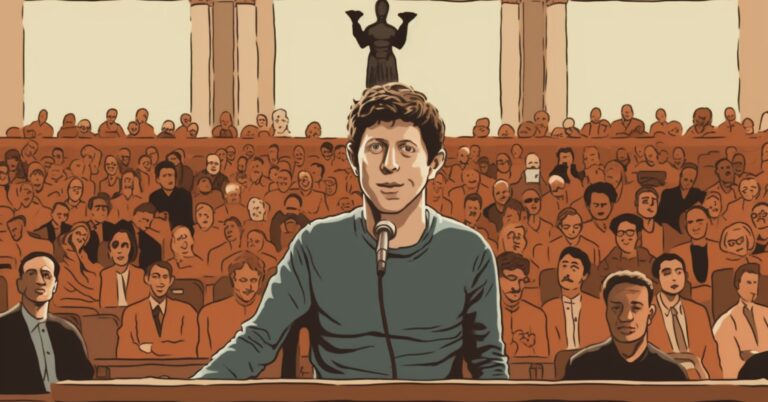
CEO Sam Altman frames Sora 2 as a “ChatGPT for creativity” moment, acknowledging risks of addiction, bullying, and RL-optimized ‘slop feeds’; principles emphasize long-term user satisfaction, user-controlled feeds, creation over consumption, and willingness to change or discontinue if outcomes aren’t positive for users.
Competitive Context:
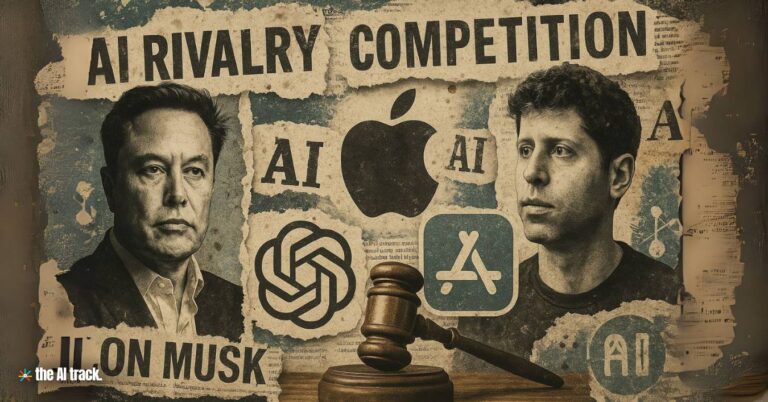
OpenAI faces competition from Runway, Luma, Kling, Higgsfield, and others. As Sora 2 expands with storyboard tools, API integrations, and a consumer-facing app, OpenAI is signaling that the race for AI video leadership is about more than viral demos. It is a contest over who can most convincingly simulate reality, while managing safety, identity, and provenance at scale. Whether OpenAI’s approach to physics-driven realism and social integration keeps it ahead of competitors will shape not only the trajectory of video AI, but also the future of digital media itself.
Why This Matters
The launch of Sora 2 is not just another product milestone, it highlights the intensifying race for leadership in AI video. With Google, Runway, and other rivals advancing rapidly, OpenAI’s push into physics-driven realism, synchronized audio, and consumer-facing distribution shows the field is converging on a single question: who can most convincingly simulate reality at scale?
The outcome will shape how video AI is integrated into entertainment, media, and creative industries, while also defining the standards for identity protection, provenance, and platform safety. In this race, technical breakthroughs are only part of the story; trust, adoption, and ecosystem design will determine who sets the rules for the next generation of digital media.
This article was drafted with the assistance of generative AI. All facts and details were reviewed and confirmed by an editor prior to publication.
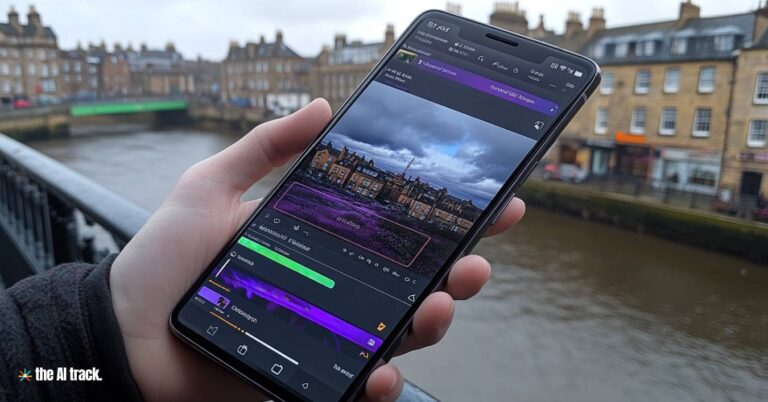
AI is revolutionizing filmmaking and content creation! This comprehensive guide compares the top 20 text-to-video tools, highlighting their strengths, and limitations
Read a comprehensive monthly roundup of the latest AI news!