Key Takeaway:
AI video is moving into a new phase: sound-first storytelling. With the launch of Veo 3.1 on October 15, 2025, Google has added native audio generation across its Flow editor, Gemini API, and Vertex AI. For the first time, creators and enterprises can convert images into moving clips with synchronized dialogue, ambient sound, and effects baked in, a capability that distinguishes Veo 3.1 from its own predecessor and sets up direct comparison with OpenAI’s Sora 2, released weeks earlier.
Google Launches Veo 3.1 AI Video Model – Key Points
Release and Platforms (Oct 15, 2025)
Google launched Veo 3.1 across Flow, the Gemini API, the Gemini app, and soon Vertex AI. Engadget confirms Veo 3.1 is available to try today via Gemini API and is powering Flow. Enterprises can adopt GUI-based workflows or programmatic integration, aligning with varied creative and development teams.
Audio Integration
Veo 3.1 now natively generates dialogue, ambient sound, and effects across Flow features (“Frames to Video,” “Ingredients to Video,” “Extend”). New capability highlighted by Engadget: convert images to video and generate audio simultaneously—not possible in Veo 3. This enables synchronized training, marketing, and branded content without separate audio pipelines.
Expanded Inputs and Editing
Veo 3.1 accepts text, images, and video clips, with upgrades including:
Up to three reference images for visual/brand consistency
First/last frame interpolation (“Frame(s) to Video”) for smooth transitions; Flow can do this while adding audio
Scene extension for longer clips (up to 148 seconds)
Insert objects into a clip and blend with its style (live now)
Remove objects (rolling out soon in Flow and Vertex AI)
Improved prompt adherence and truer textures
Adobe Firefly (powered by Veo 3) offers similar first/last frame generation, but Flow with Veo 3.1 adds simultaneous audio generation, improving fidelity and speed for enterprise post-production.
Pricing (unchanged from Veo 3)
Standard model: $0.40/second
Fast model: $0.15/second
Available only on the paid preview tier, with no free option. Charges apply only for successfully generated videos.
Technical Specs
- Output: 720p or 1080p, 24 fps
- Default clip length: 4–8s, extendable to 148s (2.5+ minutes)
- Designed for consistency across subjects and environments, supporting product and brand visuals.
Adoption Metrics
Since May 2025, Google reports over 275 million videos generated on Flow using Veo models. This underscores rapid adoption by both individual creators and enterprise teams.
Enterprise Relevance
Veo 3.1 aligns more closely with traditional filmmaking steps—scene continuity, shot composition, synchronized audio—helping enterprises automate training, marketing, and digital storytelling with fewer external tools. Google positions Veo to be useful for people who work with video, not a generator of “spammy” social clips.
Legal & IP Considerations
Unresolved ownership and liability questions persist:
- Veo appears on Google’s Generative AI Indemnified Services list (third-party IP claim coverage).
- Veo 3.1 runs under Pre-GA Terms as a preview; support/compatibility may be limited.
- IP rights for generated content and enterprise liability require close reading of current Google Cloud Service Specific Terms.
Content Provenance
- Veo outputs carry Google’s SynthID watermark in every frame.
- Detection requires voluntary upload to Google’s portal; heavy edits may weaken detectability.
- Enterprises may deploy middleware that combines SynthID + C2PA assertions with disclosure workflows for compliance at scale.
Safety & Compliance
Alongside SynthID, Google enforces safety filters, moderation, and 2-day storage of generated files unless downloaded. These measures help enterprises manage compliance and reputational risk in regulated industries.
Why This Matters
By embedding audio generation directly into editing tools like Insert, Extend, and Frame-to-Video, Veo 3.1 shows how AI video is evolving from silent visuals to complete audiovisual workflows. Yet, in the race against Sora 2 (praised for its realism and natural “handheld” style) Google faces pressure to refine its outputs and clarify enterprise terms around IP ownership and provenance. If 2024 was the year of cinematic visuals, 2025 is shaping up as the year AI video truly finds its voice.
This article was drafted with the assistance of generative AI. All facts and details were reviewed and confirmed by an editor prior to publication.
AI is revolutionizing filmmaking and content creation! This comprehensive guide compares the top 20 text-to-video tools, highlighting their strengths, and limitations
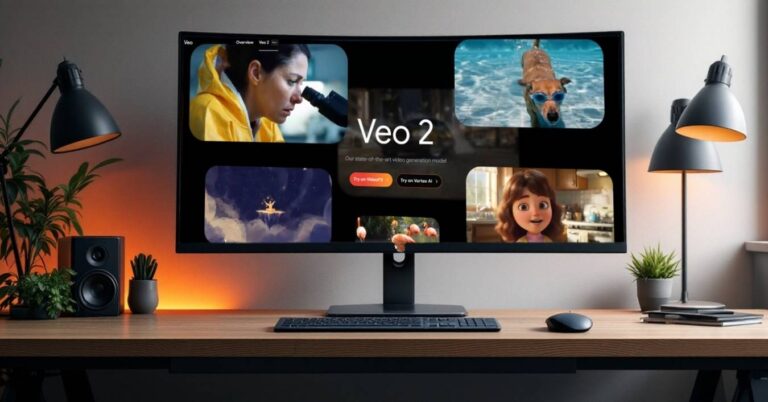
Google’s Veo 2 is now live in Gemini Advanced, supporting cinematic prompts, image animation, mobile sharing, and YouTube integration.
Read a comprehensive monthly roundup of the latest AI news!