Key Takeaway
The United States has approved exports of the Nvidia H200 to China, but Beijing is preparing to sharply limit access, turning a headline policy shift into a tightly controlled and conditional opening rather than a full market return.

China Moves to Limit Nvidia H200 Access – Key Points
What is the Case
The US decision to approve exports of the Nvidia H200 to China looked like a breakthrough in AI chip trade. Instead, it has exposed a deeper reality: Washington may authorize the sale, but Beijing will decide how little actually reaches the market.
President Donald Trump announced in December 2025 that the US would allow Nvidia to ship its H200 processors to China under strict national security conditions. Each unit must pass through US territory for inspection, exports are restricted to approved customers, and the US government will collect a 25% duty on sales. The move marked a shift away from blanket bans toward managed access.
But approval from Washington does not equal acceptance in Beijing.
Chinese regulators are now preparing their own limits on Nvidia H200 chips. According to people familiar with the discussions, authorities plan to require domestic approvals, cap volumes, and tightly define eligible use cases. The aim is to ease short-term shortages in advanced AI computing without deepening long-term dependence on US technology.
Inside China, the debate has shifted rapidly. Early warnings described Nvidia’s chips as “sugar-coated bullets” that could entrench foreign dominance and slow domestic semiconductor development. That language has softened, but the concern remains. Policymakers are now focused on control rather than rejection.
Who Gets Access — and Why
Chinese ministries have reportedly met with major technology firms, including Alibaba, ByteDance, and Tencent, asking them to justify projected demand for Nvidia H200 chips and explain why domestic alternatives cannot meet their needs. Companies may be required to pair any purchases with continued investment in Chinese accelerators such as Huawei’s Ascend series.
This selective approach reflects the chip’s strategic weight.
The Nvidia H200, part of Nvidia’s Hopper generation, delivers nearly six times the performance of the China-approved H20 and approaches the banned H100. Its high-bandwidth memory enables faster data throughput, and its compatibility with Nvidia’s CUDA ecosystem makes it easy to integrate into existing AI training pipelines.
That same ecosystem advantage is also what makes Beijing cautious.
Chinese analysts have warned that deep reliance on CUDA increases strategic vulnerability, especially given the unpredictability of US export policy. Even temporary access to Nvidia H200 hardware can create long-term lock-in, making future restrictions far more disruptive.
A Narrow Path Forward
To manage that risk, a “twin-track” strategy is gaining traction. Under this framework, Nvidia H200-class chips may be used for training large AI models, where performance demands are hardest to substitute. Inference and deployment would increasingly shift to domestic chips that are more energy-efficient and politically secure.
Supply constraints add another layer of friction. Nvidia has deprioritized Nvidia H200 production as it focuses on newer Blackwell-class GPUs and prepares its Rubin platform. Even if Chinese firms secure approvals, actual deliveries depend on Nvidia’s willingness to reopen capacity for a chip it now treats as transitional.
Enforcement concerns further complicate the picture. Each Nvidia H200 shipment must follow a traceable route through the US, and Nvidia has developed optional software tools to verify where chips are operating. While the company insists there are no kill switches or back doors, skepticism remains high in China, where officials want independent verification rather than assurances.
What This Signals
In practice, the Nvidia H200 may reach China—but only in limited numbers, under strict conditions, and for narrowly defined purposes. What appeared to be an export reopening is instead becoming a controlled experiment in strategic dependence.
The episode highlights a new phase in global tech competition: export approvals no longer guarantee access, and technological leadership no longer ensures adoption. Advanced AI hardware is now governed as a strategic asset, filtered through politics, industrial policy, and enforcement risk on both sides.
This article was drafted with the assistance of generative AI. All facts and details were reviewed and confirmed by an editor prior to publication.

Explore the global race for AI supremacy as the US, China, EU, and India deploy competing strategies in compute, capital, and talent to lead the new era.
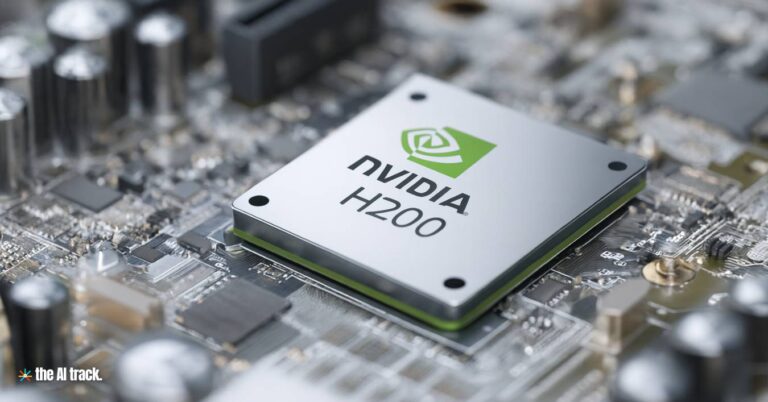
Trump approved limited exports of Nvidia H200 AI Chips to China with a 25% fee, while blocking Blackwell and Rubin processors.

Discover the key players and strategies in the AI war, a fierce battle shaping the future of technology and market dominance
Explore the vital role of AI chips in driving the AI revolution, from semiconductors to processors: key players, market dynamics, and future implications.
Read a comprehensive monthly roundup of the latest AI news!