Key Takeaway
Apple has confirmed a multiyear Apple – Google partnership to base the next generation of Apple Foundation Models on Gemini models and cloud technology, accelerating a more personalized Siri and broader “Apple Intelligence” capabilities while keeping execution on-device and through Apple Private Cloud Compute to maintain Apple’s privacy posture.
Apple–Google AI partnership – Key Points
Apple–Google AI partnership disclosed (January 2026)
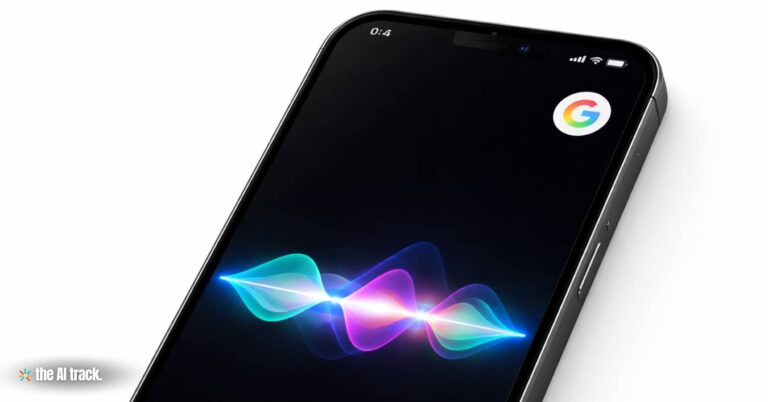
Apple announced a deal with Google allowing it to use Google’s Gemini AI models to enhance Siri and power Apple Intelligence across iPhone and other devices. The collaboration is explicitly framed as multi-year and strategic, not a single-feature integration, placing Google technology at the center of Apple’s future AI platform direction.
Gemini selected as foundation for Apple Foundation Models
Apple and Google state that the next generation of Apple Foundation Models will be based on Google’s Gemini models and cloud technology. Apple says it chose Google after “careful evaluation,” describing Google’s technology as the “most capable foundation” for Apple Foundation Models and tying the decision to “innovative new experiences” for users—positioning Gemini as a foundational layer rather than an add-on tool.
Siri overhaul delayed, now positioned as “more personalized” and coming in 2026
Apple had teased major AI upgrades in 2024 but delayed its “more personalized Siri” multiple times. The joint statement and follow-on reporting frame the updated Siri as arriving this year (2026), with reporting also pointing to an expected rollout window later in the year and, in some accounts, as early as spring—tightening the timeline versus the earlier “sometime in 2026” messaging while keeping the core point: Siri’s AI transformation slipped and became a high-visibility gap.
Apple Intelligence runs on-device and via Private Cloud Compute
Apple and Google emphasize that Apple Intelligence will continue to run on Apple devices and Apple’s Private Cloud Compute, reinforcing Apple’s positioning that sensitive processing stays local or within tightly controlled infrastructure. This addresses a key adoption barrier for Apple’s audience: AI personalization without conceding privacy control to external infrastructure.
Deal structure and competitive evaluation broaden the context
The partnership is described as not exclusive in reporting, and Apple is portrayed as having tested or evaluated competitor approaches (including other major AI labs) before selecting Gemini as the foundation for future Apple models. This frames the Apple – Google decision as a competitive bake-off outcome rather than a simple extension of the long-standing relationship.
Relationship with OpenAI remains unchanged—for now
Apple already partners with OpenAI to integrate ChatGPT into Siri and Apple Intelligence for complex, world-knowledge queries. Reporting indicates Apple is not changing that agreement at this time, implying a dual approach: Gemini as a foundational model layer for Apple’s system-level intelligence, with ChatGPT continuing as an optional capability for certain query classes.
Apple’s slower AI rollout contrasted with rivals and public perception
Apple has faced sustained criticism that Siri and Apple’s consumer AI “wow factor” lagged behind competitors, especially as Google and Samsung pushed AI features more aggressively across devices and services. The partnership functions as both a technical solution and a reputational reset: Apple is signaling it will ship meaningful Siri improvements rather than continue incremental, mostly invisible AI additions.
Market validation and analyst reaction
Wedbush Securities analyst Dan Ives described the partnership as a major validation moment for Google and an incremental positive for both companies, reflecting the view that Apple needed a credible path to competitive AI and Google needed high-profile distribution that signals trust at scale.
Alphabet surpasses $4 trillion valuation milestone and exceeds Apple in market cap
Alphabet crossed $4 trillion (€3.4 trillion) market capitalization in January 2026 and surpassed Apple in market value for the first time since 2019, with trading moves linked to broader AI momentum and the Apple – Google partnership narrative. Intraday trading also placed Alphabet among the limited set of companies to reach the $4 trillion milestone, alongside Nvidia, Microsoft, and Apple (which had reached the mark earlier).
AI boom reshapes market leadership dynamics
Nvidia became the first company to hit $4 trillion in July 2025 and briefly exceeded $5 trillion (€4.29 trillion) in October before stabilizing around $4.5 trillion (€3.86 trillion). Apple and Microsoft also crossed $4 trillion in 2025 but later fell below that level, reflecting investor preference shifts toward AI infrastructure leaders and AI platform leverage.
Regulatory backdrop and default search economics remain a major undercurrent
The Apple–Google relationship is still anchored by default search payments, widely reported as over $20 billion annually, and now constrained by antitrust remedies that target exclusivity mechanics. Additional reporting has quantified the scale of historical default placement payments in the tens of billions over multi-year spans (e.g., figures cited for 2021–2022), underscoring why regulators view Apple–Google distribution agreements as structurally consequential.
Apple business pressure: AI as a device sales catalyst
The AI push is also framed as commercial: Apple is betting that stronger AI features (including the updated Siri) will help drive iPhone upgrade demand after uneven periods for the product line. Analyst expectations cited in reporting project roughly 11% year-over-year iPhone sales growth for the December quarter results and total quarterly profits expected to rise by nearly 8% to more than $39 billion, adding financial urgency to delivering visible Siri improvements.
Google AI momentum extends beyond consumer products
Google has accelerated its AI agenda with upgraded Gemini models and strong cloud traction. Google CEO Sundar Pichai stated in October 2025 that Google Cloud signed more $1+ billion-value deals through Q3 2025 than in the previous two years combined, reinforcing the idea that Gemini’s momentum spans both enterprise adoption and consumer distribution wins like Apple.
Why This Matters
The Apple – Google partnership signals a pragmatic shift: delivering competitive, privacy-conscious AI experiences at scale now outweighs maintaining a purely in-house narrative. It strengthens Google’s position as a foundational AI provider, normalizes multi-model ecosystems on consumer devices, and shows how AI capability, distribution, and regulatory constraints are reshaping product strategy and market leadership.
This article was drafted with the assistance of generative AI. All facts and details were reviewed and confirmed by an editor prior to publication.
Sam Altman says OpenAI competition is centered on Apple, not Google, as OpenAI pivots to AI devices and refocuses ChatGPT in 2025.
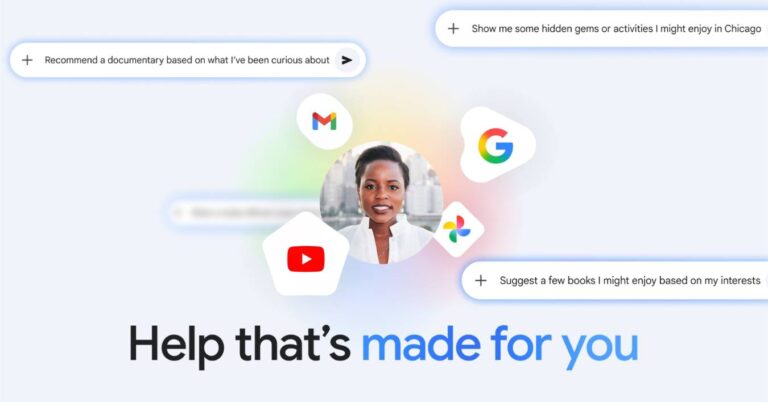
Google launches Gemini Personal Intelligence in the U.S., enabling opt-in context across Gmail, Photos, YouTube history, and Search for paid users.
Gemini 3 Flash rolls out as the default for Gemini and Search AI Mode, with Google citing 90.4% GPQA Diamond and $0.50 per 1M input tokens.
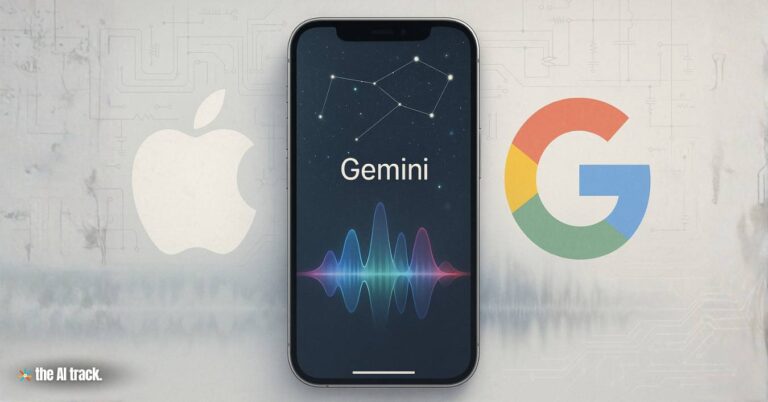
The Apple and Google partnership marks a $1B-per-year Gemini AI deal to power Siri in iOS 26.4, combining innovation with data privacy safeguards.
Read a comprehensive monthly roundup of the latest AI news!