Key Takeaway
MiniMax M2.7 is now available as an open-weight model, expanding access to a system designed for software engineering, agentic tool use, and office productivity workflows. The release makes MiniMax M2.7 more accessible through platforms such as Hugging Face and NVIDIA NIM, while still remaining commercially restricted and hardware-intensive to deploy at full scale.

MiniMax M2.7 – Key Points
The Story
MiniMax M2.7 has shifted from a primarily hosted model into an open-weight release that developers can download, test, and integrate into their own workflows. That matters because the model is being positioned not as a basic chatbot, but as a high-end system for long-horizon coding, debugging, tool use, document editing, and multi-step agentic work. At the same time, the release should be described carefully: MiniMax M2.7 is open-weight, not fully open-source, and practical local deployment still depends on substantial GPU infrastructure.
The Facts
- MiniMax M2.7 is now available as an open-weight model, allowing developers to download and run it outside MiniMax-hosted access routes.
- The model is described under a non-commercial MiniMax license, and NVIDIA’s listing says usage is governed by NVIDIA evaluation and trial terms.
- A newer model card describes MiniMax M2.7 as a 230B-parameter Mixture-of-Experts transformer with 10B active parameters, 62 layers, 256 local experts, and 8 experts activated per token.
- The model supports a 204,800-token input context length and is described as handling long system prompts.
- MiniMax M2.7 is positioned for complex software engineering, agentic tool use, office productivity, debugging, terminal-style workflows, and document generation and editing.
- The model is also described as supporting Agent Teams, dynamic tool search, multi-agent collaboration, and high-fidelity coding and document-editing tasks.
- Publicly reported benchmark results include 56.22% on SWE-Pro, 55.6% on VIBE-Pro, 57.0% on Terminal Bench 2, 39.8% on NL2Repo, 46.3% on Toolathon, 62.7% on MM Claw, 1495 ELO on GDPval-AA, and a 66.6% medal rate on MLE Bench Lite.
- The GDPval-AA result is presented as the highest among open-source models, while MM Claw testing is described as showing 97% skill compliance across 40+ complex skills.
- NVIDIA lists supported runtimes as SGLang, Transformers, and vLLM, with Linux support and hardware targets including Blackwell B100/B200/GB200 and Hopper H100/H200 GPUs.
- NVIDIA says inference testing used H100x4 hardware, reinforcing that MiniMax M2.7 is accessible but not lightweight to run at serious scale.
- The model is described as supporting live production troubleshooting, including monitoring metrics, trace analysis, database verification, and SRE-style decision-making.
- MiniMax also presents the system as participating in its own improvement, including a reported 30% performance gain after 100+ rounds of scaffold optimization.
How to Access / Pricing
MiniMax M2.7 is available through Hugging Face, ModelScope, NVIDIA NIM, and MiniMax-hosted routes. But “free” needs precision: open-weight access does not eliminate infrastructure costs, and hosted or trial routes may still come with provider terms, limits, or charges depending on how the model is used.
Risks / Limitations
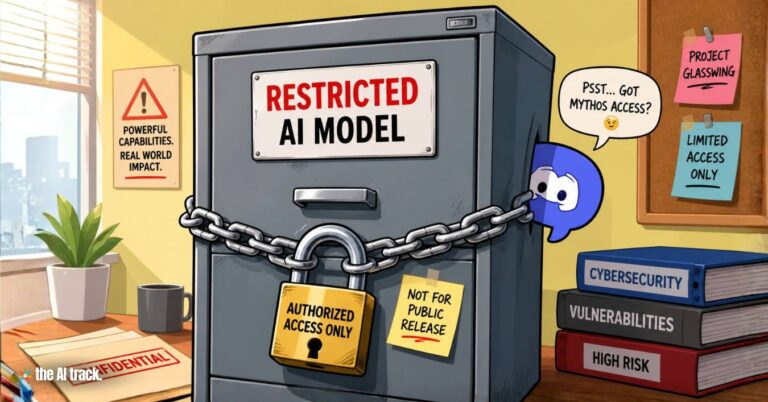
The release remains controlled rather than fully open-source. Commercial use appears restricted, training and evaluation data details are largely undisclosed, and meaningful local deployment requires high-end GPU hardware. That means MiniMax M2.7 is more open than before, but not universally open or easy to run for everyone.
Background / Context
The significance of MiniMax M2.7 lies less in a fresh model debut than in an access change. The model moves a high-end agent-oriented system from a mostly hosted environment toward downloadable, multi-platform deployment at a time when developers increasingly want alternatives to closed, API-dependent coding workflows.
Why This Matters
MiniMax M2.7 matters because it combines broader access with ambitions well beyond chatbot use. If its reported capabilities hold up in real deployment, it could become a meaningful option for developers and knowledge workers who want agentic coding, office-task execution, and multi-step automation without depending entirely on proprietary hosted APIs.
This article was drafted with the assistance of generative AI. All facts and details were reviewed and confirmed by an editor prior to publication.
MiniMax launches M2.5 and M2.5-Lightning AI models with near state-of-the-art coding performance and pricing up to 20× cheaper than Claude Opus 4.6.
Read a comprehensive monthly roundup of the latest AI news!