Key Takeaway
OpenAI is reportedly accelerating work on a ChatGPT phone built around AI agents rather than traditional apps. TF International Securities analyst Ming-Chi Kuo, a widely followed Apple and consumer electronics supply-chain analyst, says mass production could begin as early as the first half of 2027, with MediaTek better positioned to become the sole processor supplier.
ChatGPT Phone – Key Points
The Story
TF International Securities analyst Ming-Chi Kuo, a widely followed consumer electronics supply-chain analyst, now says the company appears to be fast-tracking the ChatGPT phone, shifting from an earlier 2028 mass production target to as early as the first half of 2027. The device is expected to use a customised chip from MediaTek, the Taiwanese semiconductor company behind many smartphone processors.
The Facts
Mass production may now begin in 2027.
Kuo previously pointed to 2028 production, but now says OpenAI is targeting mass production as early as the first half of 2027.
The device is reportedly being framed as a ChatGPT phone.
The project points to a smartphone designed around AI assistance rather than a conventional app-first mobile experience.
MediaTek now appears better positioned than Qualcomm.
Kuo had earlier said OpenAI was working with MediaTek and Qualcomm on processors, but now suggests MediaTek may become the sole processor supplier.
Luxshare is expected to be the manufacturing partner.
Earlier reporting based on Kuo’s analysis described Luxshare as the exclusive system co-design and manufacturing partner.
The chip may use a customised Dimensity 9600 design.
The phone is said to use a customised version of MediaTek’s Dimensity 9600 processor, expected to be manufactured on TSMC’s N2P process.
The chip is expected in the second half of 2026.
The Dimensity 9600-based processor is reportedly expected to be manufactured in the second half of this year.
The phone is expected to be built around AI-first interaction.
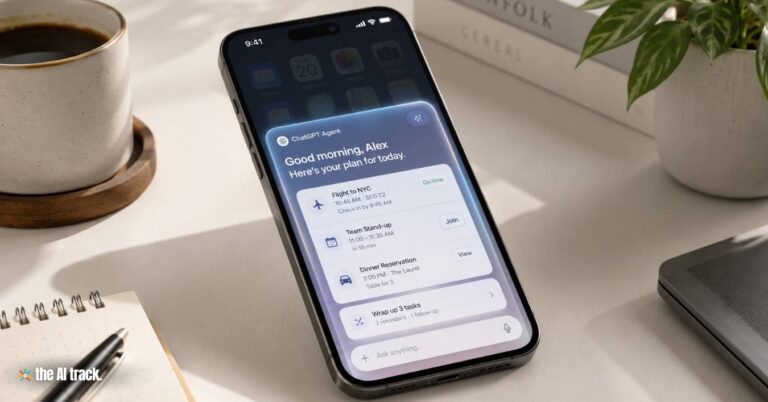
Instead of opening apps manually, users may be able to describe tasks and let an AI agent carry them out in the background.
The interface may focus on outcomes, not app icons.
The device could handle tasks such as booking travel, compiling data or managing daily activities without requiring users to navigate between apps.
The device may combine on-device and cloud AI.
On-device AI could support continuous context awareness, while cloud AI would handle heavier computational tasks.
The processor may be tuned for AI workloads.
Reported features include an upgraded image signal processor with an enhanced HDR pipeline, dual-NPU architecture, LPDDR6 RAM and UFS 5.0 storage.
Security features may be built into the platform.
The chip is expected to include pKVM and inline hashing for improved system security.
Shipments could reach 30 million units across 2027 and 2028.
Kuo estimates that combined shipments could reach around 30 million units if development stays on track.
Background / Context
ChatGPT currently runs through iOS and Android, where system-level restrictions can limit what AI tools can do directly. A dedicated ChatGPT phone could give OpenAI more control over both hardware and software, potentially allowing AI agents to perform tasks more deeply across the system.
Kuo has argued that smartphones are uniquely valuable for AI agents because they capture a user’s real-time state. He also cites OpenAI’s consumer brand, frontier AI models and accumulated user data as potential advantages, while noting that smartphones remain the largest-scale device category for deploying AI.
What to Watch Next
The key questions are whether OpenAI formally confirms the smartphone project, whether the reported first-half 2027 production target holds, and whether MediaTek becomes the final processor supplier. Another major signal will be whether OpenAI positions the device as a smartphone replacement, a ChatGPT phone companion device or part of a broader AI hardware ecosystem.
Why This Matters
An OpenAI-built ChatGPT phone would mark a major shift from AI as an app to AI as a system-level interface. If the reports are accurate, OpenAI is not just trying to build a device, but a hardware platform where ChatGPT-style AI agents can handle everyday tasks more directly than they can inside current mobile operating systems.
This article was drafted with the assistance of generative AI. All facts and details were reviewed and confirmed by an editor prior to publication.

OpenAI is rolling out GPT-5.5 Instant as ChatGPT’s default model, with better accuracy, low latency and memory-source controls.

OpenAI raised $122 billion at an $852 billion valuation and said it now generates $2 billion in monthly revenue.

Microsoft and OpenAI end cloud exclusivity, keep Azure first and remove AGI-linked terms from their revised AI partnership.

Elon Musk testified as the OpenAI trial began over charitable trust claims, Microsoft ties and the company’s commercial structure.

OpenAI is shutting down the Sora video generator and its API after fading app momentum and a shift toward robotics and world simulation.
Read a comprehensive monthly roundup of the latest AI news!