Key Takeaway
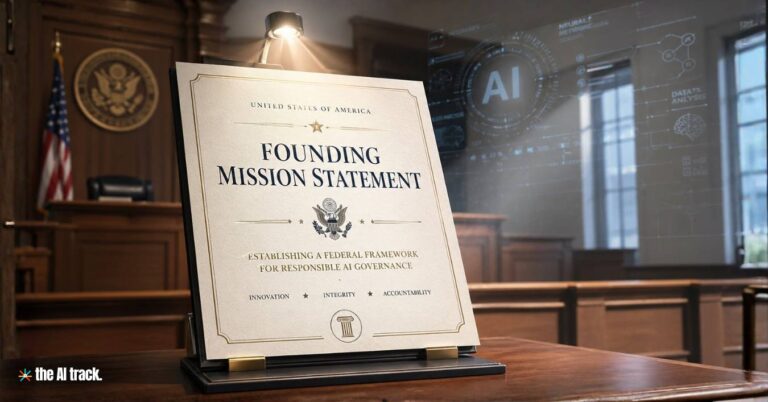
Elon Musk has taken the stand in the OpenAI trial against Sam Altman, Greg Brockman, OpenAI and Microsoft, as a federal court examines whether the company abandoned its original non-profit mission. The case now turns on two remaining claims — breach of charitable trust and unjust enrichment — and could test how much control OpenAI’s founding mission still has over its commercial structure.
OpenAI Trial Begins – Key Points
The Story
A nine-person jury was selected Monday for the OpenAI trial in federal court in Oakland, California, overseen by Judge Yvonne Gonzalez Rogers. Opening arguments began Tuesday, April 28, 2026, with Musk’s side accusing Altman, Brockman and Microsoft of turning OpenAI away from its founding mission, while OpenAI’s defense argued Musk is using the lawsuit to weaken a rival after failing to control the company. Musk was the first witness called to testify, with Altman, Brockman and Microsoft also represented in court.
The Facts
Only two claims remain from Musk’s 2024 lawsuit.
Of the 26 claims Musk originally asserted, the OpenAI trial now centers on breach of charitable trust and unjust enrichment.
Musk is seeking damages and major governance changes.
Musk previously sought up to $134 billion in “wrongful gains” personally, but is now asking for “all ill-gotten gains” to go to OpenAI’s charity. He is also seeking major changes including Altman and Brockman’s removal from their OpenAI roles and the unwinding of OpenAI’s October recapitalization.
The case centers on OpenAI’s original mission.
Musk and Altman co-founded OpenAI in 2015 as a non-profit intended to advance digital intelligence for the benefit of humanity, unconstrained by the need to generate financial return.
Musk alleges OpenAI became too profit-focused.
His side argues that OpenAI moved away from safe, open AI development and toward a commercial structure benefiting Altman, Brockman and Microsoft.
OpenAI disputes Musk’s motives.
The defense argues Musk brought the case because he “didn’t get his way,” tried to control OpenAI, sought to merge it with Tesla, and now wants to undercut a competitor to xAI.
Microsoft is also named in the lawsuit.
Musk alleges Microsoft aided the alleged breach through investments and partnerships with OpenAI’s for-profit subsidiary. Microsoft argues it did not and could not have aided a breach of charitable trust, and says Musk knew about the Microsoft relationship years before filing the lawsuit.
The dispute has years of history.
Musk left OpenAI in 2018 after a failed effort to acquire it through Tesla. OpenAI’s side says Musk wanted a for-profit structure only if he was in control, including more than 50% ownership.
Funding is a central issue.
Musk’s side says he contributed about $38 million in early funding. OpenAI’s lawyers say Musk had promised far more, including a $1 billion commitment, and later pulled $5 million quarterly donations during disputes over the company’s future.
The for-profit structure is contested.
Musk’s side argues that a for-profit arm can be legitimate only if it advances the non-profit mission. OpenAI’s side says there is no record of a promise that the company would remain a non-profit forever or open-source everything.
OpenAI’s structure has changed again.
In October 2025, OpenAI became a non-profit, the OpenAI Foundation, holding a controlling equity stake in a for-profit business called OpenAI Group PBC. At the time, the foundation held about 26% of the for-profit, while Microsoft held roughly 27%.
ChatGPT transformed the stakes.
OpenAI’s 2022 release of ChatGPT triggered a major consumer AI boom, reaching 100 million monthly active users within months.
Musk later launched xAI.
Musk founded xAI in 2023 as a for-profit public benefit corporation. The company shed its PBC commitments in 2024, merged with X in 2025, and was folded into SpaceX this year.
OpenAI’s valuation has climbed sharply.
OpenAI was previously valued at $157 billion and recently closed a $122 billion funding round at an $852 billion valuation.
Key Risk Factors
The OpenAI trial may raise questions about whether the company’s current structure still aligns with its original non-profit mission. It may also complicate perceptions of Musk’s claims because he now runs a competing AI company, previously tried to take control of OpenAI, and later attempted to buy its assets.
What to Watch Next
The trial has been divided into a liability phase and a remedies phase. The jury will issue an advisory verdict in the liability phase, but Judge Gonzalez Rogers will make the final decision. If Musk prevails, the court will then consider possible remedies without the jury.
Why This Matters
The OpenAI trial is not only a personal feud between two technology billionaires. It is also a legal test of how much control a founding mission should retain when an AI lab becomes a dominant commercial force. The outcome could affect OpenAI’s governance, Microsoft’s role, and the broader competition to build artificial general intelligence.
This article was drafted with the assistance of generative AI. All facts and details were reviewed and confirmed by an editor prior to publication.

OpenAI is shutting down the Sora video generator and its API after fading app momentum and a shift toward robotics and world simulation.
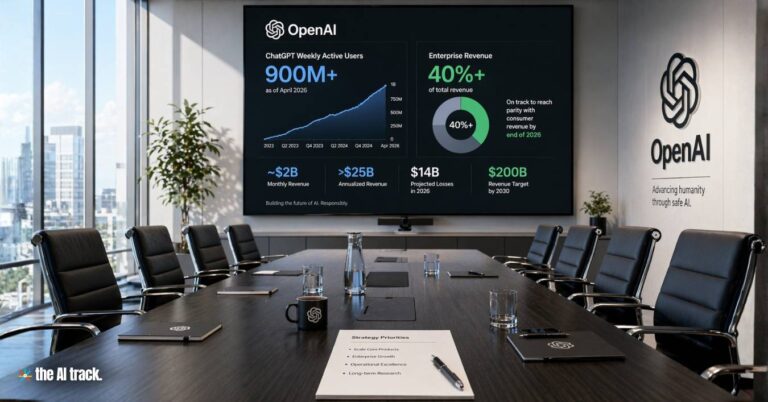
OpenAI loses three senior executives as it shuts down Sora, folds OpenAI for Science into other teams, and pushes harder into enterprise AI.

OpenAI countersues Elon Musk, alleging efforts to undermine the company through legal actions and a rejected $97.4B takeover bid.
OpenAI hits back at Elon Musk: All you need to know. From nonprofit disputes to xAI rivalry, with ethical, legal, and market implications.
Read a comprehensive monthly roundup of the latest AI news!