Key Takeaway
OpenAI has introduced Daybreak, a GPT-5.5-powered cybersecurity initiative designed to help authorized developers, security teams, industry partners, and government partners detect, validate, and remediate vulnerabilities faster. The launch positions OpenAI against Anthropic’s Claude Mythos Preview and Project Glasswing in the emerging market for AI-assisted cyber defense.
OpenAI Launches Daybreak – Key Points
The Story
OpenAI has launched Daybreak, a cyber defense suite focused on making software resilient by design rather than only finding and fixing vulnerabilities after the fact. The initiative combines OpenAI models, Codex as an agentic harness, and security partners to bring secure code review, threat modeling, patch validation, dependency risk analysis, detection, and remediation guidance into everyday development workflows. Daybreak offers three access levels: GPT-5.5 for general-purpose work, GPT-5.5 with Trusted Access for Cyber for verified defensive workflows, and GPT-5.5-Cyber for specialized authorized work. Access is limited to selected organizations, with industry and government partners involved and companies including Cloudflare, Cisco, CrowdStrike, Palo Alto Networks, Oracle, and Akamai listed as partners.
The Facts
Daybreak is OpenAI’s cybersecurity initiative for resilient software.
It is designed to help defenders reason across codebases, identify subtle vulnerabilities, validate fixes, analyze unfamiliar systems, and move from discovery to remediation faster.
The platform combines OpenAI models with Codex Security.
Daybreak uses OpenAI models and the extensibility of Codex as an agentic harness to support defensive cybersecurity work inside development environments.
The core idea is “resilient by design.”
Daybreak is built around the premise that cyber defense should be embedded into software from the beginning, not limited to later-stage vulnerability cleanup.
Daybreak can build an editable threat model from a repository.
Codex Security can focus analysis on realistic attack paths and high-impact code, helping teams prioritize the threats that matter most.
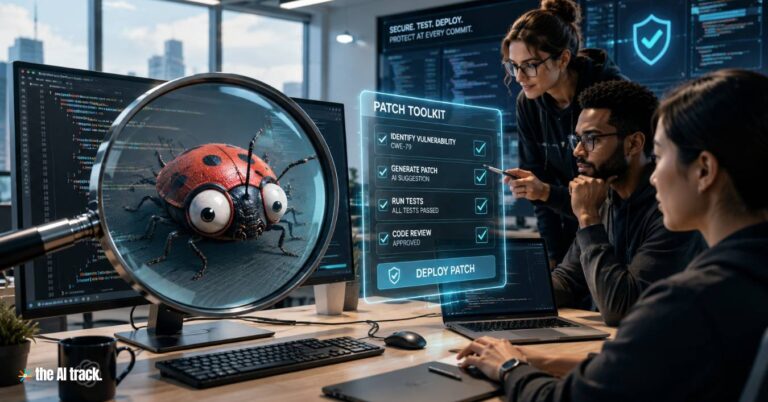
Daybreak can generate and test patches inside repositories.
The platform supports patch generation and testing with scoped access, monitoring, and review.
It can return audit-ready evidence to existing systems.
Daybreak is designed to send results and evidence back into customer systems so teams can track and verify remediation.
Daybreak is designed to reduce analysis time from hours to minutes.
The goal is to prioritize high-impact issues faster while improving token efficiency.
GPT-5.5 is the default access level.
It uses standard safeguards and is intended for general-purpose, developer, and knowledge work.
GPT-5.5 with Trusted Access for Cyber is for verified defensive work.
It uses more precise safeguards for authorized environments and supports secure code review, vulnerability triage, malware analysis, detection engineering, and patch validation.
GPT-5.5-Cyber is the most permissive access level.
It is intended for preview access to specialized authorized workflows such as red teaming, penetration testing, and controlled validation, paired with stronger verification and account-level controls.
Daybreak directly enters the same category as Anthropic’s Claude Mythos Preview.
Anthropic’s Project Glasswing uses Claude Mythos Preview for cyber defense work, while OpenAI is positioning Daybreak as a broader cybersecurity initiative with multiple access levels.
Mozilla’s use of Claude Mythos is part of the competitive context.
In April, Mozilla reported that Mythos helped find and patch 271 Firefox vulnerabilities, showing the type of enterprise security use case OpenAI is now targeting.
Use Cases
Daybreak is aimed at authorized cybersecurity and software engineering workflows, including:
- secure code review
- threat modeling
- vulnerability triage
- malware analysis
- detection engineering
- patch validation
- dependency risk analysis
- remediation guidance
- authorized red teaming
- penetration testing
- controlled security validation
- audit-ready remediation reporting
Market Timing
Daybreak arrives as major AI labs are turning cybersecurity into a specialized frontier for advanced models. Anthropic has already positioned Claude Mythos Preview through Project Glasswing, while OpenAI is now offering a competing approach built around GPT-5.5, Trusted Access for Cyber, GPT-5.5-Cyber, and Codex Security. The rollout is tied to OpenAI’s broader plan to deploy increasingly cyber-capable models through iterative deployment with industry and government partners.
How to Access / Pricing
Daybreak is not broadly available as a self-serve public product. Organizations can request a vulnerability scan or contact sales to align on the right model and access level for their security workflows. Public pricing has not been disclosed.
Why This Matters
Daybreak shows how AI-assisted cybersecurity is moving beyond simple vulnerability scanning into end-to-end remediation workflows. For developers and security teams, the most important shift is not just faster detection, but the possibility of AI systems that can model threats, prioritize risks, test fixes, and produce audit evidence inside existing software repositories.
This article was drafted with the assistance of generative AI. All facts and details were reviewed and confirmed by an editor prior to publication.

OpenAI is rolling out GPT-5.5-Cyber to vetted defenders for vulnerability triage, patching, penetration testing, and malware analysis.
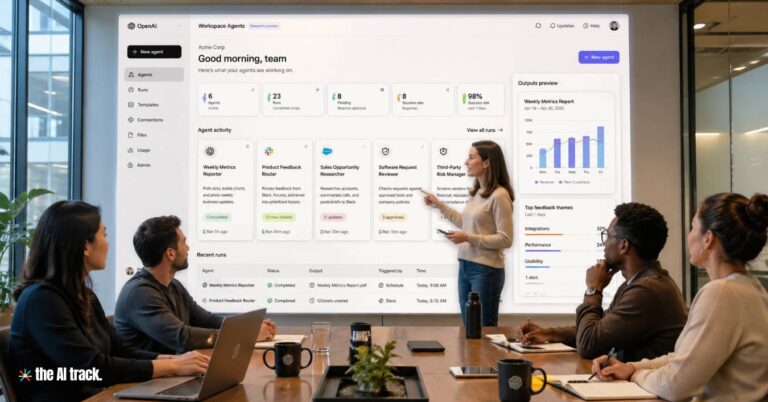
OpenAI launched Workspace Agents in ChatGPT for team workflow automation, with Slack, Salesforce, scheduling, memory and Codex execution.
OpenAI launched a $4 billion AI deployment company on May 11 to help businesses scale frontier AI with embedded engineers and Tomoro staff.
Anthropic says Mythos Preview can exploit critical vulnerabilities and remains withheld from public release over cyber and safety risks.
Read a comprehensive monthly roundup of the latest AI news!