Key Takeaway
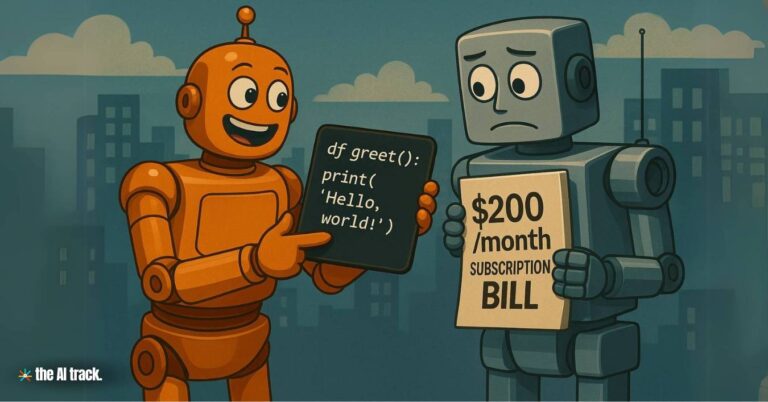
Switzerland has released Apertus, an open-source national Large Language Model (LLM) developed by public institutions, aiming to provide a transparent, regulation-compliant alternative to corporate AI models like OpenAI’s ChatGPT.
Switzerland Releases Apertus – Key Points
Developed by Leading Swiss Institutions
Apertus was jointly created by EPFL (École Polytechnique Fédérale de Lausanne), ETH Zurich, and the Swiss National Supercomputing Centre (CSCS), positioned as a national infrastructure project. ETH confirms the project is part of the Swiss AI Initiative and available via Swisscom, Hugging Face, and the Public AI network (Public AI Inference Utility). Quotes from leadership (Martin Jaggi, Thomas Schulthess) frame Apertus as a blueprint for trustworthy, sovereign AI.
Open and Transparent Training
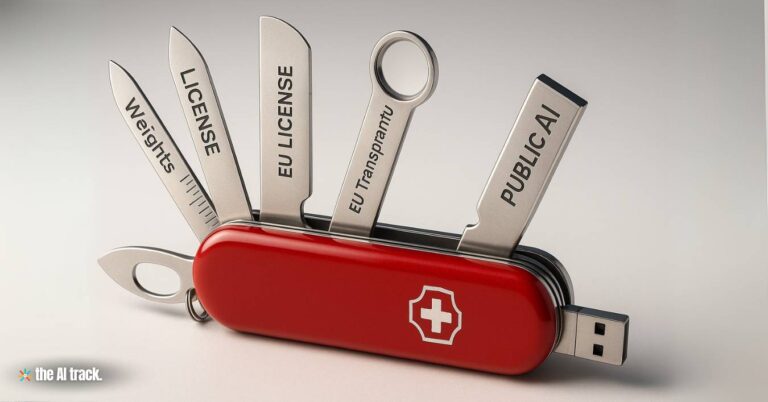
“Fully open” release: open weights, open data, and full training documentation (training recipes, reconstruction scripts, intermediate checkpoints). EU AI Act transparency materials are provided, and terms are accessible via Hugging Face. The model is released under a permissive open-source license (Apache-style), enabling educational, research, and commercial use.
Scale, Multilingual Reach, and Compute
Pretrained on 15 trillion tokens across more than 1,000 languages (with 40% non-English), including Swiss German and Romansh. Previous technical disclosures indicate long context windows (up to ~65,536 tokens) and large-scale compute (multi-thousand GPU class), aligning with state-of-the-art training stacks. These details complement the ETH brief, which emphasizes multilingual breadth and scale.
Data Sourcing and Compliance-by-Design
Training corpus built exclusively from publicly available data, filtered to respect machine-readable opt-out signals (even retroactively) and to remove personal/undesired content before training. The design prioritizes compliance with Swiss data protection and copyright as well as transparency duties under the EU AI Act.
Comparability and Positioning
Swiss media and tech outlets position Apertus as comparable to Meta’s Llama 3 (2024) in ambition and openness, while distinguishing it through comprehensive transparency artifacts and public-sector stewardship. This framing underscores Apertus’ role in Europe’s open-weight ecosystem.
Public Accessibility and Channels
Available in 8B and 70B/71B parameter sizes on Hugging Face and through Swisscom’s sovereign Swiss AI platform. For international users, Public AI offers hosted access. ETH notes Swiss {ai} Weeks hackathons as the first hands-on opportunity for developers to test Apertus and provide feedback, with Swisscom offering a dedicated interface.
Governance, Funding, and Roadmap
The initiative sits under the ETH Board and leverages CSCS “Alps” supercomputing resources, with over 10 million GPU hours invested. The roadmap targets expanded model families, efficiency gains, and domain-specific variants (law, climate, health, education), while retaining strict transparency standards. Leadership quotes (Imanol Schlag, Antoine Bosselut; Swisscom’s Daniel Dobos) highlight ongoing updates and a long-term public-good mandate.
AI as Public Infrastructure
Advocates describe Apertus as public infrastructure—“like highways, water, or electricity”—signaling a public-interest approach that contrasts with closed corporate models and aligns with national digital-sovereignty goals.
Why This Matters
Apertus advances digital sovereignty and compliance-ready AI in Europe: an open-weights, open-data, fully documented LLM, released by public institutions and distributed via national infrastructure (Swisscom) and global public networks (Public AI). For regulated sectors (banking, health, public administration), the integrated transparency artifacts and EU-aligned governance reduce deployment risk and audit burden. With EU AI Act exposures reaching €35M or 7% of global turnover, Apertus’ compliance-by-design approach provides implementers a head start. The model’s public-sector provenance, multilingual depth, and published training stack create a repeatable national playbook—open data + open weights + public distribution—that other countries can adapt.
This article was drafted with the assistance of generative AI. All facts and details were reviewed and confirmed by an editor prior to publication.

Explore the key differences between open source vs closed source AI, including their benefits, challenges, and implications for the future of AI
Read a comprehensive monthly roundup of the latest AI news!