Key Takeaway
Microsoft and OpenAI have restructured one of the AI industry’s most important partnerships, ending Microsoft’s exclusive cloud arrangement and removing AGI-linked terms that had created uncertainty around future rights and payments.

Microsoft and OpenAI End Exclusive Deal – Key Points
The Story
OpenAI is now free to sell and serve its products across other cloud providers, including Amazon Web Services and Google Cloud, expanding its enterprise reach beyond Azure-only distribution. Microsoft remains OpenAI’s primary cloud partner, with OpenAI products shipping first on Azure unless Microsoft cannot or chooses not to support the required capabilities. The revised Microsoft and OpenAI deal gives OpenAI more infrastructure flexibility while preserving Microsoft’s model access, revenue share and Azure commitments.
The Facts
Microsoft’s exclusivity over OpenAI cloud hosting is ending.
OpenAI can now use other cloud providers to host and sell services such as ChatGPT, including through Amazon Web Services and Google Cloud.
Azure remains OpenAI’s primary cloud partner.
OpenAI products will continue to launch first on Azure unless Microsoft cannot or chooses not to support the required capabilities.
OpenAI can expand its enterprise reach.
The change allows AWS and Google Cloud customers to access OpenAI products more directly, potentially strengthening OpenAI’s position against enterprise AI rivals such as Anthropic.
Microsoft will keep receiving revenue share through 2030.
OpenAI will continue paying Microsoft a 20% revenue share through 2030, though the total is now subject to an undisclosed cap.
Microsoft no longer has to pay revenue share to OpenAI for using its models.
Microsoft can offer OpenAI models on Azure without paying OpenAI a share of Microsoft’s related revenue.
Microsoft keeps access to OpenAI intellectual property through 2032.
Microsoft will maintain a license to OpenAI’s models and IP through 2032, but the license is no longer exclusive.
OpenAI’s Azure spending commitment remains in place.
OpenAI has committed to use at least $250 billion in Azure services by 2032.
The AGI clause has effectively been removed.
The revised deal removes AGI-linked terms that could have affected Microsoft’s rights and OpenAI’s payments if OpenAI declared it had achieved artificial general intelligence.
Microsoft’s OpenAI investment totals $13 billion since 2019.
The partnership helped support OpenAI’s rise and contributed to growth in Microsoft’s Azure cloud business.
The deal follows rising tension over cloud exclusivity.
OpenAI wanted more freedom to secure compute and cloud deals with Microsoft’s rivals, while prior reporting cited disagreement over exclusivity, AGI and a possible Amazon cloud arrangement.
Microsoft is reducing reliance on OpenAI.
Microsoft has been developing its own AI models and adding models from companies such as Anthropic into products including Microsoft 365 Copilot for enterprises.
The market reaction was muted by the close.
Microsoft shares initially fell 1.3% after the news but closed largely unchanged. Alphabet closed up 1.81%, while Amazon closed down 1.1%.
Timeline / What Changed
The Microsoft and OpenAI relationship previously centered on a tighter cloud arrangement, with Microsoft controlling broad access to OpenAI models through Azure and contractual terms tied to AGI. The new structure keeps Microsoft in a central role but removes its exclusive position, giving OpenAI more freedom to work with other cloud providers, enterprise customers and investors. Microsoft and OpenAI had also restructured their tie-up in October, removing major constraints on OpenAI’s ability to raise capital and secure computing resources.
Market Timing
The restructuring comes as AI companies face intense demand for computing power and enterprise distribution. For OpenAI, access to multiple cloud providers could help support products such as ChatGPT and reduce dependence on a single infrastructure partner. For Microsoft, the deal may free capital for Copilot and other cloud capacity while giving the company more certainty around future OpenAI revenue.
What to Watch Next
The key signals will be how quickly OpenAI expands availability across AWS and Google Cloud, how directly those platforms sell OpenAI products to enterprise customers, and whether the new structure helps OpenAI move closer to a potential IPO. The end of exclusivity may also help Microsoft respond to antitrust scrutiny in the U.S., UK and Europe over its relationship with OpenAI.
Why This Matters
The Microsoft and OpenAI agreement marks a major reset in one of the AI industry’s defining alliances. Microsoft remains deeply tied to OpenAI, but OpenAI now has more room to diversify infrastructure, funding and enterprise distribution as competition around AI cloud capacity intensifies.
This article was drafted with the assistance of generative AI. All facts and details were reviewed and confirmed by an editor prior to publication.
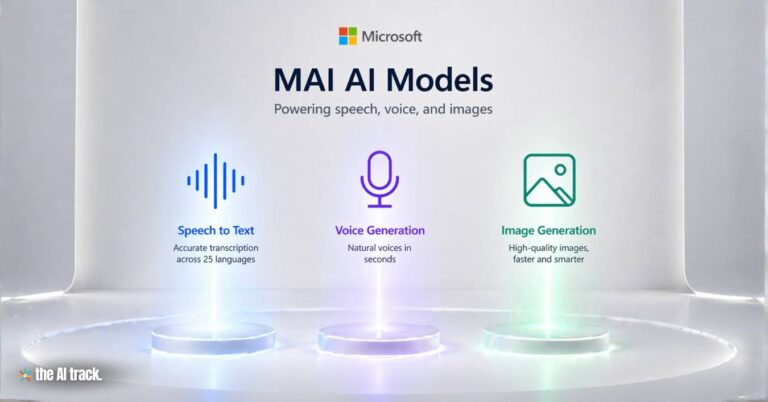
Microsoft unveiled MAI AI Models for transcription, voice generation, and image creation as it pushed further toward in-house AI self-sufficiency.
Elon Musk testified as the OpenAI trial began over charitable trust claims, Microsoft ties and the company’s commercial structure.

Microsoft will invest $10B in AI infrastructure in Portugal, deploying 12,600 Nvidia GPUs at the Sines hub & expanding data-centre capacity across Europe by 2027.
Read a comprehensive monthly roundup of the latest AI news!