
Key Takeaway
Horizon 1000 is a $50 million joint initiative by OpenAI and the Gates Foundation aimed at deploying practical AI tools in primary healthcare, targeting 1,000 clinics in Africa by 2028, starting in Rwanda, while explicitly positioning AI deployment as a mitigation strategy against accelerating global aid cuts and their measurable health consequences.
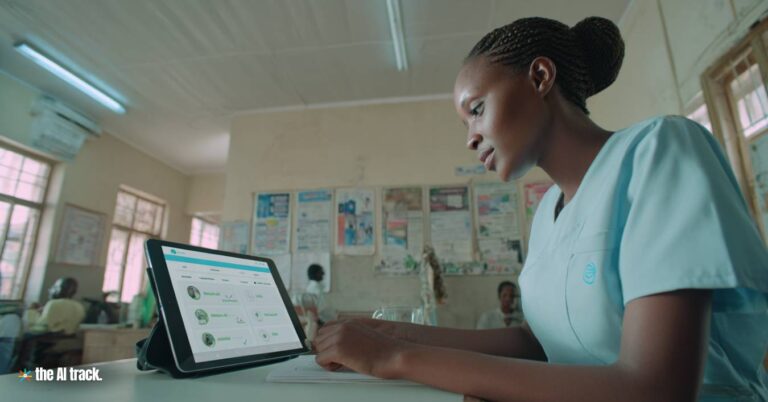
Horizon 1000 – Key Points
$50 million commitment with a defined deployment goal (2025–2028)
OpenAI and the Gates Foundation jointly commit up to $50 million in combined funding, technology, and technical support. The initiative is explicitly framed as a deployment-focused pilot, not research-only, with a measurable target of reaching 1,000 primary healthcare clinics and their surrounding communities by 2028. The announcement was published by OpenAI in early 2026 as an institutional program launch. Bill Gates has described the operating model as collaboration with African leaders and innovators to decide where AI can deliver the most value first, beginning in Rwanda.
Addressing a quantified healthcare workforce crisis
Primary healthcare remains inaccessible to around half of the global population, according to World Health Organization and World Bank universal health coverage assessments. In Sub-Saharan Africa, health systems face a workforce shortfall of approximately 5.6 million health workers, a gap widely cited by the WHO and echoed by Bill Gates as too large to be closed through training alone in the near term.
In Rwanda, overall health-worker density is around 1–1.3 workers per 1,000 people, well below the **WHO benchmark of roughly 4–4.5 doctors, nurses, and midwives per 1,000** required to deliver essential services. Gates has argued that, at current workforce growth rates, closing this gap could take well over a century, underscoring the structural nature of the shortage.
More broadly, Gates and global health agencies have highlighted extreme physician scarcity in parts of Sub-Saharan Africa, with ratios reaching one doctor per tens of thousands of people in some settings, reinforcing the rationale for AI tools designed to extend clinical capacity rather than replace health workers.
AI as a response to global aid cuts and rising mortality
The initiative is explicitly framed as a response to shrinking international health aid. A Gates Foundation analysis published in December 2025 projected 4.8 million global under-five deaths in 2025, up from 4.6 million the previous year, signaling what would be the first increase in child mortality since 2000, when deaths stood at approximately 10 million.
The Foundation attributes this reversal primarily to recent reductions in international health assistance, estimating that global development assistance for health fell by nearly 27% in 2025 compared to 2024. Under modeled scenarios in which health funding declines by 20%, the analysis warns that up to 12 million additional child deaths could occur by 2045. In this context, Bill Gates has argued that AI-enabled efficiency and earlier patient guidance, before individuals reach clinics, could help offset the impact of abrupt funding contractions on care access and continuity.
From AI capability to real-world clinical use
The initiative responds to a documented gap between advanced AI model capabilities and their actual use in everyday healthcare settings. Horizon 1000 emphasizes “frontline workflow” deployment: AI-powered tools supporting patient intake, triage, follow-up, referrals, and access to trusted medical information in local languages. The organizations have stated these tools are intended to augment, not replace health workers. They are also described as being aligned to national clinical guidelines and optimized for accuracy, privacy, and security, reflecting a design constraint set for real-world clinical environments rather than general-purpose chat.
Targeted clinical use cases with measurable efficiency gains
Initial deployment priorities are expected to include maternal health and HIV care, particularly by providing patients with guidance before they reach clinics. On arrival at clinics, AI systems are intended to reduce paperwork, link patient histories and appointments, and support clinical decision-making in real time. Gates has stated a “typical visit” could be about twice as fast while improving quality, implying a practical KPI focus on throughput and adherence to guidance, not only on novelty.
Support for African-led deployment and governance
Rather than exporting a fixed solution, Horizon 1000 prioritizes African leadership, governments, and medical experts.
Rwanda has already established an AI health hub / Health Intelligence Center in Kigali linked to health-system reform efforts, creating local institutional capacity for deployment, evaluation, and governance. Rwanda’s minister of ICT and innovation, Paula Ingabire, has publicly framed the effort around responsible use to reduce clinician burden while reaching more patients.
Explicit learning and evaluation framework
Success is defined not by technical benchmarks but by measurable improvements in care quality and workforce experience. OpenAI has stated it will learn openly during deployment and evaluate outcomes based on real-world impact for patients and healthcare workers. The initiative was discussed publicly alongside global health leaders during the World Economic Forum Annual Meeting 2026, including a session featuring Gates, Rwanda’s ICT leadership, and the head of the Global Fund to Fight AIDS, Tuberculosis and Malaria, situating Horizon 1000 within broader “global health recovery” efforts after recent setbacks.
Why This Matters
Horizon 1000 represents a shift from experimental AI in healthcare to accountable, large-scale deployment in low-resource settings, at a moment when global health systems are under direct pressure from aid retrenchment. By anchoring AI adoption in primary care, workforce support, and local leadership (and explicitly linking it to mitigating the human cost of funding cuts) the initiative tests whether advanced models can offset structural shortages and stabilize health outcomes at scale. The explicit design constraints (alignment with national guidelines; accuracy, privacy, and security; augment-not-replace positioning; local-language delivery; workflow integration across intake/triage/follow-up/referrals) make it a real-world test of whether AI can be operationally dependable in clinical settings. Its success or failure is likely to influence global health policy, donor strategies, procurement standards for clinical AI tools, and the role of AI as a compensatory capability in an era of constrained international assistance.
This article was drafted with the assistance of generative AI. All facts and details were reviewed and confirmed by an editor prior to publication.

Discover the pivotal role of AI in healthcare, from enhancing workflow efficiencies to facilitating personalized medicine, AI is revolutionizing medical practices

10 brilliant free health AI apps that offer a variety of services from emotional support to medical symptom analysis, all designed to enhance your well-being

Anthropic unveils Claude for Healthcare (Opus 4.5) with strict safety policies requiring human review. Features include automated prior authorizations, Apple Health sync, and clinical trial tools.
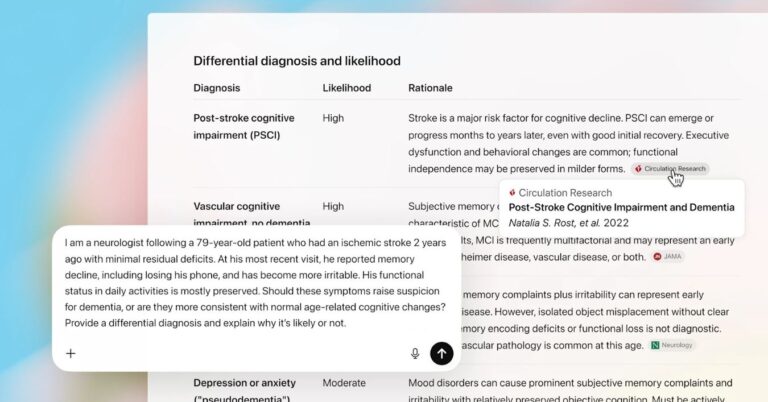
OpenAI launched ChatGPT Health on Jan 7, 2026, enabling U.S. users to connect medical records and wellness apps in a dedicated health workspace.

Discover ChatGPT’s AI emotional support for 24/7 mental well-being. Learn to cope with stress, anxiety, and life’s challenges with AI-driven therapy

A curated collection of the most important recent AI breakthroughs in health, enhancing diagnostics, treatments, and healthcare operations.
Read a comprehensive monthly roundup of the latest AI news!