
Key Takeaway
ChatGPT can now connect to bank and financial accounts through Plaid, giving Pro users read-only access to balances, transactions, investments, liabilities, subscriptions, spending patterns and savings goals. The new personal finance feature is launching in preview for ChatGPT Pro users in the U.S. on web and iOS.
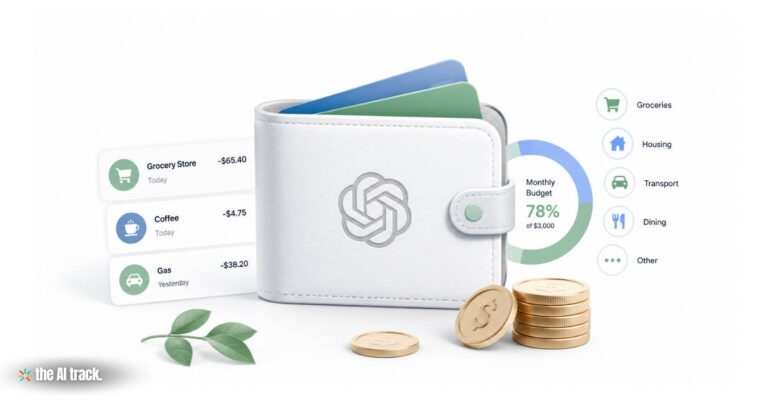
ChatGPT Launches Personal Finance Tools – Key Points
The Story
OpenAI has launched a personal finance experience in ChatGPT that connects to users’ financial accounts and answers money questions using their actual financial data. The feature uses Plaid to connect with more than 12,000 financial institutions and creates a dashboard across four categories: portfolio performance, spending activity, active subscriptions and upcoming bills.
The preview is available first to ChatGPT Pro subscribers in the U.S. on web and iOS. ChatGPT cannot move money or view full account numbers, but it can read connected financial data to generate personalized budgeting, spending analysis, savings planning and financial guidance.
Key Points
ChatGPT can connect to more than 12,000 financial institutions through Plaid.
Supported institutions include Chase, Citi, Schwab, Fidelity, Robinhood, Affirm, American Express and Capital One.
The access is read-only.
ChatGPT can view balances, transactions, investments and liabilities, but it cannot move money, make account changes or see full account numbers.
The feature is launching in preview for ChatGPT Pro users in the U.S.
The rollout starts on web and iOS for Pro subscribers, priced at $100 per month.
Users can open the feature from the Finances section.
They can start from the ChatGPT sidebar by selecting Finances and tapping “Get started,” or by typing “@Finances, connect my accounts” in a chat.
Plaid handles the account-linking flow.
After users start the process, ChatGPT guides them through linking financial accounts through Plaid.
The dashboard shows four main finance areas.
It surfaces portfolio performance, spending activity, active subscriptions and bills on the horizon. Generating the visual dashboard may take a few minutes.
The feature uses GPT-5.5 Thinking by default.
GPT-5.5 Thinking powers the finance experience and is stronger on complex financial reasoning tasks involving context, timing, debts, income and long-term goals.
The main change is personalization.
Without account access, ChatGPT gives generic budgeting advice. With connected accounts, it can analyze recent spending, recurring bills, investments and goals to generate tailored suggestions.
Example questions include whether recent spending has changed and how to build a plan to buy a house within five years.
Users can add financial context manually.
They can tell ChatGPT about future purchases, mortgage plans, family loans or savings goals, and this information can be stored as financial memories.
More than 200 million people ask ChatGPT finance-related questions every month.
The new feature formalizes a personal finance use case that many users were already bringing to ChatGPT manually.
OpenAI has recently acquired finance-focused AI startups.
The company acquired the team behind Hiro Finance in April, one month before the launch, and previously acquired Roi, a personalized investing app. Work on the feature began before the Hiro acquisition.
The feature was tested with finance professionals.
Finance experts helped create a benchmark for improving the model on personal finance questions.
Users can disconnect accounts and delete saved finance context.
Users can remove account connections through Settings > Apps > Finances. Synced financial data is deleted from ChatGPT within 30 days after disconnection, and users can view and delete financial memories from the Finances page.
Temporary chats do not access connected financial accounts.
Temporary chats also do not save financial history, and existing model-training opt-outs carry over to the finance experience.
How to Access / Pricing
The feature is launching first in preview for ChatGPT Pro users in the United States on web and iOS. Users can access it through the Finances section in the ChatGPT sidebar or by typing “@Finances, connect my accounts” in a chat.
ChatGPT Pro is priced at $100 per month. Feedback from early Pro users will shape the product before access expands to ChatGPT Plus subscribers later.
Benchmarks / Evidence Check
Finance professionals helped create a benchmark for personal finance questions. GPT-5.5 Thinking, the default model for the Finances feature, scored 79 out of 100. GPT-5.5 Pro scored 82.5.
These results come from OpenAI’s own evaluation process, not an independent third-party benchmark.
Risks / Limitations
The feature creates a major data-access question: Plaid handles the connection and security layer, but ChatGPT still receives sensitive financial information once accounts are connected.
Market Timing
Perplexity has also launched a finance product based on its Computer agent, while Intuit support is expected to come to ChatGPT soon for use cases such as tax impact estimates and credit card approval predictions.
Why This Matters
The feature turns ChatGPT from a generic financial advice tool into a data-connected personal finance assistant. For users, the practical benefit is more specific budgeting, spending analysis and goal planning; the tradeoff is giving ChatGPT access to highly sensitive financial data.
This article was drafted with the assistance of generative AI. All facts and details were reviewed and confirmed by an editor prior to publication.

Google Cloud launched Gemini Enterprise Agent Platform with Agentic Data Cloud, new TPUs, Workspace Intelligence and Wiz security integrations.

AI in Finance is revolutionizing the banking and finance sectors by refining decision-making processes, automating tasks, and enhancing operational efficiency.

Anthropic unveiled dreaming for Claude Managed Agents, letting AI agents review past sessions, update context files, and improve work.

Claude for Financial Services integrates real-time data, Excel agents, and compliance automation—now available via AWS Marketplace and trusted by global banks.
Read a comprehensive monthly roundup of the latest AI news!