
INTRO

Biren Jumps 76% in Hong Kong IPO – Key Points
IPO Performance and Market Reaction (Jan 2, 2026)
Shares of Shanghai Biren Technology surged 76% on debut, climbing from an IPO price of HK$19.60 to HK$34.46, after briefly hitting HK$42.88 — more than doubling intraday. The stock vastly outperformed the Hang Seng Index, which rose 2.8%. Biren ranked as the third most actively traded stock of the day, with 150.7 million shares exchanged worth HK$5.52 billion (US$707.7 million), making it one of the strongest large Hong Kong IPO debuts since 2021.
Fundraising, Valuation, and Demand
Biren raised HK$5.58 billion (US$717 million) by selling 284.8 million H shares at the top of its pricing range. Institutional demand exceeded supply by ~26×, while the retail tranche was oversubscribed roughly 2,300–2,348× — an unusually high level even by Hong Kong standards. At listing, Biren’s market capitalization reached HK$46.9 billion, far above typical first-day outcomes for similarly sized IPOs between 2020 and 2025.
Business Focus, Origins, and Product Context
Founded in 2019 by Zhang Wen, former president of SenseTime Group, Biren designs general-purpose GPUs and intelligent computing systems for AI training and inference. The company gained attention in 2022 with its first GPU and later positioned its BR100 chip as a domestic alternative to Nvidia hardware. Biren is widely grouped among China’s GPU challengers known as the “Four Little Dragons.”
Commercial Traction and Financial Profile
Despite strong investor enthusiasm, Biren remains in early commercialization. In H1 2025, it reported just 58.9 million yuan in revenue despite 2.1 billion yuan in pending orders, pointing to slow delivery, contract friction, or deployment constraints. Over the same period, the company posted a net loss of 1.6 billion yuan, reflecting the heavy cost of building advanced AI hardware platforms.
Use of Proceeds and R&D Focus
Approximately 85% of IPO proceeds are allocated to research, development, and commercialization, including software. Biren operates as a deeply engineering-driven company, with R&D staff making up about 83% of total employees.
Software Ecosystem and Cloud Adoption
Software is central to adoption. Biren promotes BIRENSUPA, its SDK and runtime platform, to help developers optimize AI workloads. Opportunities are emerging for software vendors and system integrators to port PyTorch and TensorFlow models to Biren hardware, particularly for domestic cloud operators such as China Mobile and China Telecom, which already deploy Biren GPUs in AI-focused data centers.
Technical Positioning Constraints
The BR100 lacks FP8 support and does not benefit from structured sparsity techniques used by Nvidia to boost performance. Biren instead emphasizes architecture-specific tuning and its proprietary BLink chip-to-chip interconnect as areas where system-level optimization can narrow performance gaps in domestic deployments.
Strategic Risks and Supply Chain Uncertainty
Biren was placed on the U.S. Entity List in October 2023, restricting access to certain foreign technologies and requiring export licenses. Public disclosures offer limited detail on manufacturing partners, process nodes, and the licensing status of some foreign EDA tools, leaving open questions around long-term scalability and supply chain resilience.
Policy Environment and Domestic Support
China is accelerating its push for a self-reliant semiconductor industry amid escalating trade tensions. Authorities are reportedly considering incentive packages of up to US$70 billion to support domestic chipmakers, reinforcing investor confidence in firms aligned with national industrial priorities.
Investor and Expert Commentary
Winston Ma of NYU Law said Chinese AI firms are listing faster than U.S. peers due to policy support, clearer enterprise revenue paths, and more IPO-friendly valuations. Kenny Ng of China Everbright Securities International highlighted Biren’s scarcity value as Hong Kong’s first GPU-focused listing. Qiming Venture Partners managing partner Alex Zhou described the IPO as evidence of China’s shift toward original innovation.
Hong Kong IPO Pipeline and 2026 Outlook
Hong Kong raised US$36.5 billion from 114 listings in 2025, its strongest year since 2021. AI and semiconductor deals drove the rebound and are expected to dominate 2026. Recent filings include Baidu’s Kunlunxin unit, while Zhipu AI and MiniMax Group are also preparing to list — many still unprofitable due to heavy R&D spending.
Why This Matters
Biren’s IPO is an early signal that China’s AI hardware sector is becoming investable at scale, despite export controls and geopolitical pressure. The listing strengthens Hong Kong’s position as the key offshore funding hub for Chinese AI and chip companies, while exposing the core challenge ahead: converting massive demand and policy support into reliable production, mature software ecosystems, and sustainable revenue growth.
This article was drafted with the assistance of generative AI. All facts and details were reviewed and confirmed by an editor prior to publication.
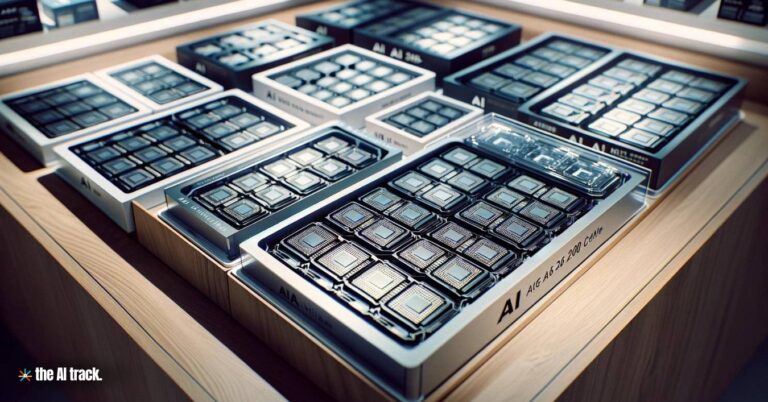
Everything you need to know about the AI chip business and the geopolitical factors shaping the global race for AI (chip) dominance

All you need to know about the critical components of AI infrastructure, hardware, software, and networking, that are essential for supporting AI workloads.
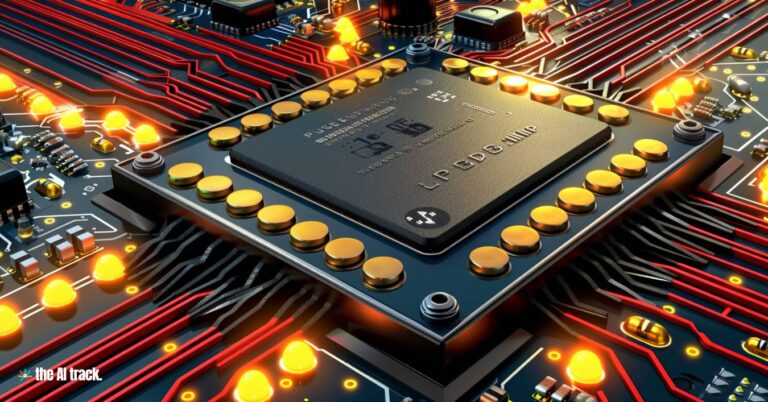
Explore the vital role of AI chips in driving the AI revolution, from semiconductors to processors: key players, market dynamics, and future implications.
Read a comprehensive monthly roundup of the latest AI news!