Key Takeaway
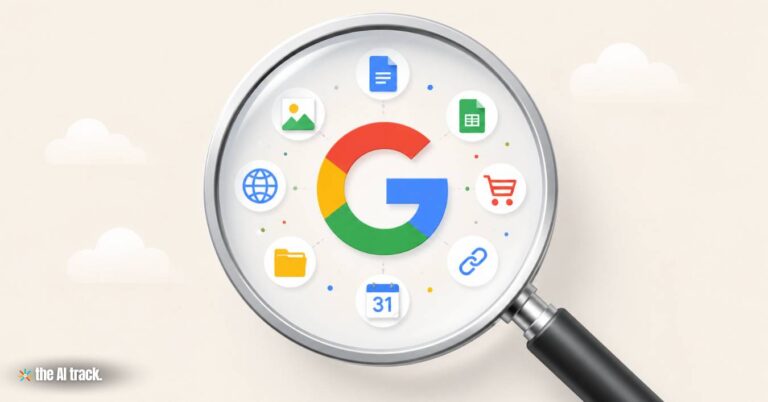
Google search is becoming a more agentic AI product, with an Intelligent Search box, AI Mode, background information agents, personal context, booking tools, shopping support, generative widgets, and custom mini apps built directly into the search experience.
Google Search AI – Key Points
The Story
At Google I/O 2026, Google introduced the biggest upgrade to the Search box in more than 25 years. The new Intelligent Search box is designed to close the gap between traditional Google search, AI Overviews, and AI Mode, making AI-generated answers, follow-up questions, file inputs, personalized actions, and agentic workflows part of the same interface.
The update is powered by Gemini 3.5 Flash in AI Mode and is rolling out across desktop and mobile in markets where AI Mode is available. Google is also preparing paid AI agents that can monitor topics in the background, notify users when relevant information changes, and help complete tasks such as shopping, booking, and building small tools.
Key Points
The Search box is becoming an AI input hub.
Google’s redesigned Intelligent Search box can expand as users type longer natural-language questions and supports text, images, files, videos, and Chrome tabs as inputs. It is starting to roll out in all countries and languages where AI Mode is available.
AI Overviews now connect more directly to AI Mode.
Users can ask follow-up questions from an AI Overview and continue the query inside AI Mode, keeping the context of the original Google search. The Search-to-AI Mode flow is live globally on desktop and mobile.
Gemini 3.5 Flash becomes the default AI Mode model.
Gemini 3.5 Flash is now the default model for AI Mode globally, bringing stronger agent and coding capabilities into Google search. Google’s I/O 2026 summary says Gemini 3.5 Flash outperforms Gemini 3.1 Pro on several agentic and coding benchmarks, including Terminal-Bench 2.1, GDPval-AA, and MCP Atlas.
AI Mode has passed one billion monthly users.
AI Mode reached more than one billion monthly users one year after launch, with queries more than doubling every quarter. Google also said Search queries reached an all-time high in the previous quarter.
Information agents are coming for paid subscribers first.
Google AI Pro and AI Ultra subscribers will get access this summer to agents that monitor topics in the background, such as apartment listings, sports updates, shopping drops, tour announcements, finance data, blogs, social posts, and real-time news.
Google search can send synthesized updates.
Users will be able to describe what they are looking for in detail, then receive alerts when an agent finds relevant new information. One example is apartment hunting, where the agent continuously scans for listings that match a user’s requirements.
Google search can connect to personal Google data.
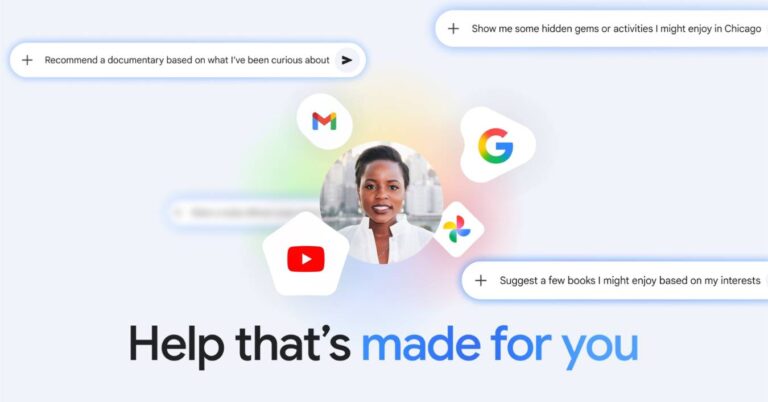
Personal Intelligence in AI Mode can connect to apps such as Gmail and Google Photos, with Google Calendar support planned. The feature is expanding to nearly 200 countries and territories across 98 languages, with no subscription required.
Booking and business-calling features are expanding.
Search will support more agentic booking tasks, including local experiences and services. One example is finding a private karaoke room for six people on a Friday night with food, then showing current pricing and availability with links to finish booking. In selected U.S. categories such as home repair, beauty, and pet care, users will be able to ask Google to call businesses on their behalf.
Shopping is becoming more agentic.
Universal Cart will let users add products while browsing Search, chatting with Gemini, watching YouTube, or reading Gmail. It can watch for deals and price drops, provide price history, alert users when products are back in stock, use payment and loyalty details, and flag issues such as product incompatibilities when building a cart. It starts rolling out across Search and the Gemini app in the U.S. this summer, with YouTube and Gmail to follow.
Search will generate custom interfaces.
Generative UI features will let Search create interactive layouts, visual tools, tables, graphs, and simulations in response to a query. These capabilities are planned to be free for everyone in Search this summer.
Paid users will be able to create mini apps in Search.
Google AI Pro and AI Ultra subscribers in the U.S. will first get access to custom Search experiences, such as astrophysics visualizations, wedding-planning dashboards, moving trackers, and fitness apps built with Antigravity and connected to real-time data.
Traditional web results remain available.
The familiar blue links are not going away, and users can still choose the “Web” tab to view traditional results only.
What Is New
Google is not only adding AI answers to Search. It is changing Google search from a list of links into a system that can answer, continue conversations, monitor the web, use personal context, compare options, support shopping and booking, generate interfaces, and build lightweight apps.
The practical shift is that users may no longer need to decide whether to use Google search, AI Mode, or a separate chatbot. The Intelligent Search box itself becomes the entry point.
What You Can Use It For
- Ask longer, more specific questions without compressing them into keywords.
- Attach files, photos, videos, or Chrome tabs to give Search more context.
- Continue from an AI Overview into a deeper AI Mode conversation.
- Track changing information, such as listings, prices, events, sports, or announcements.
- Get help with local booking tasks and selected business calls.
- Monitor shopping research, price drops, alternatives, stock changes, and cart details.
- Generate interactive explanations, diagrams, tables, graphs, or simulations.
- Build recurring task dashboards, such as fitness trackers or planning tools.
What to Know Before Using It
The most powerful agentic features will not be available to everyone at launch. Information agents and custom mini apps start with Google AI Pro and AI Ultra subscribers, while some booking and business-calling features are initially U.S.-focused.
The new Intelligent Search box is starting to roll out in countries and languages where AI Mode is available. The AI Overview-to-AI Mode flow is live globally on desktop and mobile. Generative UI capabilities are planned for this summer free of charge, while Antigravity-powered mini apps will come first to Google AI Pro and AI Ultra subscribers in the U.S.
The privacy trade-off is clear: the more personalized Search becomes, the more useful it can be, but only if users choose to connect personal Google apps. Personal Intelligence currently supports Gmail and Google Photos in AI Mode, with Calendar support planned. Users can choose whether to connect those apps.
Risks / Limitations
The biggest open question is how reliable AI Search will be when it moves from answering questions to taking action. Background agents, booking tasks, shopping tools, personal data access, and generated mini apps all require strong accuracy, transparency, and user control.
There is also a publisher and web ecosystem question. AI Overviews and AI Mode may reduce visits to traditional websites if users get synthesized answers directly inside Search. Pew Research Center found that users clicked a traditional search result in 8% of visits when an AI summary appeared, compared with 15% of visits when no AI summary appeared. Users clicked a link inside an AI summary in just 1% of visits to pages with such a summary.
For search marketers and publishers, the redesigned Search box may also change query behavior. Pew Research Center found that longer searches, question-based searches, and full-sentence searches were more likely to trigger AI summaries, which matters as Google pushes users toward longer natural-language prompts.
Why This Matters
This is a major step in Google’s attempt to keep Google search central in the AI era. For users, it means Search may become less like typing keywords into a web index and more like asking an AI assistant to research, monitor, compare, personalize, shop, book, and act. For businesses, publishers, creators, and SEO teams, it signals another shift away from ranking only for blue links and toward visibility inside AI-generated answers, longer conversational queries, and agentic search workflows.
This article was drafted with the assistance of generative AI. All facts and details were reviewed and confirmed by an editor prior to publication.
Google I/O 2026 introduced Gemini 3.5 Flash, Spark, AI Search, Chrome agents, smart glasses, Antigravity and creative AI tools.
Google Gemini Omni can generate and edit videos from text, images, audio, and clips, with avatars, watermarking, Flow credits, and limits.
Google launches Gemini Personal Intelligence in the U.S., enabling opt-in context across Gmail, Photos, YouTube history, and Search for paid users.

Google disrupted an AI-assisted zero-day exploit that could bypass two-factor authentication before a planned mass attack.
Read a comprehensive monthly roundup of the latest AI news!