Key Takeaway
Meta is acquiring agentic AI startup Manus, a Chinese-founded AI agent company now headquartered in Singapore, in a deal estimated at more than $2 billion. The acquisition accelerates Meta’s push to embed general-purpose AI agents across Facebook, Instagram, WhatsApp, and Meta AI, while addressing regulatory pressure by cutting Chinese ownership ties and shutting down remaining operations in China. Services from agentic AI startup Manus are expected not to operate in China.
Meta acquires agentic AI startup Manus – Key Points
The acquisition and valuation
- Meta confirmed the deal on December 29, 2025, without disclosing official terms.
- The price is widely reported at $2–3 billion, with indications it closed at over $2 billion, roughly the valuation agentic AI startup Manus was seeking for a new funding round.
- Manus previously raised $75 million in April 2025 at an estimated $500 million valuation, underscoring the speed of its rise.
- The company traces its roots to Chinese startup Butterfly Effect (also known as Monica.im) before relocating its operations to Singapore.
What makes Manus different
- Manus positions itself as a “general agent” software designed to plan, execute, and complete tasks with minimal user input, rather than respond step-by-step like chatbots.
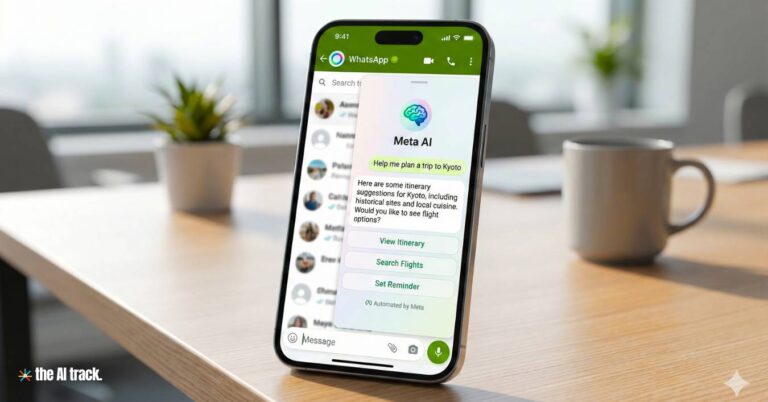
- Its agents handle practical work including trip planning, presentation building, market research, coding, data analysis, and job candidate screening.
- One demo workflow shows the agent opening a .ZIP file of applications, evaluating candidates against criteria, and generating a ranked shortlist.
- Tasks run inside a proprietary cloud “computer,” described as a cloud-hosted virtual machine using a multi-agent, multi-model system for multi-step execution.
- The company gained attention in 2025 after a viral demo and claims competitive performance with OpenAI’s DeepResearch.
Commercial traction and scale
- Agentic AI startup Manus operates on a subscription model with both free and paid tiers.
- The company reported over $100 million in annualized average revenue within eight months of launch, with a run rate above $125 million.
- Manus also disclosed large-scale usage metrics, including 147 trillion processed tokens and support for 80 million virtual computers.
Why Meta wants it
- Meta’s strategy is to move beyond chatbots and embed agentic AI directly into its products, allowing users to delegate complex tasks inside familiar apps.
- The company described the deal as accelerating AI innovation for both businesses and consumers, explicitly including Meta AI.
- The acquisition supports Meta’s long-term vision of personal AI agents that understand goals and act on them.
- It aligns with Meta’s broader AI investment push, including at least $70 billion in capital expenditure in 2025, largely focused on AI infrastructure and data centers.
WhatsApp as the key distribution layer
- WhatsApp’s global scale and growing adoption by small and medium-sized businesses make it a natural surface for AI agents.
- The ambition mirrors the “everything app” model, where messaging, services, and commerce converge.
- Manus said its subscription service will continue operating from Singapore, with no disruption to existing customers.
Chinese roots and regulatory pressure
- Manus’s Chinese origins have drawn scrutiny in the U.S. over data security and geopolitics.
- Meta has stated there will be no continuing Chinese ownership after the acquisition and that remaining China operations will be wound down.
- Manus previously had ties to China’s tech ecosystem, including a partnership with Alibaba’s Qwen AI team and funding involving U.S. and China-linked investors.
Political and data concerns
- Autonomous agents raise higher-stakes privacy questions because they can access files, run workflows, and process sensitive data more deeply than social apps.
- Some U.S. lawmakers have criticized earlier American investment in Manus on national security grounds.
- Meta says it is implementing internal safeguards, including access controls and data separation for new staff.
Why This Matters
This deal signals a decisive shift from conversational AI to agentic systems that complete tasks end-to-end. If Meta successfully integrates agentic AI startup Manus into WhatsApp and Meta AI, messaging and social platforms could evolve into powerful productivity and commerce tools. At the same time, the acquisition will test whether restructuring ownership and operations is enough to satisfy regulators when Chinese-founded AI technology enters global consumer platforms at scale.
This article was drafted with the assistance of generative AI. All facts and details were reviewed and confirmed by an editor prior to publication.

Autonomous AI agents are redefining automation. Learn how major tech players are leading the development of this transformative technology.
Read a comprehensive monthly roundup of the latest AI news!