Amazon CEO Andy Jassy confirms that the Amazon Workforce will shrink over the coming years as generative AI and intelligent agents boost operational efficiency, restructure workflows, and automate repetitive roles. With over 1,000 AI applications in development and billions in infrastructure investment, Amazon is transforming its organizational model to prioritize automation and strategic human roles.
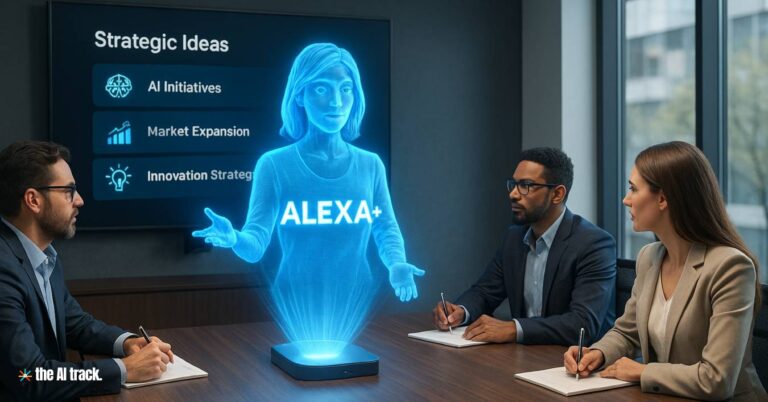
Amazon Workforce to Shrink – Key Points
Amazon CEO Andy Jassy Projects Amazon Workforce Reductions Due to AI:
In a June 2025 memo, Jassy revealed that the Amazon Workforce will be reduced as AI systems increasingly take over current job functions. The company anticipates a gradual decline in headcount, particularly across corporate roles, though new positions may emerge in areas aligned with AI operations. Amazon remains the second-largest private employer in the U.S., with 1.5 million employees globally.
Generative AI to Restructure Work Models:
Employees are being urged to integrate AI tools into daily operations, attend training sessions, and contribute to team brainstorming. These tools—numbering over 1,000 across the company—are intended to make the Amazon Workforce leaner, faster, and more innovation-driven.
AI as Teammates, Not Replacements:
Jassy framed AI agents as catalysts for moving away from rote work, enabling the Amazon Workforce to focus on creativity and strategy. While promising efficiency, some employees have raised concerns about increased workloads and reduced autonomy due to intensified productivity expectations.
Ongoing Layoffs Reflect Amazon Workforce Strategy Shift:
Amazon has laid off more than 27,000 employees since 2022. In 2025 alone, 200 jobs in the North America Stores unit and 100 in Devices & Services were cut—moves that align with Amazon’s plan to streamline operations and reconfigure its workforce for AI-driven scalability.
Billions Invested in AI Infrastructure to Support a New Amazon Workforce Model:
Key investments include:
$100B in total 2025 capital expenditures
$20B in AI data centers in Pennsylvania
$10B in North Carolina AI operations
These facilities will support the next evolution of the Amazon Workforce by centralizing AI capabilities and reducing dependence on labor-intensive processes.
AI Product Rollouts Embedded Across Amazon Workforce Functions:
Jassy outlined new tools reshaping work inside Amazon:
Alexa+, a smarter generative AI assistant
“Buy for Me,” “Recommended Size,” and other AI shopping features
AI-powered seller services and logistics optimization
These advancements are enhancing customer experience while redefining tasks across the Amazon Workforce.
Industry-Wide Adoption Echoes Amazon’s Direction:
Tech leaders align with Amazon’s vision:
Shopify’s CEO requires staff to prove AI can’t complete tasks before hiring.
Klarna’s CEO credits AI with a 40% workforce reduction.
The Amazon Workforce model may become the blueprint for other companies undergoing similar transitions.
Anthropic CEO Warns of Broader Impacts on Workforces:
Dario Amodei has forecast that up to 50% of white-collar entry-level jobs could vanish due to AI in the next 1–5 years, pushing unemployment up to 20%. These predictions, while debated, reflect the scale of disruption AI could bring to the Amazon Workforce and beyond.
Labor Economists Call for Balanced Assessment:
Glassdoor’s Daniel Zhao cautions against attributing hiring slowdowns solely to AI, citing broader macroeconomic conditions. Nonetheless, the restructuring of the Amazon Workforce signals tangible short-term effects driven by automation trends.
Why This Matters:
Amazon’s redefinition of its workforce model—grounded in generative AI and intelligent systems—sets a precedent for global businesses. The transformation of the Amazon Workforce is not only about cost-saving but about preparing for a digital-first economy where human roles are increasingly strategic and AI handles execution. Governments, workers, and industries must prepare for sweeping labor shifts, as the Amazon Workforce becomes a case study in the future of work.

Amazon expects Rufus, its AI shopping assistant, to add $700M in 2025 profits. Global expansion, AI upgrades, and ad revenue drive the forecast.
AWS introduces Kiro, an AI-driven coding assistant designed to enhance developer productivity through real-time code generation and multimodal inputs.
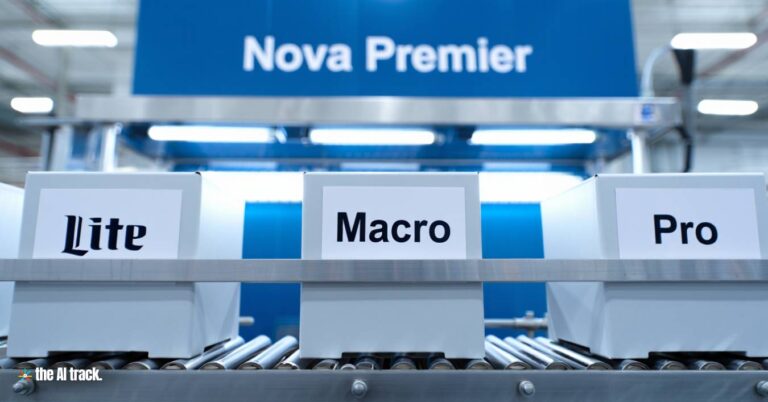
Nova Premier joins Amazon Bedrock as its top model, blending cost-effective scale, multimodal support, and agentic workflows—despite STEM tradeoffs.
Read a comprehensive monthly roundup of the latest AI news!