Key Takeaway
OpenAI has introduced Jalapeño, its first custom AI inference processor, developed with Broadcom for large language models and future agentic AI workloads. The chip signals OpenAI’s move deeper into full-stack AI infrastructure, but its claimed efficiency and cost gains still need public benchmarks and clearer environmental disclosure.
Jalapeño AI Chip – Key Points
The Story
OpenAI and Broadcom unveiled Jalapeño on June 24, 2026. The custom-built inference processor is designed for running AI models after they have already been trained. This is the stage where systems such as ChatGPT, Codex, OpenAI’s API, and future AI agents process user requests and generate responses.
Jalapeño is not being positioned as a general-purpose AI accelerator. It was designed around the specific serving patterns of large language models, including compute use, memory movement, networking, latency, and throughput.
The chip is the first part of a planned multi-generation computing platform. It also reflects a broader OpenAI strategy to control more of the infrastructure behind its models and products. Instead of relying only on third-party GPUs and accelerators, OpenAI is designing hardware, software, networking, scheduling, deployment systems, and product experience around its own AI workloads.
The Facts
- Jalapeño is OpenAI’s first custom “Intelligence Processor,” built with Broadcom.
- It is designed for inference, not model training.
- The chip targets large language models and future agentic AI workloads.
- OpenAI designed the chip around its model roadmap, kernels, serving systems, and product needs.
- Broadcom contributed silicon implementation, networking, and connectivity technologies.
- Celestica is supporting board, rack, and system integration.
- Broadcom’s Tomahawk networking silicon is part of the platform’s large-scale production path.
- Engineering samples are already running in the lab at production target frequency and power.
- OpenAI says the chip has been tested on workloads including GPT-5.3-Codex-Spark.
- OpenAI used its own AI models to assist parts of the chip design and optimization process.
- OpenAI and Broadcom claim early testing shows substantially better performance per watt than current state-of-the-art hardware.
- Broadcom CEO Hock Tan has cited roughly 50% cost savings compared with current AI GPUs, but no independent cost benchmark has been released.
- No public benchmark numbers, memory specifications, pricing, or full technical report have been released yet.
- OpenAI says a detailed technical performance report will be presented in the coming months.
- Initial deployment is planned by the end of 2026, with expansion in later years.
- The platform is intended for gigawatt-scale data centers with Microsoft and other partners.
- OpenAI is expected to continue using Nvidia hardware for pre-training workloads, keeping Jalapeño’s initial role focused on inference economics.
What Is New
Jalapeño matters because it is purpose-built for AI inference at scale. Most AI chip discussion focuses on model training, but inference is the recurring cost that grows as more people use AI products every day.
For an AI company with hundreds of millions of users, faster and more efficient inference can affect response speed, operating cost, product reliability, and the economics of advanced AI features.
The design also reflects a shift in AI infrastructure. OpenAI is no longer only building models and applications. It is now designing parts of the hardware stack that those models depend on.
How Jalapeño Is Designed
OpenAI says Jalapeño was built from scratch around the behavior of modern LLMs. The architecture is intended to handle practical bottlenecks that appear when AI models serve large numbers of users.
The main focus areas are:
- reducing costly data movement;
- balancing compute and memory resources;
- improving networking efficiency;
- increasing real-world hardware utilization;
- combining high throughput with low latency.
OpenAI says the chip is informed by systems it runs across ChatGPT, Codex, the API, and future agentic products. The goal is to combine the throughput of leading AI accelerators with latency closer to specialized inference systems.
The nine-month tape-out cycle also shows how AI models may start affecting chip development itself. OpenAI used its own models to support parts of the design and optimization process, although the company has not detailed exactly which tasks were accelerated.
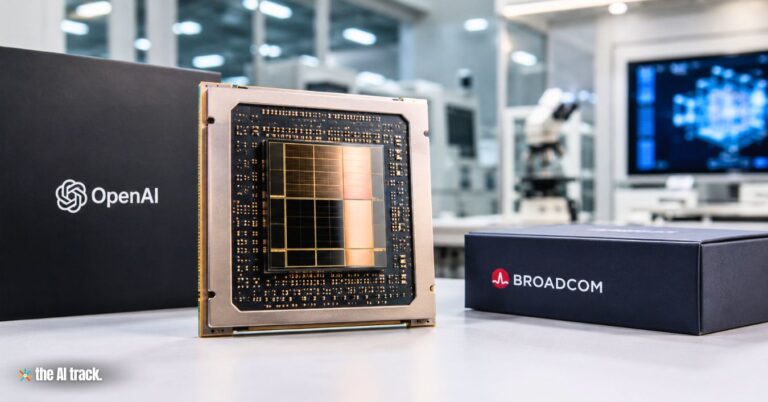
The package appears to include a large compute chiplet and multiple high-bandwidth memory modules. This suggests a design focused on fast access to data and low-latency inference, but the exact architecture remains undisclosed.
The Infrastructure Strategy
Jalapeño fits into a larger OpenAI compute strategy. OpenAI has already announced large infrastructure partnerships involving Nvidia systems, AMD GPUs, Broadcom custom accelerators, and data center partners.
This shows that OpenAI is not replacing one supplier with one custom chip. It is building a multi-supplier, multi-generation compute roadmap.
Custom chips can give OpenAI more control over cost, speed, availability, and workload optimization. However, they also increase dependency on manufacturing capacity, advanced packaging supply, power availability, networking systems, water access, and large-scale deployment execution.
Business Impact
For OpenAI, Jalapeño could reduce long-term inference costs if the chip performs as claimed. That matters because inference is tied directly to product usage. Every chatbot answer, coding request, enterprise workflow, and AI agent action consumes compute.
For Broadcom, the announcement strengthens its position in the custom AI silicon market. Broadcom is already a major supplier of networking and ASIC technology, and OpenAI gives it one of the highest-profile AI infrastructure customers.
For Celestica, the project adds a role in the physical deployment layer of AI infrastructure, including board, rack, and system-level integration.
For Nvidia and AMD, Jalapeño adds pressure but does not remove demand. OpenAI is still using and planning large deployments of third-party accelerators. The practical question is whether custom inference chips can take over specific workloads where they are more efficient than general-purpose GPUs.
What to Watch Next
The next important milestone is OpenAI’s promised technical report. That report should clarify whether Jalapeño can deliver measurable gains in real-world inference workloads.
The most relevant signals will be:
- public performance-per-watt data;
- latency under production serving conditions;
- verified cost compared with GPU-based inference;
- scale of deployment by the end of 2026;
- whether the chip supports only OpenAI workloads or broader customer use;
- how it compares with next-generation Nvidia Rubin and AMD Instinct systems;
Why This Matters
Jalapeño shows that AI competition is moving beyond models and apps into the physical infrastructure layer. For end users, better inference chips could eventually mean faster responses, lower-cost AI services, and more reliable agentic systems. For the industry, it shows that the biggest AI companies want hardware designed around their own workloads, while governments and communities are demanding clearer disclosure of the environmental footprint behind that infrastructure.
This article was drafted with the assistance of generative AI. All facts and details were reviewed and confirmed by an editor prior to publication.

The GPT 5.6 launch starts with Sol, Terra and Luna in limited preview as U.S. officials review cyber risks before wider access.
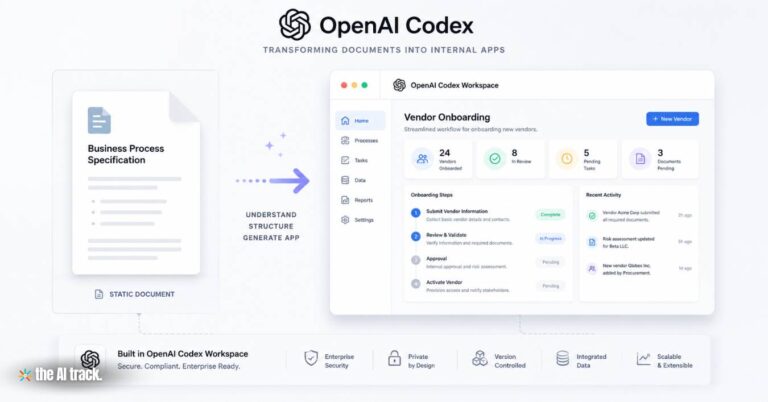
OpenAI Codex expands with Sites, Annotations, and plugins for enterprise workflows, moving beyond coding into broader business work.

ChatGPT health intelligence improves with GPT-5.5 Instant, bringing stronger benchmarks and fewer flagged factuality issues for free users.

Getty Images signed a multi-year OpenAI deal to display licensed visuals inside ChatGPT search as AI platforms move toward licensed media.

Explore the vital role of AI chips in driving the AI revolution, from semiconductors to processors: key players, market dynamics, and future implications.
Read a comprehensive monthly roundup of the latest AI news!