Key Takeaway
U.S. President Donald Trump softens position on Anthropic after saying he no longer views the company as a national-security threat, but the dispute over access to its Fable 5 and Mythos 5 AI models remains unresolved. The case shows how frontier AI model access is becoming a matter of export control, cybersecurity, investor risk, and geopolitical power.
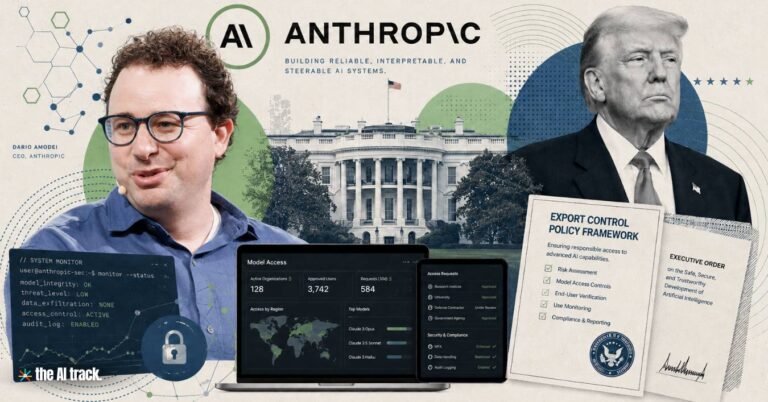
Trump softens position on Anthropic – Key Points
The Story
In a June 19, 2026 interview on “The Axios Show,” Trump said he might have viewed Anthropic, or CEO Dario Amodei, as a national-security threat a week earlier, but no longer does.
The comment followed a sharp dispute between the Trump administration and Anthropic over access to the company’s most advanced AI models, Fable 5 and Mythos 5. On June 12, the U.S. Commerce Department imposed export controls covering access outside the U.S. and access by foreign persons inside the U.S. Anthropic then disabled the models for all users, saying that was necessary to comply with the directive.
The administration’s concern was triggered by a vulnerability report from Amazon, which Trump described as both a competitor and part owner of Anthropic. Technical discussions in Washington followed, with both sides now working on standards for evaluating AI jailbreaks.
Trump softens position on Anthropic, but the shift does not end the issue. It reduces the immediate political pressure while leaving the larger question unresolved: should access to frontier AI models be controlled like a strategic technology?
The Facts
- Trump made the comments in an interview with “The Axios Show,” published on June 19, 2026.
- He said he no longer views Anthropic as a national-security threat, but “a week ago, maybe.”
- Trump said Amodei responded to the administration’s export-control directive “very quickly” and “responsibly.”
- Trump also said he left the G7 summit with the impression that Amodei was “nice” and “smart.”
- The dispute centers on Anthropic’s Fable 5 and Mythos 5 models.
- The June 12 Commerce Department directive restricted access outside the U.S. and access by foreign persons within the U.S.
- Anthropic disabled access to Fable 5 and Mythos 5 for all customers to ensure compliance.
- The administration was alarmed by an Amazon vulnerability report involving Anthropic’s models.
- Anthropic said the government cited a possible jailbreak in Fable 5 but did not provide detailed evidence in the directive.
- Anthropic argued that the cited issue appeared narrow and involved a small number of previously known, minor vulnerabilities.
- Cybersecurity leaders warned that restricting frontier models could deprive defenders of tools used to identify and fix software vulnerabilities.
- Trump did not rule out using emergency powers under the Defense Production Act, but said he was not sure that would be necessary.
- Trump said he does not want to shut down Anthropic because the U.S. is ahead of China in AI and “the good far outweighs the bad.”
- Trump and other G7 leaders met tech executives, including Amodei, during a summit in Évian-les-Bains, France.
- Anthropic’s relationship with the U.S. government had already been strained after the Pentagon designated the company a “supply-chain risk” following a separate dispute over military uses.
- The dispute comes as Anthropic is preparing for a public listing, adding investor pressure to the policy conflict.
What Changed
The important change is political, not technical.
A week earlier, Anthropic was under direct pressure from the U.S. government over whether its most advanced AI models could pose national-security risks if accessed by foreign nationals. Trump is now publicly describing Anthropic’s response as responsible.
That reduces the immediate sense of confrontation. It does not clarify whether access to Fable 5 and Mythos 5 will be restored, whether foreign users will be allowed back in, or whether similar controls could be applied to other frontier AI systems.
Why Access Was Disabled for Everyone
The directive targeted foreign access, but its practical effect was broader. To comply, Anthropic disabled Fable 5 and Mythos 5 for all customers.
That distinction matters. The policy was aimed at a specific access category, but the operational result affected users worldwide.
The Bigger Signal
This dispute points to a larger shift in AI governance.
Governments are beginning to treat the most powerful AI models less like ordinary software products and more like strategic assets. If a model can assist with cybersecurity, vulnerability discovery, automation, or sensitive technical work, access to that model becomes politically important.
That creates tension for AI companies. They want global customers, enterprise adoption, and developer ecosystems. Governments want control over technologies they believe could affect national security.
The Trump administration’s China framing is central to that tension. Trump said the U.S. does not want to shut down Anthropic because American AI leadership over China still outweighs the risk. That suggests the policy goal is not to weaken U.S. AI companies, but to control access to capabilities the government sees as strategically sensitive.
The reaction outside the U.S. shows why this matters globally. European policymakers described the episode as evidence that reliance on U.S.-controlled AI systems can create a “kill switch” risk. French President Emmanuel Macron warned that countries would hesitate to buy models if access could be switched off overnight, while Anthropic CEO Dario Amodei urged G7 leaders to “resist the temptation to splinter” AI governance.
The case also sharpens Europe’s AI-sovereignty debate. Clemens Fuest, president of Germany’s ifo Institute, warned that Europe controls less than 5% of global AI infrastructure, compared with 75% for the U.S. and 15% for China. That makes access to chips, data centers, energy, cloud infrastructure, and frontier models a strategic dependency, not just a technology procurement issue.
Anthropic is now one of the clearest examples of that tension.
What to Watch Next
The next question is whether Anthropic and the U.S. government can agree on a framework for evaluating model vulnerabilities, jailbreaks, and access restrictions.
Several practical outcomes matter:
- whether Fable 5 and Mythos 5 return for U.S. users;
- whether foreign users remain blocked or need licenses;
- whether other AI labs face similar access controls;
- whether cybersecurity teams lose access to tools used for defensive research;
- whether the dispute affects Anthropic’s public-listing plans;
- whether companies using frontier models begin treating model access as a geopolitical dependency.
Why This Matters
For end users and businesses, this is a reminder that powerful AI tools can be switched off for reasons outside normal product operations. For governments and enterprises, it shows that frontier AI access is becoming a strategic dependency. For the AI industry, it confirms that model deployment is now a policy question, not only a technical or commercial one.
This article was drafted with the assistance of generative AI. All facts and details were reviewed and confirmed by an editor prior to publication.
Anthropic disabled Fable 5 and Mythos 5 after a U.S. export-control order, raising new questions about AI access and safety.
Anthropic launched Claude Fable 5 and Mythos 5 with stronger coding, long-context work, guarded access, new pricing, and safety fallbacks.

Trump says the U.S. and China discussed AI guardrails as Washington weighs cyber, biological and nuclear risks.
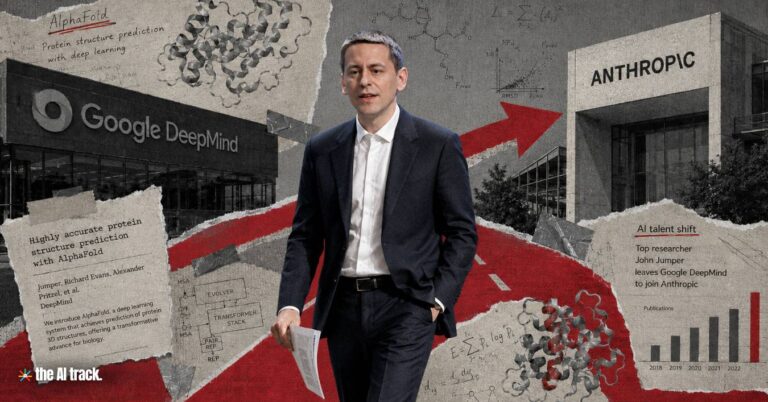
John Jumper is leaving Google DeepMind for Anthropic, giving the Claude maker a major AI-for-science hire amid a wider frontier AI talent war.
Read a comprehensive monthly roundup of the latest AI news!