Xiaomi has released MiDashengLM-7B, an open-source AI voice model built on Alibaba’s Qwen2.5-Omni-7B and powered by Xiaomi’s Dasheng audio encoder.
Designed for integration across electric vehicles and smart home devices, it delivers record-setting performance on 22 public benchmarks, advances seamless daily task automation, and reinforces China’s strategy to achieve AI sovereignty while reducing reliance on US technology providers.

Xiaomi Launches MiDashengLM-7B Open-Source AI Voice Model – Key Points
- Launch Details & Technical Basis
- MiDashengLM-7B is a 7-billion parameter AI voice model combining Xiaomi’s Dasheng audio encoder with Alibaba’s Qwen2.5-Omni-7B Thinker autoregressive decoder.
- Xiaomi published detailed benchmarks and architecture data on WeChat, supported by a comprehensive technical report.
- Already embedded in Xiaomi’s smart home devices and EVs, enabling hands-free assistance for tasks such as organizing online shopping carts or changing in-car music.
- Industry-Leading Performance Metrics
- Achieved 22 public benchmark records for voice recognition.
- First token delay reduced by 75% versus comparable systems.
- 20× more concurrent processes supported without extra memory usage, ensuring scalability for large-scale deployment.
- Long-Term AI Strategy
- Builds on years of AI investment:
- 2018: Partnership with Microsoft for Azure cloud integration.
- 2019: Creation of dedicated AI, big data, and cloud units; CEO Lei Jun stressed AI as “life and death” for Xiaomi.
- 2017: IoT network reached 85M connected devices and 400 partners, now serving as an instant deployment base.
- Builds on years of AI investment:
- Innovative Architecture & Capabilities
- Unified framework supports:
- Speech recognition
- Environmental sound detection
- Music analysis
- Universal audio description training for consistent performance across diverse audio inputs
- Unified framework supports:
- Real-World Applications in Xiaomi Products
- Deployed in 30+ applications including:
- Advanced wake-up and external defense modes
- Continuous abnormal sound monitoring for mobile speakers
- Gesture-based ambient sound controls for IoT devices
- Enhanced scratch detection with Xiaomi YU7 sentry mode
- Deployed in 30+ applications including:
- Open-Source Competitive Edge in China
- Part of a domestic AI strategy aimed at China-first technological independence.
- Avoids reliance on US firms such as Meta, OpenAI, and US-controlled cloud infrastructure.
- Aligns with moves by Alibaba’s Qwen and Yi models, and similar sovereignty initiatives in Denmark and Germany.
- Reflects wider industry adoption: Alibaba’s Qwen-VLo variants have exceeded 40M downloads; 89% of organizations now use open-source AI.
- Transparency and Licensing
- Trained solely on 77 publicly available datasets.
- Released under Apache License 2.0, enabling unrestricted commercial and academic use.
Why This Matters:
MiDashengLM-7B is more than a technical achievement—it’s a geopolitical and commercial move. Technically, it combines ultra-low latency, high scalability, and multi-domain audio capabilities into a single system. Strategically, it strengthens China’s open-source AI sovereignty push, deepens domestic alliances like Xiaomi–Alibaba, and reduces reliance on US-controlled AI ecosystems. For Xiaomi, it leverages a massive IoT and automotive footprint to quickly scale adoption.
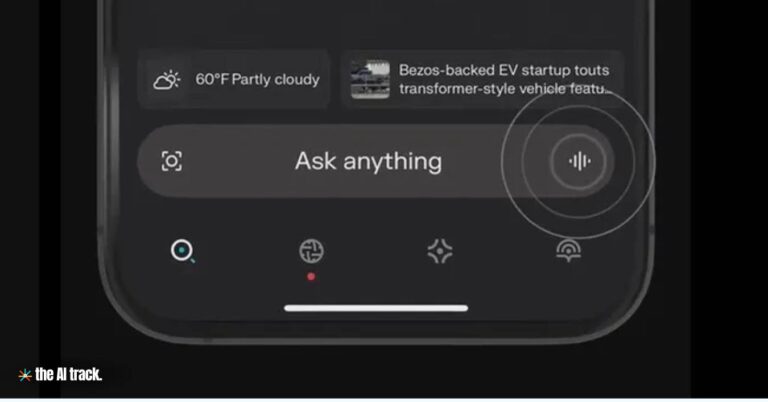
Perplexity’s iOS voice assistant offers proactive task completion, multitasking across apps, persistent conversations, and compatibility with older iPhones.
Read a comprehensive monthly roundup of the latest AI news!